



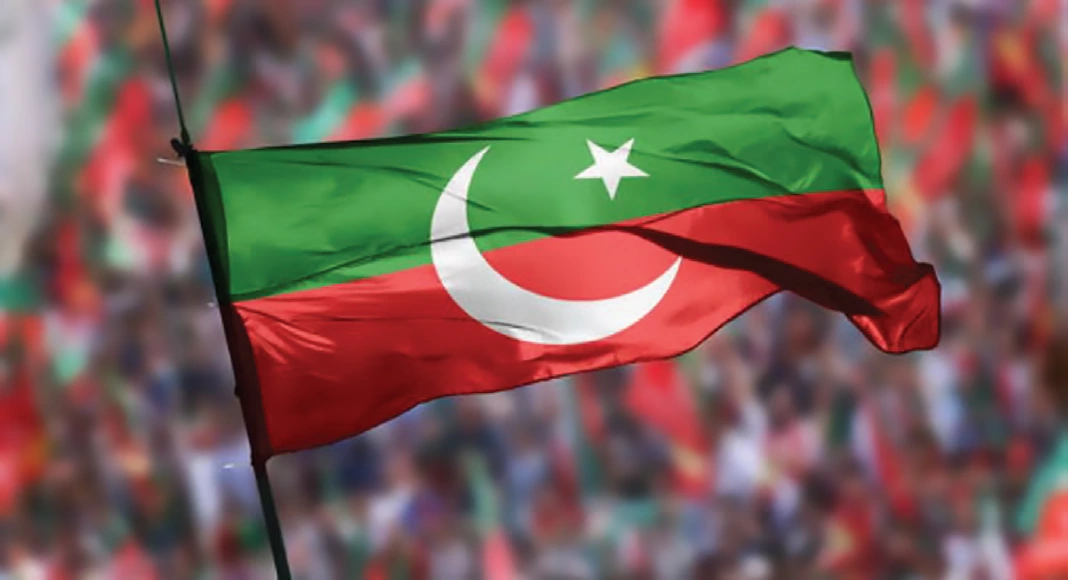
The spectre of banning the Pakistan Tehreek-e-Insaf (PTI), which was seen as the third force in Pakistan’s political arena, challenging the traditional dominance of the two main political parties, the Pakistan People’s Party (PPP) and the Pakistan Muslim League-Nawaz (PML-N), looms large over Pakistan’s political landscape, casting a shadow that has only grown darker in the aftermath of recent tumultuous events.
The dramatic episode of April 2022, which saw the ouster of the Imran Khan-led government through a parliamentary vote of no-confidence, was a significant turning point in the country’s political history. This event set the stage for a series of developments that have since escalated the political tensions in the country. The situation reached a critical point with the arrest of Imran Khan on May 9, 2023, a move that sparked widespread protests across the nation. The ensuing unrest has fuelled discussions about a potential ban on the PTI, raising a pivotal question: Would such a drastic measure contribute to political stability?
Historically, Pakistan has had a troubled relationship with the suppression of political parties, often under the rule of military dictatorships or during periods of severe political crises. These actions have left an indelible mark on the country’s political fabric. For instance, the Pakistan People’s Party (PPP) faced severe repression during General Zia-ul-Haq’s era, a time when political dissent was met with harsh crackdowns. Similarly, the Awami National Party (then called National Awami Party) was banned in the 1970s for its alleged secessionist activities, a move that further fuelled political unrest in the country. The common thread in these historical precedents is that the suppression of political parties has often led to unintended consequences—heightened political polarization, increased unrest, and, paradoxically, the strengthening of the banned parties’ support bases. These actions have shown that attempts to suppress political dissent often backfire, leading to more significant challenges for governance and stability.
Khan’s rise to power in 2018 with a promise of a “Naya Pakistan,” free from corruption, resonated with a significant portion of the electorate, particularly the youth and the urban middle class. However, the party’s tenure in power was marred by a series of challenges, including an increased authoritarian approach towards dissent, the outbreak of the COVID-19 pandemic, and ensuing socio-economic issues, leading to questions on the party’s performance in government. These issues, coupled with Khan’s confrontational style of politics, further polarized the political environment.
The political landscape became even more volatile following Imran Khan’s arrest in May 2023. The arrest led to widespread protests across the country. The intensity of these protests, coupled with the allegations of PTI’s involvement in acts of violence and vandalism, has intensified calls from some quarters for a ban on the party. Proponents of this drastic measure argue that PTI has become a destabilizing force in Pakistan’s political arena. They point to the party’s increasingly confrontational stance against state institutions, including the military and the judiciary, and its alleged role in inciting violence during the May 9 protests as evidence that the PTI is undermining the country’s stability. In this view, removing PTI from the political equation would create a more conducive environment for governance and allow security and political establishment to address the country’s pressing socio-economic and security challenges without the constant threat of political unrest.

 The writer is a development practitioner. He has done Master’s in Governance, Development and Public Policy from the Institute of Development Studies, University of Sussex and has also earned his Master’s in Philosophy of Humanities from the IIS London. He can be reached at shakeelahmedshah@yahoo.com
Leave a Reply