

Karachi
NFC to SIFC
While many of our exploiters are dead and gone, some are still around in the corridors of power, together with their offspring and siblings.

If operated with full decorum, our governance system would qualify as parliamentary democracy, at least in form, if not in substance. We have a National Assembly, several Provincial Assemblies, and a Senate, and we hold elections. However, our major political parties are run and controlled by dynastic politicians and autocrats, with loyalty to top leadership and not merit being the determinant for top positions in the party and government. Of course, the performance of such governments can hardly be stellar. And that necessitates a bit of control on our democracy to make it functional, at least minimally.
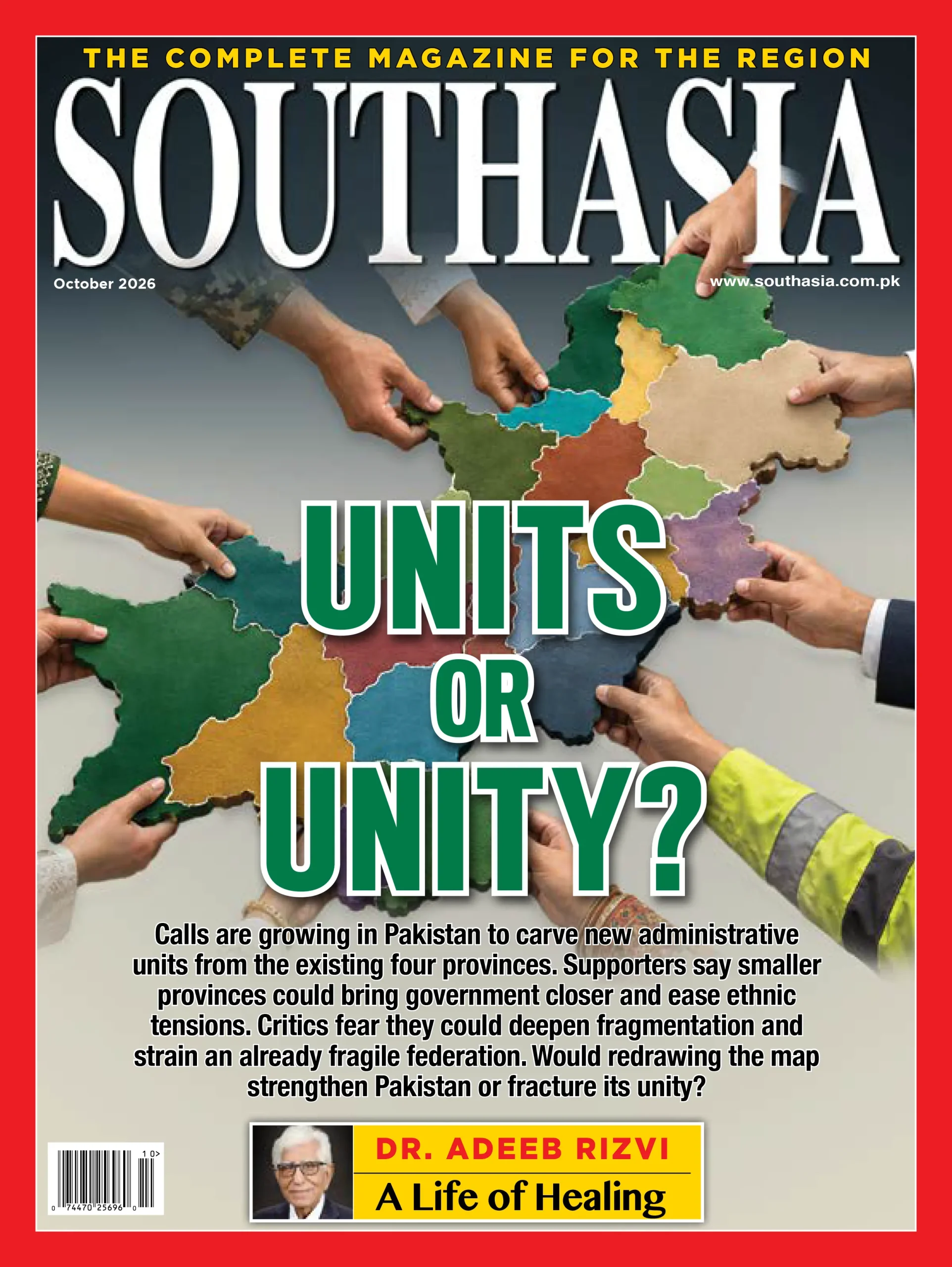
Another problem is the significant disparity in the population of various provinces, with the population of Punjab being more than that of all other provinces combined. This gives Punjab an unfair advantage because of its relatively heavy presence in all state institutions, which must be redressed by creating more provinces. Our population explosion also necessitates additional provinces for better administration, while begging for effective population planning as well.
The Pakistan Muslim League-Nawaz (PML-N) and the Pakistan People’s Party (PPP) have occasionally talked about more provinces in Punjab and even passed some resolutions but didn’t proceed further, being unwilling to lose control of large provinces, with a larger share in the national revenue to fiddle around with.
For a start, Punjab had to be split into three provinces, and Karachi was also made a province. And, of course, power and resources must also be devolved further down to the district level to enable the masses to reap the benefits of devolution under a revised NFC Award.
It is often claimed that the system of parliamentary democracy has not worked well in Pakistan, and every now and then, a move starts for the presidential form of governance. However, we know from personal experience that even the presidential system did not work well, which is believed to have caused the country’s dismemberment.
With both the parliamentary democracy and presidential systems failing, there was briefly a move towards the Caliphate system, with one well-known politician dreaming of becoming Ameer-ul-Momeneen. And then, we also had military takeovers aplenty.
Of course, in almost all spheres of activity, the dismal state that we are in means that no system has worked well for us. The reason, of course, has been the excessive hunger for power, money, or both of the incumbents, with nepotism messing things up further.
Another reason for our lack of progress is that we never developed into a nation and still jealously guard and feel proud of our ethnicity. Many of our leaders exploit this for their personal gain. Yet, the same leaders happily embrace each other to promote their common interests, minting more illicit money. See how all and sundry got together under the PDM banner, and after calling each other all sorts of names, the PML-N and the PPP are in an embrace again.
While many of our exploiters are dead and gone, some are still around in the corridors of power and, together with their offspring and siblings, duly freed of all constraints by a ‘benevolent’ system of dispensation of justice, form a large crowd of a greedy lot, eager to become multi-billionaires in their rights or to add further to their billions, with the welfare of the masses being none of their concerns. How dismal has been their performance in economic and other fields can be judged from the fact that even our former eastern wing, now Bangladesh, considered a burden and accused of preventing us from progressing, has done considerably better than us in most fields, including population planning, after separating from us.
And if no system works well for us, the problem could be not with the system but those operating it. And the fact that the caretaker federal government performed far better than ‘seasoned’ politicians further strengthens this belief.
Given the above, I firmly believe that the Parliamentary system of democracy - duly facilitated and assisted by you-know-who, in the right mix - is the answer to our problems. So, I think it is about time we stopped pretending to be what we, and our leaders are not.
Given our predicament, it is lucky that no single party or group has secured even a simple majority. However, the PTI-associated independents did emerge as the largest single group and leading contender for a coalition government. Fortunately for us again, demonstrating the usual lack of judgment, coupled with phenomenal overconfidence and arrogance, the PTI top leader out-rightly rejected forming a coalition government with the PML-N or the PPP, leaving the two supposed ‘rivals’ to join hands. And by attracting some other parties, including the MQM, they have formed a coalition government. Belatedly, the PTI leadership seems to be waking up, but I suppose it is too late now.
Unfortunately, no major institution in Pakistan has worked satisfactorily, even most of the time. However, luckily for us, our armed forces, being the one organized, disciplined and effective institution with continuation of policies assured, are now helping the government perform better. Without taking over power directly, they are offering all possible help/guidance to the government. Remember, the Special Investment Facilitation Council (SIFC) is their brainchild. With its deep involvement in various government functions, an enlarged and expanded SIFC will hopefully have a ‘sobering’ influence on the government.
Their positive influence is already visible in selecting personnel for the crucial ministries like finance, and other top positions. There are plans to broaden the tax base by taxing agriculture, real estate, and wholesale and retail trade, which are hitherto regarded as untouchable. There are also plans to exploit the plentiful mineral, agricultural, and human resources for the country’s benefit, with significant progress already visible in some sectors. I think the assisted parliamentary democracy system is our best option, provided the facilitators can prevent ‘veterans’ from hoodwinking others, such as on the NFC award issue.![]()

The writer is a freelance contributor with interest in regional, South Asian and international affairs. He can be reached at hashmi_srh@hotmail.com
Pakistan urges Afghanistan to address terrorism as ‘shared concern’
New Team at PBA
Pakistan seeks investment, not loans: PM
Pakistan, China to form WG on 5 new economic corridors
ChatGPT sees a surge in website traffic as schools reopen
US diplomat visits Napa
Sarah Ahmad wins prestigious award
Pakistan eyes $300m by selling Panda Bonds
Tunnel becomes the latest flashpoint in India-China border tensions
India’s ‘Silicon Valley’ is running out of water
New Delhi summons US diplomat over Kejriwal’s arrest remarks
World’s super rich attend pre-wedding bash of Mukesh Ambani’s son
Shahid Afridi and Mushtaq Ahmed Demand Censorship
Biden, Netanyahu hold first call in over a month
Telenor Pakistan launches female sales trainee program
NBP’s Annual Corporate Briefing
Sailor martyred in operation against Indian fishermen


Leave a Reply