



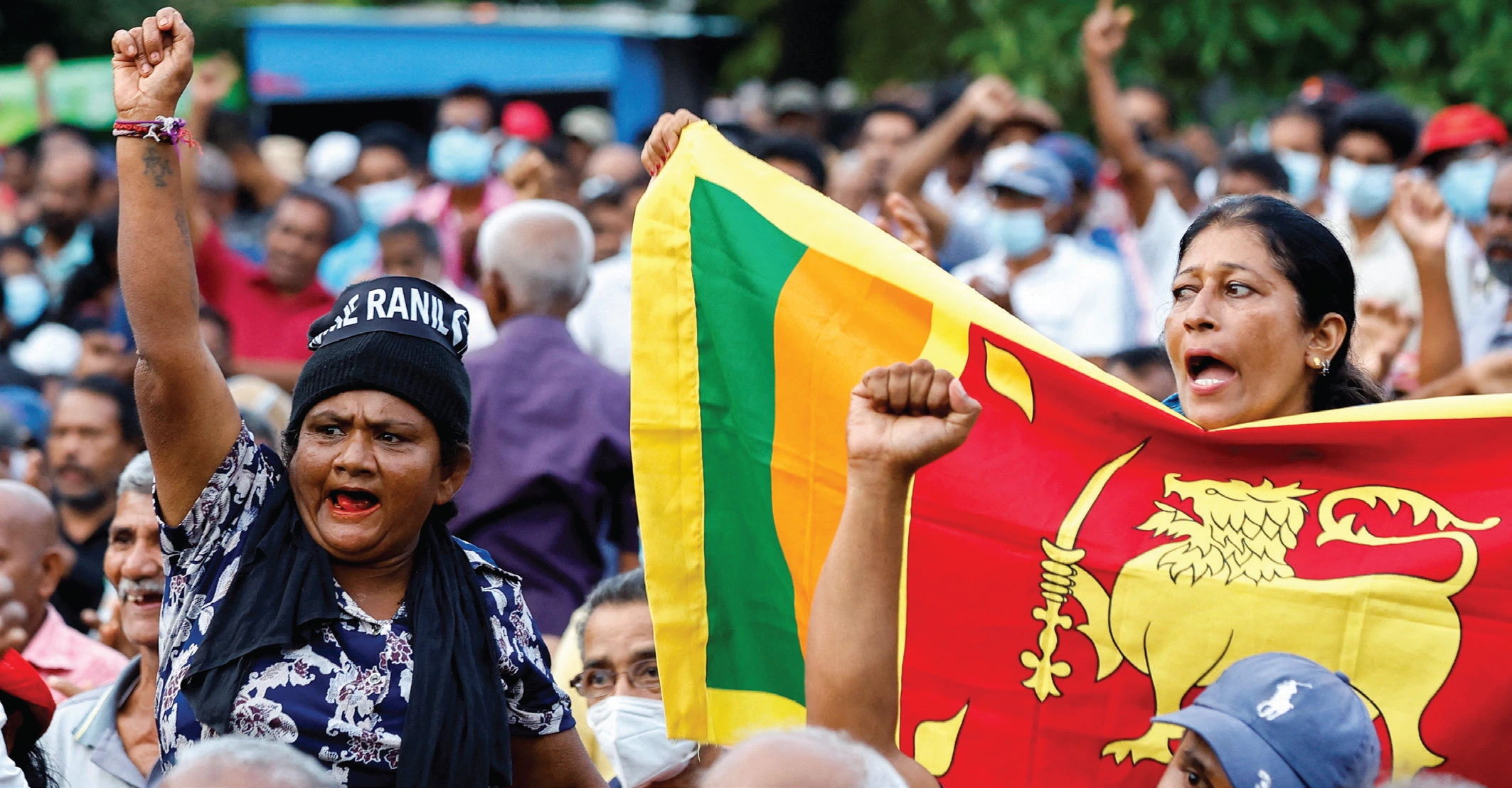
In the teardrop-shaped island of Sri Lanka, where green landscapes meet blue waters, a less idyllic reality unfolds for its women and minority populations. As the International Monetary Fund (IMF) imposes austerity measures, these marginalized groups bear the brunt of economic strain, facing exacerbated challenges in nutrition, healthcare, and financial stability.
Sri Lanka’s economic structure, primarily reliant on agriculture, tourism, and garment exports, leaves it vulnerable to global economic fluctuations. When financial crises strike, the IMF often intervenes with loan packages laden with stringent conditions to stabilize the economy. However, these measures frequently come at the expense of the most vulnerable segments of society.
Before delving into their impact, it is essential to know the measures the IMF has taken. This involves reducing government spending and increasing revenue by cutting public expenditure, reducing subsidies, and increasing taxes. The IMF has also advocated tighter monetary policies, including higher interest rates, to control inflation and stabilize the currency. Structural adjustments include reforms focusing on liberalizing markets, privatizing state-owned enterprises, and deregulating industries to promote economic efficiency and attract foreign investment. The IMF has also recommended devaluing the national currency to improve export competitiveness and reduce trade imbalances. Most importantly, austerity measures will lead to reductions in social welfare programs and public services, including healthcare and education, which can disproportionately affect vulnerable populations, including women and minorities.
For women in Sri Lanka, the impact of IMF austerity measures is acutely felt, particularly in healthcare and social security. With health budget cuts, access to essential services like maternal care dwindles. Public hospitals, vital for many women and marginalized individuals, face resource shortages, compromising their ability to cater to patient needs. Consequently, women unable to afford private healthcare are left grappling with inadequate services, endangering their well-being and that of their children. Public hospitals struggle to provide adequate maternal care, family planning services, and access to essential medications. Consequently, women’s health is compromised, leading to increased maternal mortality rates and heightened risks during childbirth. With education budgets slashed, there are limited opportunities for girls’ access to quality schooling and, perpetuating gender gaps in literacy and education attainment.
IMF policies are hence exacerbating existing socio-economic disparities and hindering gender equality efforts. With austerity measures enforced by the IMF, essential services like healthcare and education face budget cuts, disproportionately affecting women who rely heavily on public services. Reduced access to maternal care and family planning services jeopardizes women’s health and exacerbates maternal mortality rates. Moreover, the privatization of public services under the IMF directives often leads to increased costs, further marginalizing women from lower-income backgrounds who cannot afford private alternatives.
The emphasis on privatization and deregulation under the IMF directives adversely affects Sri Lankan women’s economic security. Privatizing essential services often leads to increased costs, rendering them inaccessible to women from lower-income backgrounds. Moreover, the promotion of export-oriented industries, as encouraged by IMF policies, perpetuates gendered divisions of labor. Women, predominantly employed in sectors like garment manufacturing, face precarious working conditions, low wages, and limited access to social protections. As a result, Sri Lankan women are disproportionately impacted by economic downturns, facing heightened vulnerability to poverty and financial instability.


Sara Danial is a Pakistan-based writer/editor and can be reached at sara.amj@hotmail.co.uk
Leave a Reply