



Border politics in South Asia is a mix of historical grievances, territorial disputes, security challenges, and economic opportunities, shaping the region’s geopolitical landscape and relations between neighbouring countries. Its key features include the following:
Partition Legacy
The partition of British India in 1947 into India and Pakistan remains a central issue in South Asian border politics, which led to the largest mass migration in history and left behind numerous territorial disputes, particularly over the Kashmir region.
Territorial Disputes
South Asia is home to several unresolved territorial disputes, with the Kashmir conflict being the most prominent. Other disputes include the Siachen Glacier, Sir Creek, and border disputes between India and Bangladesh.
Security Concerns
Border regions in South Asia are often volatile due to security concerns, including terrorism, insurgency, and cross-border infiltration. The Line of Control (LoC) between India and Pakistan and the Line of Actual Control (LAC) between India and China are heavily militarized zones.
Water Disputes
South Asia’s major rivers, such as the Indus, Ganges, and Brahmaputra, flow through multiple countries, leading to water sharing and dam construction disputes. Water scarcity exacerbates tensions between upstream and downstream riparian states.
Refugee and Migration Issues
South Asia faces challenges related to refugees and migrants, including displacement due to conflicts, environmental degradation, and economic factors. South Asian governments invest significant resources in border security measures, including border fencing, surveillance, and patrols, to prevent illegal migration, smuggling, and militant infiltration. In fact, South Asia often divides communities with shared cultural and ethnic ties, leading to social tensions and identity conflicts. Promoting cultural exchange and people-to-people contact is essential for fostering regional stability.
Role of External Powers
South Asia’s strategic location has attracted the interest of external powers, leading to geopolitical competition and influence in the region. Major powers like the United States, China, and Russia often play a significant role in shaping border politics through diplomatic, economic, and military means.
Background of India-Myanmar Border
The border between India and Myanmar stretches approximately 1,643 kilometres and has a complex historical background. The boundary between India and Myanmar originates in the colonial period when both territories were under British rule. Its distinction was based on various treaties and agreements between the British and local rulers and natural geographical features.
From the Indian side, the northeastern Indian states of Manipur and Nagaland share borders with Myanmar, but historically, communities on both sides of the border predate colonialism, with cultural, ethnic, and economic interactions being common. The mountainous regions of the Chin Hills and the Arakan Yoma form a significant portion of the India-Myanmar border. These areas have been historically inhabited by various ethnic groups, including the Chin, Kuki, and Naga tribes, with migrations and trade occurring across the border. The Arakan Kingdom, located in the present-day Rakhine State of Myanmar, historically interacted with neighboring regions of northeastern India. The kingdom traded with Indian ports and had cultural exchanges with Indian civilizations.
During the British colonial period, Burma (now Myanmar) was administered separately from British India. At the time, there were close economic ties and movements of people across the border for trade, labor, and cultural exchanges. After gaining independence from British colonial rule in 1947, India and present-day Myanmar inherited the colonial-era borders.
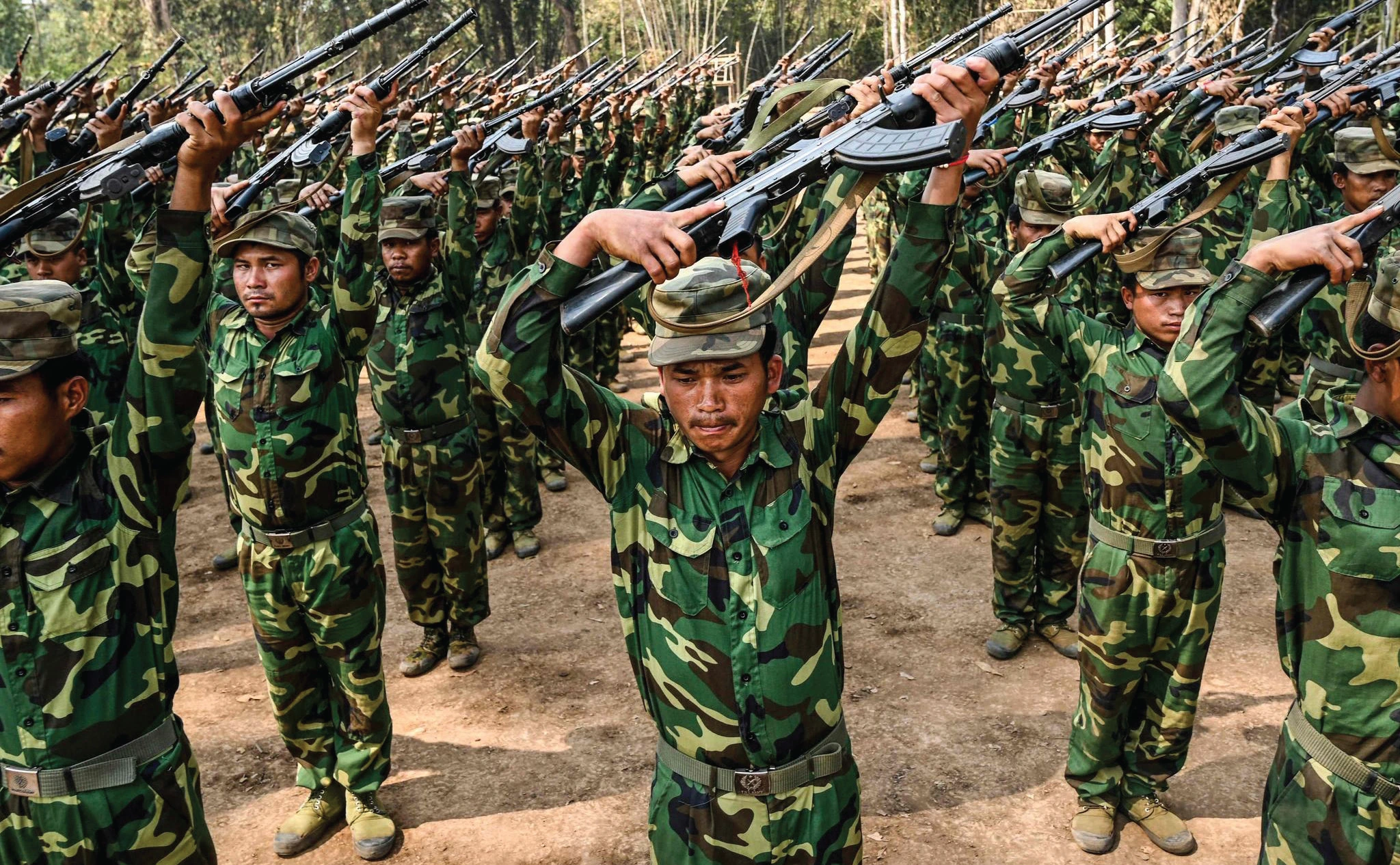
From the beginning, the border region between the two has witnessed security challenges, including insurgency and smuggling activities. Various insurgent groups from India’s northeastern states have found sanctuaries and support across the border in Myanmar, leading to occasional tensions between the two countries.
Although India and Myanmar have agreements and mechanisms for border management and security cooperation, curb illegal activities, and promote legitimate cross-border trade and travel. In recent years, the Rohingya refugee crisis has affected the India-Myanmar border region, and some of them have crossed into India, leading to concerns about border security and humanitarian issues.



The writer is Professor and Head of the Department of Political Science as well as Dean, Faculty of Social Sciences at the Bhupendra Narayan Mandal University in Madhepura, Bihar. He can be reached at rajkumarsinghpg@gmail.com
Leave a Reply