



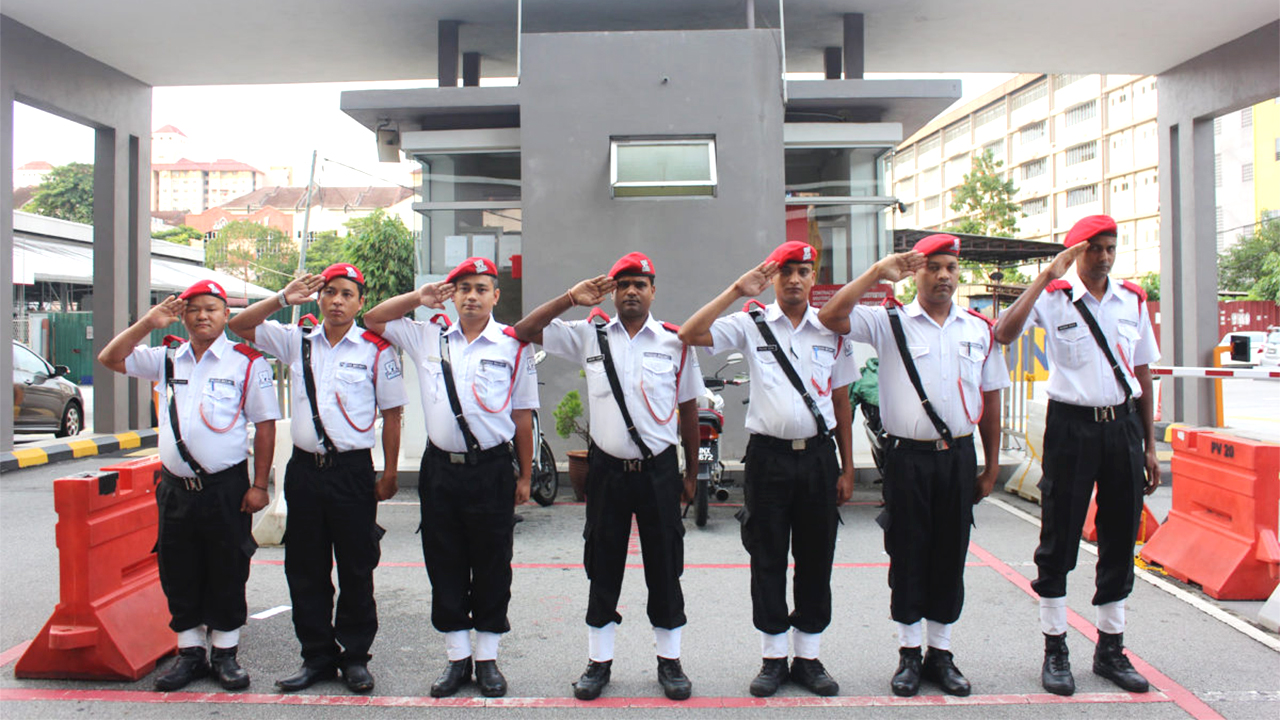
Owing to the on-going Covid-19 catastrophe, the hundreds and thousands of Nepalese nationals who were working for various privately-run security companies in Malaysia, have returned to their homeland. The mass exit of workers from Malaysia in a very short period has left private security companies of the country in the lurch.
'Many security projects have been shut down or in a limbo due to the non-availability of the Nepali nationals since most companies prefer security guards, who are Nepalese by their origin', says the owner of a local security company based in Kuala Lumpur. 'Now people running private security companies are asking Indian and Pakistani citizens to hide their nationalities and register themselves as a Nepali citizen to have them recruited on different security posts. Also, security companies want the Malaysian government to relax travel restrictions so that they can visit Nepal to hire new security guards', he said.
The Malaysian government has a long-standing agreement with Nepal to hire security guards from the Himalayan state which prevents citizens of any country, other than the local residents, from serving as security guards in Malaysia. According to the owners of private security agencies, the Nepalese government is currently providing security guards to Singapore, Saudi Arabia, Qatar, Kuwait and the UAE. While Nepal's own population is not as large as any other South Asian country, the Nepalese government tends to send its ordinary citizens without any law enforcement or military background to foreign countries to get them recruited as security guards. To hire the retired army personnel as security guards, the privately-run security companies of Malaysia want the Malaysian government to enter into a similar agreement with Pakistan as it has already signed with Nepal.
Currently, many retired army personnel from Pakistan are working in Europe, the UK and the United States, including the Gulf nations. In the past, the Malaysian government showed its reluctance to hire Pakistani security and military personnel to get their services in Malaysia in the similar capacity. There have also been numerous complaints about some Malaysian security companies not paying their security guards on time. However, foreign security guards cannot get a legal remedy for their losses, since they are largely denied a work permit in Malaysia, which makes it easier for local security agencies to exploit and take undue advantage of them.
As a rule, some employers in Malaysia deprive foreign workers of their salaries and also make them serve for twelve hours a day without having any weekly off, which is a stark violation of the country's labour laws. In many countries, security guards do not have to work for more than eight hours in a row, but the situation is quite the opposite in Malaysia. As things take place here, most foreign migrants currently living in Malaysia are forced to work illegally in private security companies, restaurants, hotels, factories, construction sector and other places, etc., since the Malaysian government completely banned the issue of work visas to foreign nationals, since the onset of Covid-19 pandemic. It is hoped that once the issuance of work visas resumes in Malaysia, the foreign workers in general and security guards in particular, will be able to get a legal work permit to continue working in better conditions.
Most foreigners, as it all plays out, are caught by immigration officials for using fake visa stickers. However, delays in issuing work visas by the government has become a major threat to the Malaysian economy since it is hampering progress in many development projects. Following the examples of Dubai, Qatar, Saudi Arabia and the UK, the Malaysian government must open its airports to foreign workers under strict SOPs to avoid an economic crisis and to help Malaysia gain the economic momentum just like before. 

The writer is associated with the Kunming University of Science and Technology in China as a Research Analyst. He can be reached at tamoorazam@hotmail.com
Leave a Reply