A start has to be made somewhere to introduce electronic voting in Pakistan.
ByS.R.H. Hashmi | July 2021
One would be tempted to think that the electronic voting system, so enthusiastically taken up by the PTI government in Pakistan, would be a dream come true. It could bring to fruition the promise made by the party to overseas Pakistanis to give them voting rights. It could also speed up the process of compiling election results. Moreover, with vetting done while casting the vote, it would eliminate disputes about rejected votes and also save the time otherwise spent in manually counting and re-counting votes. All this sounds so good. However, this is viewing the situation as the best-case scenario and there’s many a slip between the cup and the lip.
For example, while Pakistanis living in the UK, US and other developed countries may have ready access to, and be proficient in the use of internet, unskilled Pakistanis working in Middle Eastern states – who form the bulk of overseas Pakistanis – may be deficient in both respects. Moreover, the whole process is vulnerable to cyber attacks, while weaknesses in the system, whether unforeseen or deliberately introduced, may prove disastrous. In fact, the Spanish consultants hired by the government have already declared the Internet Voting System designed by Nadra to be unsatisfactory as it does not meet international standards. Moreover, the finalization of the prototype electronic voting machine being developed in Pakistan is not ready yet.
While introducing electronic voting in Pakistan, the first problem would be raising substantial finance and also preparing teams of adequate calibre to operate and maintain the voting machines. The number of machines required could be reduced somewhat by staggering the elections. An even bigger problem could be for the PTI to secure support of the opposition, the Election Commission and the bureaucracy, as well as members of the public.
Electronic voting is one of the key components of digital technology for governance related issues in the modern world. Electronic voting has always been debated, researched and practiced around the world as a substitute for paper and the political opposition in Pakistan must at least consider how the EVMs developed by the government will work instead of rejecting the proposal outright without even taking a look at the machines.
The PTI government has serious differences even with its coalition partners, besides lacking public confidence. Add to that grave doubts about Imran Khan’s decision-making process for selecting persons for important positions. People fail to understand the PM’s reasons for replacing a star performer like Wajid Zia while retaining Usman Buzdar, come what may. Committing the country to an electronic voting system in the next elections would be a recipe for disaster and would be seen as a desperate attempt to cling to power. Imran Khan had ample time and opportunity to learn the ropes.
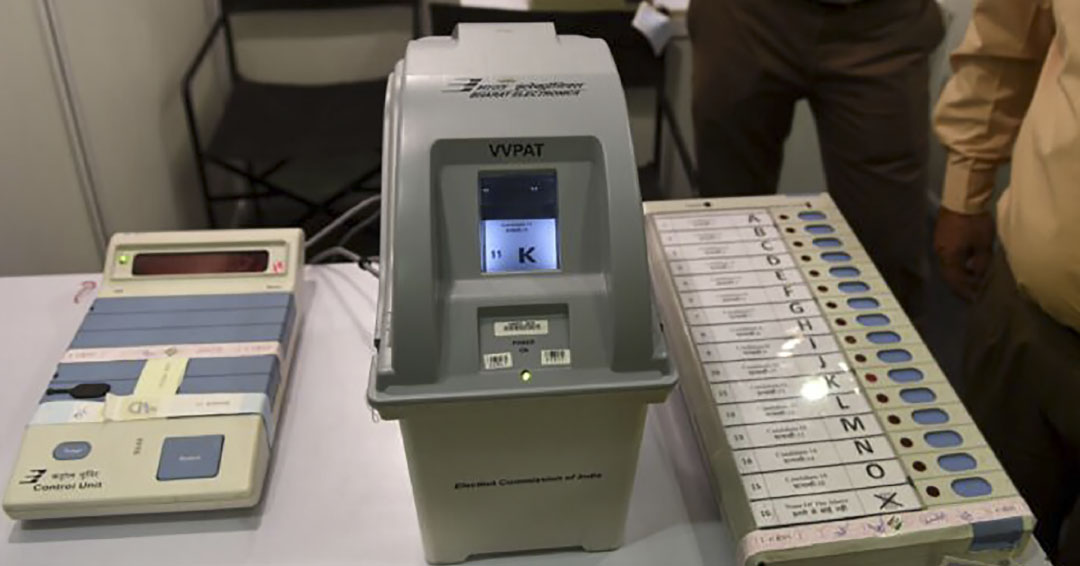
The introduction of electronic voting system in Pakistan is a sound proposal, provided it has the capacity to perform and can also secure the support of all stakeholders. Instead of trying to re-invent the wheel, Pakistan should seek help from India which has been conducting electronic voting for years. Wikipedia gives plentiful details about it in the link: https://en.wikipedia.org/wiki/Electronic_voting_in_India)
Committing the country to an electronic voting system in the next elections would be a recipe for disaster and would be seen as a desperate attempt to cling to power.
The Indian, battery-operated EVMs comprise a control unit, connected by a cable to the balloting unit. The control unit has a tamper-proof programme permanently etched on it. A polling officer operates the control unit and, after confirming the identity of the voter, electronically activates the ballot unit and the voter. This is done in complete privacy. The voter casts his vote by pressing the button against his selected candidate’s symbol, whereupon the machine also displays his vote and then locks to prevent multiple voting, with the controller repeating the process for the next vote. The system can also print a voter-verifiable paper audit trail to cross-check election results compiled by the electronic voting system.
The snag is that Pakistan has snapped trading relations with India, though that can change. The Indian action against Muslims in occupied Kashmir and elsewhere in India has been most atrocious. It must be considered that Pakistan’s present stance helps neither the country, nor the Kashmiris and not even Muslims in other parts of India. Badly battered by the pandemic and lack of active help from the US or QUAD against China, Narendra Modi may be a bit more inclined to normalize relations with Pakistan. This is a window of opportunity that must be availed. Strengthening of the ceasefire along the line of control has helped. A realistic approach based on the current realities may improve relations further and help bring down terrorism from Afghanistan-based elements and, in time, also alleviate suffering of Muslims in Indian-occupied Kashmir and elsewhere in India. In fact, this is the only way forward.




 The PTI government has serious differences even with its coalition partners, besides lacking public confidence. Add to that grave doubts about Imran Khan’s decision-making process for selecting persons for important positions. People fail to understand the PM’s reasons for replacing a star performer like Wajid Zia while retaining Usman Buzdar, come what may. Committing the country to an electronic voting system in the next elections would be a recipe for disaster and would be seen as a desperate attempt to cling to power. Imran Khan had ample time and opportunity to learn the ropes.

Leave a Reply