

Region
The Stalemate
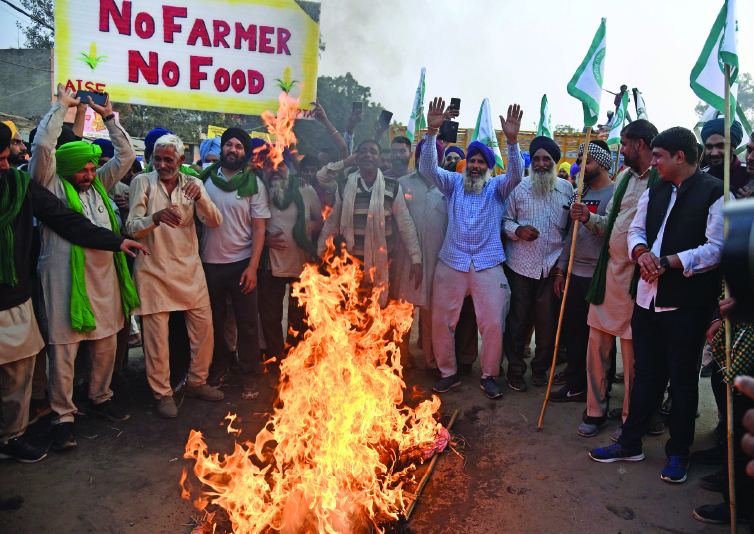
Tens of thousands of farmers in India have been on strike since November 26, 2020, demanding repeal of recent laws that are likely to shrink their incomes.

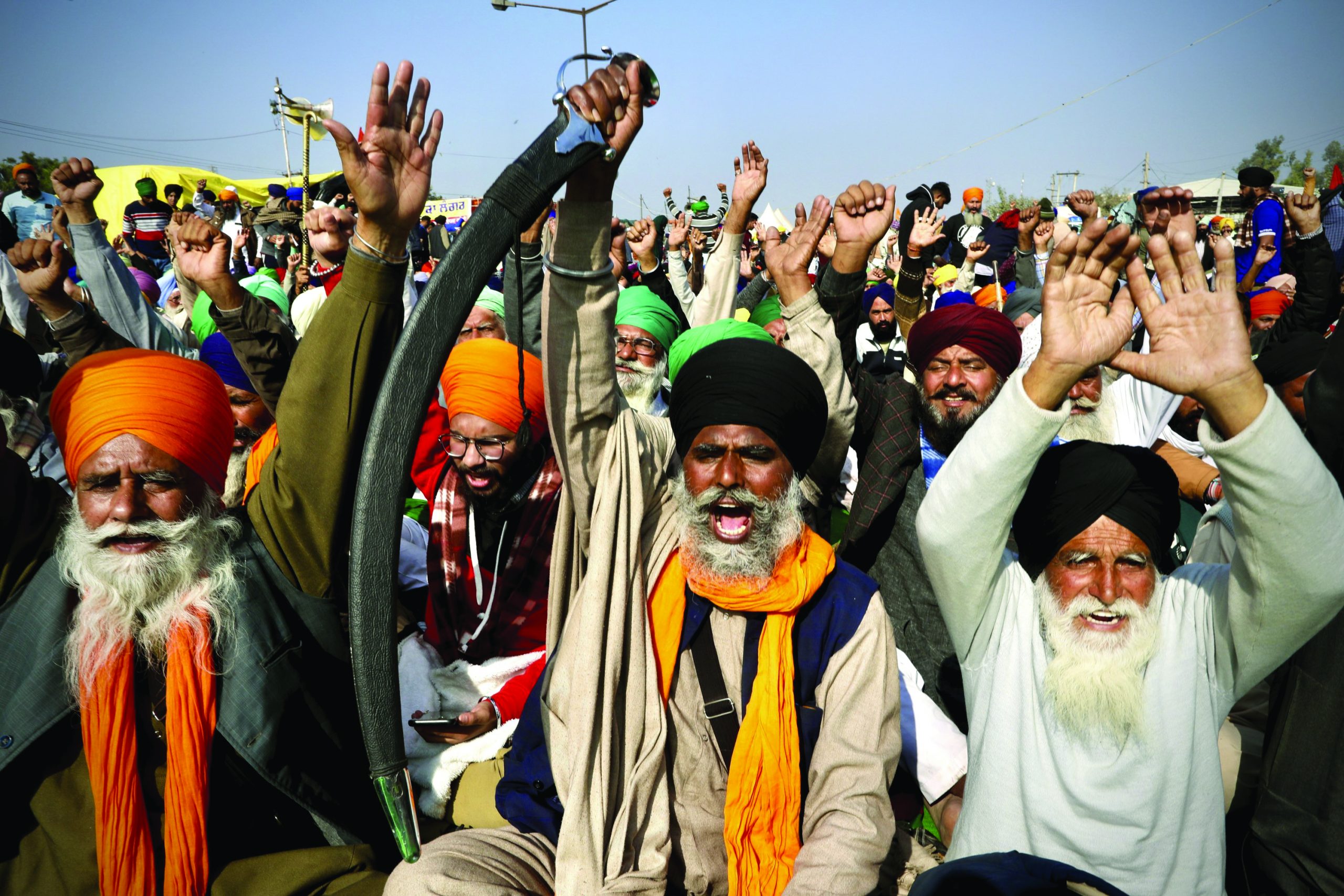
Farmers have laid siege to India’s capital and plenty continue to pour in from Punjab, Uttar Pradesh and Haryana. They have gathered to protest against agricultural reforms, which place them at the mercy of big corporations. Protests of this scale have not been witnessed in recent memory and have created a massive crisis for Modi’s government. Several labour unions and opposition members have also joined what has been termed as the “largest organized strike in India.” The future seems gloomy for India, which is already struggling to control a pandemic. The unfolding Kissan Crisis will exacerbate the current conditions until sanity prevails and the government agrees to address the farmers’ woes through dialogue.
The first group of protesteing farmers trying to enter Delhi were met with brute force, batons, and water cannons. The Indian government’s lackadaisical approach towards the issue further infuriated the farmers and led to their influx. Despite the cold weather and the spread of Covid, the farmers sought refuge in the streets of Delhi to save their livelihood. The majority have now made arrangements for food and shelter, aiming not to leave until their demands are accepted, even if the strike lasts for several months.
Agricultural reforms introduced by the Indian government in September were pushed through parliament without any debate or discussion. This attracted a lot of anger from the opposition, which views these bills as death warrants for farmers. The Farmers’ Produce Trade and Commerce (Promotion and Facilitation) Bill, 2020, the Essential Commodities (Amendment) Bill, 2020, and the Farmers (Empowerment and Protection) Agreement on Price Assurance and Farm Services Bill, 2020 are currently at stake.
The reforms that the Indian government intends to bring about through these bills will impact prevailing rules on the sale, pricing, and storage of farm produce, allowing the free market to directly reach out to the Indian farmers previously protected by government regulations.
A major change introduced by the reforms is that the farmers will be allowed to sell their products directly to private players at a market rate. Earlier, farmers used to sell their produce at government-controlled wholesale rates and were received at a minimum price. The products would then be sold to the private players by the middle man.
The only way possible to initiate dialogue would be to stop labeling the farmers as traitors and terrorists or groups funded by foreign countries.
Farmers are anxious about the short-term and long-term consequences of the reforms. Their primary concern is that these new rules will make their mandis redundant. These mandis are operated by farmers, landowners and the trade. The major concern of the farmers is that due to the recent reforms, farmers will flock to the markets which offer better prices initially. This, in effect, would cause the government to do away with mandis as well as assured prices altogether. Once these mandis are no longer available, the market players will be in a better position to navigate the prices.
Prime Minister Modi is trying to fulfill the pledge he made to double farmers’ income by 2022 through the reforms. These may increase their income, but will also allow the corporate sector to squeeze the farmers out of their holdings altogether. Hence, this issue has become a matter of life or death for the farmers. A large number of farmers already commit suicide every year due to the financial burden placed upon them. According to India’s National Crime Records Bureau, more than half of India’s farmers are in debt, and approximately 20,638 committed suicide in 2018 and 2019.
Farmers have outrightly rejected the bills and blocked major highways leading to the capital in order to force the government to reverse the reforms. The protests have reached a global scale, with many Indians protesting in different parts of the world in solidarity with the Indian farmers. If the Indian government does not act fast, then this event will add to the list of failures of the Modi government.
The only way possible to initiate dialogue would be to stop labeling the farmers demanding their rights as traitors and terrorists or groups funded by foreign countries. It is necessary to recognize the issue at hand to solve it. Dialogue can only prove fruitful in an atmosphere where both parties can communicate without hurling abuses.
The government must ensure that the mandi system coexists with the private trading system. Otherwise, the farmers will not be keen on accepting any change to the status quo. The government must not decide without taking all the stakeholders on board.![]()
The writer is a Social Development and Policy graduate from Habib University. He can be reached at bilalmustikhan@yahoo.com |
|
Cover Story
|
|
News Buzz
|
Update |


Leave a Reply