

Region
Old Wine, New Bottle
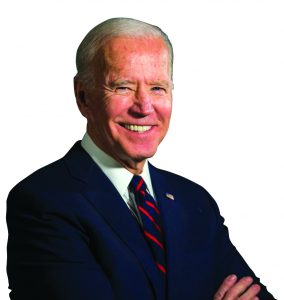
The Joe Biden Administration will face major challenges in South Asia, whether it is ending US involvement in Afghanistan or countering China’s increasingly aggressive influence in the region.

A rising China is perceived by the US as a serious threat to its global hegemony. China’s Belt and Road Initiative (BRI), with its focus on both land and maritime connectivity, is viewed as an assertive grand strategy seeking to largely replace the western world order by introducing new norms of global governance.The US threat perception is reflected in the ongoing strategic competition between the US and China over the future of Asia-Pacific. For the US, strong security alliances and trade partnerships can enhance the American military’s operational capabilities in the region.
Since the end of the Cold War, successive US governments have been mindful of India’s potential as a counterweight to China. Accordingly, cooperation has flourished in the fields of both security and trade under a variety of governments in Washington and New Delhi. However, it is during the Trump presidency that bilateral relations have strengthened as never before. The two strategic partners have signed several trade agreements, including the recent BECA deal that gives the Indian military access to data considered vital for target precision.
Washington has clearly identified Beijing as a geostrategic competitor, whereas the recent standoff over the Himalayan Ladakh region between China and India has exacerbated perennial security concerns in New Delhi. A massive Indian market and the fear of China will ensure continued bipartisan Congressional support for stronger US-India relations. Undermining CPEC and BRI is one of the key means to contain China and to keep Pakistan under economic pressure. A closer alignment of US-India geopolitical land-based and maritime objectives in South Asia and Asia- Pacific, will therefore remain relevant under the Biden administration.
That said, structural constraints of the international system along with political ideology of policy-makers can impact foreign policy choices. Thus, unlike Trump’s ‘’America First’’ unilateralism, Biden is likely to view China-US relations through the neoliberal lens of economic interdependence and multilateralism in a world threatened by the coronavirus pandemic, climate change and nuclear proliferation. As a result, US-China trade tensions may ease, turning the India/QUAD –counterweight - strategy into diplomatic leverage rather than a direct military threat.
So where will Pakistan stand with the Biden administration?
US-Pakistan relations have always been transactional and security-oriented. For the last two decades, Afghanistan has been the driver of Pakistan-US bilateral ties and the future of the relationship will depend on the outcome of the ongoing intra-Afghan dialogue. If it fails or is suspended and violence continues, Islamabad can expect a renewal of the ‘Do More’ mantra while remaining stuck in the FATF grey list (or worse).
Even if peace returns to Afghanistan, the Biden administration could continue to use FATF as a key leverage to extract concessions from Pakistan to further US geopolitical interests in Asia, including US and Indian maritime goals in the Indian Ocean.
Structural constraints of the international system along with political ideology of policy-makers can impact foreign policy choices.
While New Delhi is the key rival of Beijing in South Asia, Islamabad’s economic and strategic ties to Beijing have reached a new level of cooperation since the launch of CPEC. The US will not be able to get Islamabad to improve its bilateral ties with the US at the cost of its strategic interests that are linked to CPEC, a project that Islamabad sees as the key to its future prosperity. However, if Biden opts for constructive engagement with Beijing, it will ease pressure on Pakistan and CPEC.
Pakistan must be pragmatic. Washington is Islamabad’s largest trading partner. The American public and private investment in Pakistan could increase economic cooperation and provide greater access to American markets.
Pakistan also needs US support in receiving IMF assistance and for getting off the FATF grey list. Moreover, Biden is likely to have a more sympathetic approach to the Iran nuclear deal. Its restoration could ensure Islamabad’s access to Iranian oil and gas, boosting both economies in the process. Islamabad therefore must identify and then work towards areas of mutual interest. Some deft diplomacy is sorely needed.
Unlike Trump, Biden is no stranger to Pakistan. It is likely that despite stronger relations with New Delhi, Biden will work toward restoring America’s image as a strategic balancer between India and Pakistan. Given the Democrats’ ideological leanings, the Biden administration could be more critical of India’s oppressive policies in Indian-administered Kashmir. That said, historical precedence shows that US economic interests have trumped democratic idealism in case of both India and China.
Pakistan’s recent evidence -based approach on India’s active interference in Balochistan could prove a useful strategy. Islamabad must also effectively highlight India’s human rights abuses and international law violations in the disputed territory to move its Kashmir policy forward. At the same time, Pakistan must not expect to be absolved of its own record of human rights abuses and religious intolerance.
At the end of the day, the question is not how Joe Biden will treat Pakistan, but rather what Pakistan can do proactively to protect its national interests by putting its own house in order. ![]()
The writer is an academic and an author. She is policy advisor at the Centre for Strategic and Contemporary Research, Islamabad. She can be reached at talatfarooq11 |
|
Cover Story
|
|
News Buzz
|
Update |


Leave a Reply