

Glaring Realities
Russia has been infiltrating into Serbia for its vested interests. Will Serbia pursue positive relations or will its ties with Russia falter? The situation is fluid.

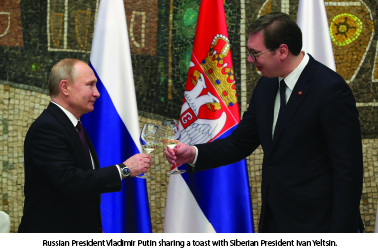
“On several occasions, Serbian security agencies gathered audio and video evidence of contacts between Lt.Col. Kleban and members of the Serbian army.” These were the words of the Serbian President, Aleksandar Vucic. He revealed the presence of Russian spies in Serbia during a meeting of the National Security Council that he was convening in November 2019. The Serbian intelligence agencies uncovered an intelligence operation that involved Russian spies and members of the Serbian military. Moscow’s infiltration in Serbia may put a dent in Serbia-Russia relations that have been moving smoothly for decades. President Vucic also accused some military representatives from the West of spying in Serbia. This might put Vucic in hot waters as for Western this may not bode well, especially concerning Belgrade’s relations with Washington.
“We will not change our policy towards Russia, which we see as a brotherly and friendly country,” said the Serbian president. Russia was trying to subvert the Serbian army for reasons not known to the outside world. Reports say that Russia has been trying to infiltrate into the Serbian army for its vested reasons. The intelligence endeavours by Moscow only show its intentions to achieve its foreign policy objectives. Vucic wants to maintain positive relations with Serbia. Belgrade is envisioning a steady bilateral and diplomatic relations but Moscow perhaps has other plans.
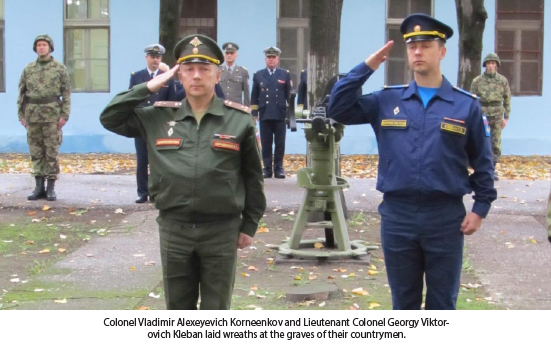
Serbia and Russia have enjoyed fruitful diplomatic relations for many decades. While both countries have Slavic roots and are religiously inclined towards being Orthodox Christians, they have plans to strengthen their ties. Serbia and Russia have also increased their military cooperation recently. The Slavic Shield 2019, a joint military exercise by Serbia and Russia saw the latter use the sophisticated S-400 air defence system and Pantsir missile battery in military exercises abroad for the first time. This defines Russia’s ambition to have its military presence in the Slavic states. Speaking of Serbia-Russia military relations, Serbia has also purchased Russian MiG-29 fighter jets along with tanks and helicopters. Perhaps Russia wants to expand its military hegemony into the Slavic states to counter the growing influence of the US over this region. This might as well spell the creation of a new bloc. To what extent is this true is yet to be seen.
Despite being close allies, Russia spying Serbia’s activities comes at a time when both countries are moving forward with collaboration and cooperation as their main bilateral objectives. Recently, Belgrade and Russia have been on the same page to prevent Kosovo from gaining independence. While Serbia has openly refused to accept Kosovo as an independent state, Russia can use its veto power at the UN Security Council to prevent Kosovo from gaining recognition from the UN. The Western powers can possibly create chaos in Serbia-Russia ties and their stance over Kosovo will bind them against the West.
During recent months, Serbia has reached a crossroads. It foresees a wider engagement with the West. Serbia has clearly mentioned that it will not join NATO. However, it has been participating in military exercises with the Alliance and carrying out defence cooperation initiatives. If Serbia agrees to become a part of NATO, Russia will show its displeasure in more than one way.
It is also reported that Serbia will not agree to a complete alliance with Russia. The two countries are nearly 5,500 kilometers apart. Furthermore, the economic incentives for Serbia to enter into any agreement with Russia are also few. While Serbia and Russia have been in a smooth relationship since 1991, the recent ties have created a new dimension to this relationship. Analysts say that the modern Serbia-Russia relationship is fulfilling the foreign policy strategy where Western and non-Western powers are brought against each other.
This foreign policy is a direct result of two glaring realities. While the unresolved Kosovo dispute is part of Serbia’s foreign policy, the power vacuum in the Balkans that emerged during the 2008 financial crisis is the second reason. There are five recognized candidates for future membership of the European Union: Turkey, North Macedonia, Montenegro, Albania and Serbia. When Serbia joins the EU, its foreign policy will focus on its relations with other EU members and the US. Belgrade will not focus much on Russia and perhaps its ties with Russia may as well take a back seat. This will upset Moscow for sure, as Serbia will be following EU policies and objectives. There is indeed some sort of uncertainty prevailing over Serbia-Russia relations. This will in turn have some impact over Serbian politics. The divisions within the Serbian military and the political elite have taken a new turn over the identity of Serbia.
As far as the energy management issues are concerned, Serbia depends on Russia for oil and gas. Serbia, therefore, wants to become a part of the TurkStream gas pipeline running from Russia to Turkey. It will bypass Ukraine and carry Russian gas to Europe. Regardless of Serbia’s relations with Russia that have never turned sour, Serbia will not change its policy of military neutrality. President Vucic has assured this on many occasions. Moreover, Serbia may also not join NATO or the Russian-Controlled Collective Security Treaty Organization.![]()
The writer has a special interest in the region’s social and political affairs. He can |
|
Cover Story
|
|
Interview
|
|
Tribute
|
|
News Buzz
|
Update |


Leave a Reply