



BYD to assemble electric vehicles
in Pakistan by mid-2026
 Chinese automaker BYD has announced it will assemble electric and plug-in hybrid vehicles in Pakistan by July or August 2026, in an indication of how Chinese investment under CPEC 2.0 is moving beyond traditional infrastructure into advanced manufacturing.
The Pakistan plant addresses rising demand from emerging markets and allows the company to take advantage of incentives offered by the government.
The plant has been under construction since April near Karachi in a partnership between BYD and Mega Motor Company, a subsidiary of Hub Power, Danish Khaliq, vice president of sales and strategy at BYD Pakistan, told Reuters.
It would initially have the capacity to produce 25,000 units a year on a double shift, he said. He did not elaborate on when the plant would achieve full capacity or say when mass production would begin there.
The plant will start by assembling imported parts, with some local production of non-electric components, Khaliq said, adding it would initially produce vehicles for the domestic market, with potential to export to right-hand drive countries in the region depending on freight costs and business economics.
“We do not foresee excess capacity in our system as demand in Pakistan will catch up,” he said.
BYD started delivering imported EVs in Pakistan in March. Khaliq did not give an exact sales number but said the sales of a few hundred cars had exceeded internal targets by 30 per cent.
Sindh approves 500 electric buses for public transport
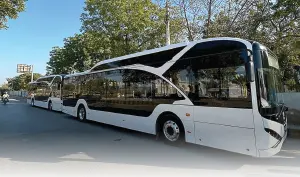 The government of Sindh has approved the purchase of 500 electric buses under a public-private partnership initiative aimed at improving transport facilities across the province. The move marks a significant step in green public transport, with routes set to expand across Karachi and other major cities, making Sindh a pioneer in electric mobility within Pakistan.
Nepal tops South Asia in global press freedom index
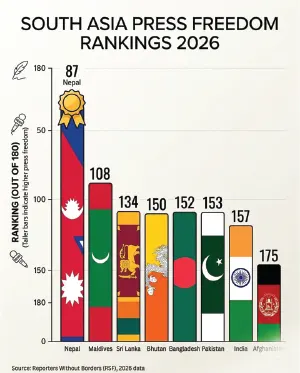 Nepal has been ranked 87th out of 180 countries in the World Press Freedom Index 2026, the highest in South Asia, with India, Pakistan, Bangladesh, Bhutan and Sri Lanka trailing far behind. However, the ranking has been accompanied by a cautionary note, as the Freedom Forum recorded 97 press freedom incidents between May 2025 and April 2026, up sharply from 68 the previous year, with 145 journalists affected
Pakistan issues first-ever Panda Bond, raises $250 million
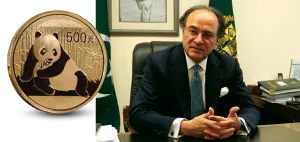 Pakistan has made history by successfully issuing its inaugural Panda Bond in China’s onshore capital market, raising RMB 1.75 billion — equivalent to approximately US$250 million — through a three-year fixed-rate instrument, marking Pakistan’s first-ever RMB-denominated sovereign bond issuance. The landmark issuance attracted overwhelming investor demand of over RMB 8.8 billion, resulting in a more than five-times oversubscription — signalling strong investor confidence in Pakistan’s ongoing economic recovery. Finance Minister Muhammad Aurangzeb described the move as a “transformational step,” noting it opens a new chapter in Pakistan-China economic cooperation by giving Pakistan access to the world’s second-largest capital market for the first time.
Modi embarks on a five-nation European tour
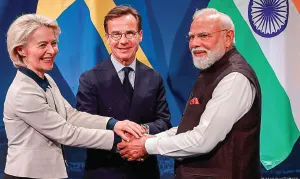 Indian Prime Minister Narendra Modi visited the Netherlands, Sweden, and Norway in May as part of a five nation European tour aimed at deepening trade, defence, and technology partnerships. At the third India-Nordic Summit in Oslo, both sides agreed to strengthen ties in green technology, renewable energy, blue economy, defence, space, and the Arctic. During the Norway leg of the trip, PM Modi received the Grand Cross of the Royal Norwegian Order, Norway’s highest civilian honour, the 32nd global award conferred upon him so far. Running from May 15 to May 20, the visit heavily focused on strengthening strategic partnerships across trade, green energy, semiconductors, and AI. The broader diplomatic push, which included engagements in the UAE, the Netherlands, Sweden, Norway and Italy, also saw interactions with CEOs and senior executives from over 50 multinational companies spanning semiconductors, infrastructure, logistics, technology and manufacturing.
Sri Lanka’s economy to recover 2018 output levels in 2026
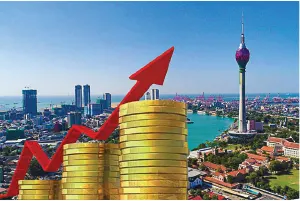 Sri Lanka’s economy is expected to regain its 2018 level of real output in 2026, driven by stronger-than-expected growth in tourism and remittances. The World Bank has upgraded its growth forecast for Sri Lanka as the country emerges from its worst economic crisis, with improving current account and fiscal balances pointing to a more stable macroeconomic footing in the months ahead.
Independent press being stifled in Pakistan: Hameed Haroon
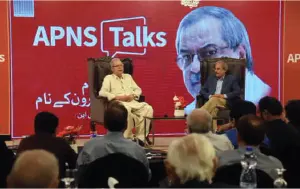 The governments in Pakistan have long adopted an “anti-media attitude”, which has put pressure on the free press and hindered the growth of independent journalism in the country. Even during periods of martial law, such as that of Pervez Musharraf, there were certain restraints and action against journalists and media houses was not always taken lightly. At present times, however, it’s “the law of the jungle” where those in power act without hesitation.
These views were expressed by former president of the All Pakistan Newspapers Society (APNS) and DawnMedia CEO Hameed Haroon during a programme titled ‘APNS Talks’ organised by the Society at a local hotel in Karachi.
At the outset, APNS President Senator Sarmad Ali said the session aimed to highlight the challenges and pressures faced by Pakistan’s media industry, as well as the rapid changes taking place within it. He added that the event also focused on Haroon’s life, achievements and his struggle for press freedom in the country.
Moderating the session, journalist Mazhar Abbas started by asking Mr Haroon to explain how Dawn, described as the “dream of Jinnah and Liaquat Ali Khan”, was being crippled through “conspiracies” and advertisement bans for pursuing independent journalism.
Haroon said the press in Pakistan had largely been “tamed” and those who tried to maintain an independent voice and professional standards were often targeted and weakened.
He added that this was also the case with Dawn. “It is surviving on a shoestring,” he said and shared that there are advertisement bans not only from the government, but private advertisements are also being blocked through pressure.
He was of the view that media houses had been targeted and attacked many times in the past, but the government’s “anti-media attitude” had now reached new limits.
“It’s the law of the jungle now,” he said and added that apart from the media, the judiciary was also under attack, given how judges’ transfers have been done.
In response to a question about the future of the free press, Haroon said the prospects appeared weak under the current circumstances. However, he expressed hope that media organisations could improve their position by working together and ensuring job security and dignity for journalists.
“Unless you learn to provide permanent jobs to journalists, you cannot run a newspaper,” he said.
Oil block auctions resume in Pakistan after 20-year gap
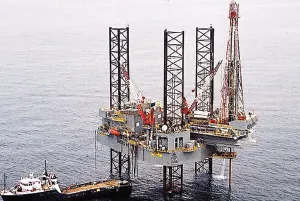 Twenty-three blocks were awarded after a 20-year gap, attracting $82 million in initial investment in the Indus and Makran basins, signalling renewed confidence in Pakistan’s upstream oil and gas sector. The development is expected to reduce dependence on imported fuel at a time when the Iran war has put fresh pressure on the country’s energy import bill.
Bangladesh seeks China’s support for Teesta River restoration
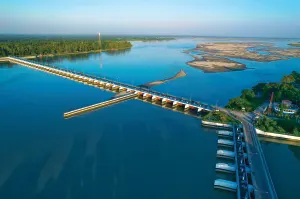 Bangladesh has formally sought China’s assistance in the long-running Teesta River restoration project, with the issue placed on the agenda during bilateral diplomatic engagements in early May. The move comes as Dhaka seeks to bolster relations with Beijing while navigating a post-election political landscape and diversifying its foreign policy away from over-reliance on any single partner.
Citizens Speak for a Livable Karachi
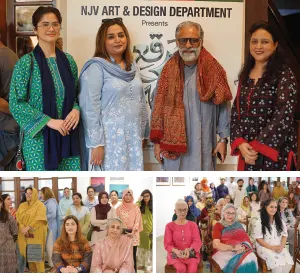 The Karachi Citizens Forum (KCF) held a press conference at the Karachi Press Club, bringing together residents, lawyers, urban planners, journalists, and civil society representatives to voice serious concerns over the unchecked commercialisation of residential neighbourhoods across the city.
Speakers warned that new laws permitting large-scale commercial conversion are being introduced without the prerequisite infrastructure, environmental safeguards, or public consultation required to support such activity. Karachi already ranks 170th out of 173 cities on the 2025 EIU Global Livability Index. Its sewerage, drainage, and road networks are operating beyond capacity, green spaces are critically deficient, and zoning regulations are routinely violated with impunity.
Citizens stressed that commercialisation is not opposed in principle — but that it must be lawful, planned, and accompanied by corresponding infrastructure upgrades. Women, children, the elderly, and the disabled stand to bear the greatest burden of unplanned development.
KCF is demanding transparent master planning, meaningful public consultation, Environmental Impact Assessments, and full disclosure of the reasoning behind recent commercialisation-related judicial and policy decisions.
The Forum has called on all Karachiites to raise their voices and stand united in protecting the city from environmental decline and institutional neglect
China’s IBI to establish Digital Economy Headquarters in Pakistan
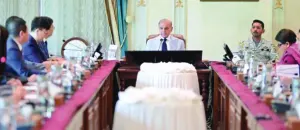 Pakistan officially launched the IBI Pakistan Digital Economy Headquarters at a ceremony held in Islamabad under the framework of the China-Pakistan Economic Corridor (CPEC), aimed at promoting trade facilitation, supply chain digitisation, and empowerment of small and medium enterprises (SMEs). The launch ceremony was chaired by Pakistan’s Deputy Prime Minister and Foreign Minister Ishaq Dar, while the Chinese side was represented by Qian Xiaojun and Pakistan’s Ambassador to China Khalil Hashmi.
Officials said nearly 30 per cent of the $10 billion worth of MoUs signed during recent Pakistan-China engagements had already materialised into finalised projects. Prime Minister Shehbaz Sharif is also scheduled to visit China later this month, where a major B2B business forum will be held to further strengthen bilateral commercial and digital cooperation.
Leave a Reply