
Digital Development
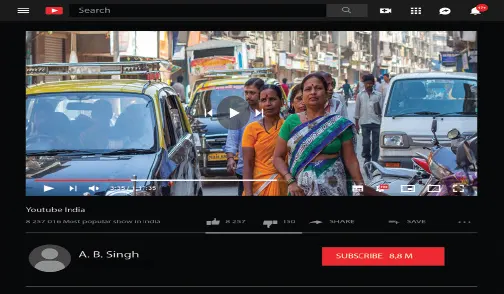
YouTube India
YouTube, the world’s largest free online video-sharing platform owned by Google, sits at the intersection of India’s economic aspirations

In little over a decade, YouTube has grown from a casual entertainment platform into one of the most influential digital forces in the world, in general and in India in particular. What once served as a space for music videos and comedy clips has evolved into a powerful engine of learning, livelihood, and cultural expression.
Today, YouTube sits at the intersection of India’s economic aspirations, its hunger for knowledge, and its complex, multilingual identity. As India navigates its next phase of digital growth, YouTube is playing a central role in shaping how people learn, work, create, and connect.
One of the platform’s most significant contributions has been in education. India’s education system has long struggled with issues of access, scale, and quality, particularly outside major urban centers. YouTube has helped bridge many of these gaps by offering free, easily accessible learning resources to anyone with a smartphone and an internet connection. From exam preparation and science lessons to spoken English and financial literacy, educational content on YouTube has reached millions of learners who might otherwise have been left behind.
What makes this shift especially impactful is language. Indian educators and creators are teaching in Hindi, Urdu, Tamil, Telugu, Bengali, Marathi, and dozens of other regional languages. For many students, learning in their mother tongue makes complex subjects less intimidating and far more relatable. YouTube has effectively become an informal, parallel education system- one that complements schools and colleges while also serving those who never had access to formal education in the first place.
Beyond academics, YouTube has emerged as a major platform for skill development. As India’s economy evolves and traditional job pathways become less secure, the demand for practical, job-ready skills has grown sharply. YouTube responds to this demand with remarkable speed. Tutorials on graphic design, video editing, coding, tailoring, carpentry, mobile repair, cooking, and digital marketing are widely available, often created by self-taught professionals who understand local realities.
For many users, especially young people and women, YouTube offers a way to learn without leaving home or investing large sums of money. These skills frequently translate into freelance work, small businesses, or side incomes, making the platform a quiet but powerful supporter of India’s informal and gig economies.
At the same time, YouTube has enabled the rise of a new class of Indian entrepreneurs: content creators. Content creation in India is no longer a niche hobby but a legitimate career path. Successful YouTubers run small companies of their own, employing writers, editors, designers, and managers. Revenue flows through multiple streams, including advertising, brand collaborations, memberships, merchandise, live events, and online courses.
What is particularly striking is how decentralized this creator economy has become. You no longer need to live in Mumbai or Delhi to build an audience. Creators from small towns and rural areas are documenting their lives, sharing expertise, and creating loyal followings. Farmers, home cooks, mechanics, teachers, and comedians are finding audiences that value authenticity over polish. In this ecosystem, relatability often matters more than perfection.
YouTube has become a two-way cultural bridge, allowing India not only to consume global content but also to export its own perspectives, creativity, and talent
Culturally, YouTube reflects India’s diversity more accurately than any traditional media platform ever has. Regional music, folk art, local storytelling, and hyperlocal humor thrive alongside mainstream entertainment. Languages and dialects that rarely find space on national television attract millions of viewers online. This visibility helps preserve cultural traditions while also allowing them to evolve for younger audiences.
At the same time, Indian creators are reaching global audiences. Tech reviewers influence buyers worldwide, beauty creators set trends beyond national borders, and vloggers connect the Indian diaspora to life back home. YouTube has become a two-way cultural bridge, allowing India not only to consume global content but also to export its own perspectives, creativity, and talent.
This shift has inevitably disrupted traditional media. Television, once the dominant force in Indian households, now competes with YouTube for attention, especially among younger viewers. News debates, interviews, film promotions, and even religious programming increasingly find their primary audience online. Many television personalities and media houses have launched their own YouTube channels, recognizing that digital platforms offer immediacy, interactivity, and measurable engagement that broadcast media struggles to match.
Advertising patterns have followed this change. Brands are investing heavily in YouTube campaigns, drawn by the platform’s ability to target specific audiences and measure impact. Influencer marketing, product explainers, and long-form brand storytelling have become common, benefiting both large corporations and small businesses.
For Indian entrepreneurs and startups, YouTube serves as both a marketing tool and a storytelling platform. Founders use video to explain their vision, demonstrate products, and build trust with customers. Small and medium businesses, in particular, benefit from the platform’s relatively low cost and wide reach, allowing them to compete in markets that were once dominated by larger players.
As India continues its rapid digital transformation- supported by affordable data, widespread smartphone adoption, and a young population- YouTube’s influence is only set to grow. The platform is shaping how Indians learn new skills, consume information, express identity, and imagine success.
At the same time, challenges remain. Issues around misinformation, content moderation, creator burnout, and income sustainability cannot be ignored. Yet, even with these concerns, YouTube’s broader impact on Indian society is undeniable.
By lowering barriers to entry, amplifying diverse voices, and turning access into opportunity, YouTube has embedded itself deeply into India’s digital future. It is not merely reflecting change; it is actively driving it. In doing so, the platform is helping millions of Indians participate in the country’s growth story- one video at a time.
Based in Karachi, the writer is a Social Development and Policy graduate from Habib University, Karachi. He can be reached at bilalmustikhan@yahoo.com


Leave a Reply