



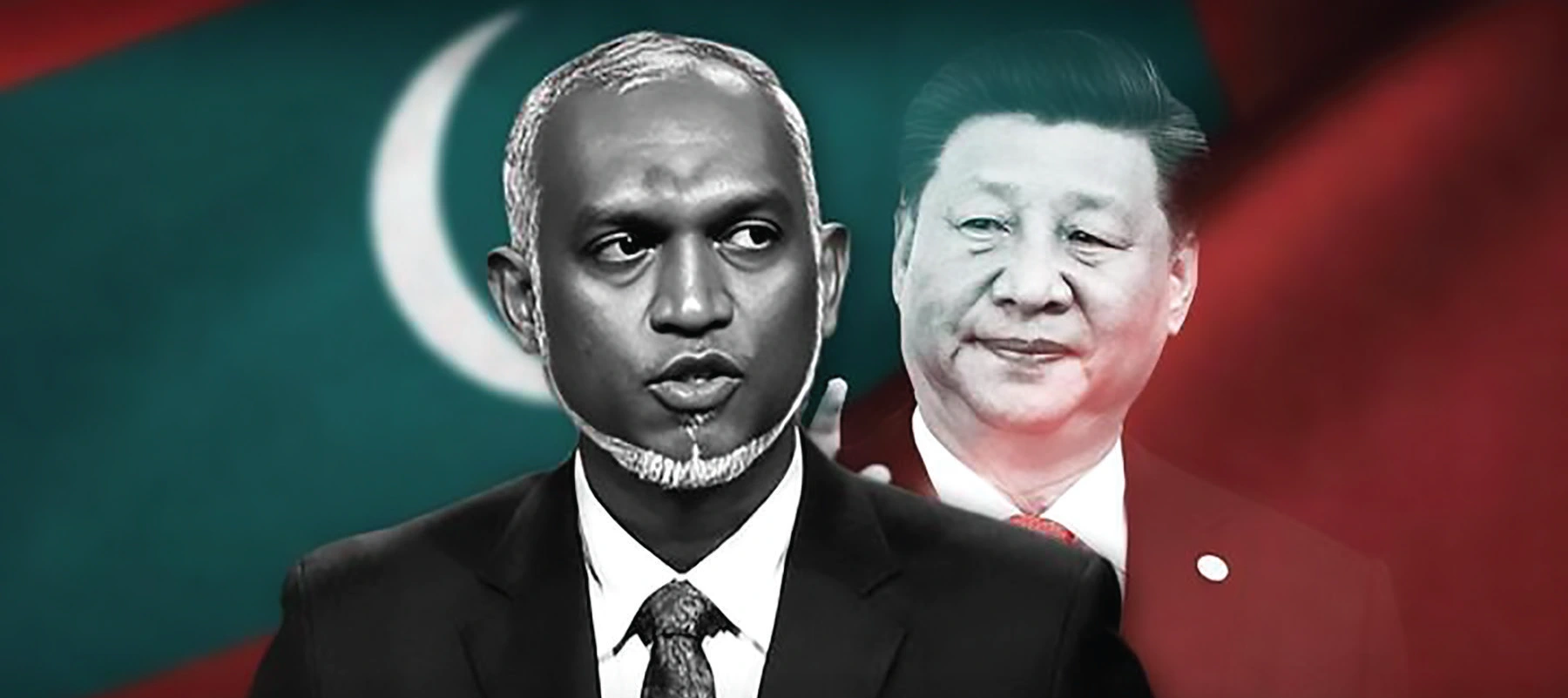
Mohamed Muizzu’s recent victory in the Maldives’ presidential election has sparked concerns in New Delhi, signaling potential changes in the dynamics of India-Maldives relations. Muizzu, backed by an “India Out” campaign, has expressed his intent to reduce India’s military presence in the strategically located island state, challenging Delhi’s historical role as a key player in the region.
The Maldives, strategically positioned near India’s southwest coast, plays a crucial role in maritime traffic surveillance in the Indian Ocean. Muizzu’s pledge to reduce India’s military footprint raises questions about regional security dynamics and the implications for strategic partnerships. Decades of economic, trade, and defense alliances have historically bound India and the Maldives. The relationship, forged in the face of geopolitical challenges, faces a litmus test as Muizzu’s victory signals a potential shift in the traditional alignment.
The “India Out” campaign, spearheaded by Muizzu’s People’s National Congress and the Progressive Party of Maldives, has tapped into anti-India sentiments. Social media, marked by the #IndiaOut hashtag, showcases a complex interplay of genuine public sentiment and potential political manipulation.
Under former President Abdulla Yameen, the Maldives embraced China’s Belt and Road Initiative, leading to significant infrastructure projects funded by Beijing. Muizzu’s victory raises questions about a potential pivot toward China and how it might impact the strategic balance in the region.
India, a historical ally of the Maldives, faces a strategic dilemma as Muizzu’s administration signals a reevaluation of ties. The anti-India rhetoric and potential alignment with China challenge New Delhi’s regional influence and security interests. Muizzu’s presidency could trigger geopolitical shifts in the Indian Ocean region. The delicate balance of power among regional players may undergo transformations, impacting trade routes, security agreements, and economic collaborations.
The “India Out” stance underscores a need for adept diplomacy to address concerns and foster collaboration. Both India and the Maldives must navigate diplomatic challenges to ensure a constructive relationship and explore common ground for mutual benefit.
The prevalence of anti-India sentiment, especially among the youth, as showcased on social media, raises questions about the authenticity of public opinion versus potential political motivations. Understanding the nuances of public sentiment will be crucial in shaping future policies.
Muizzu’s victory challenges the Maldives’ commitment to the US’ Indo-Pacific strategy, potentially impacting regional stability. The evolving dynamics may necessitate a reassessment of alliances and partnerships in the broader Indo-Pacific context.
The international community, with a vested interest in the stability of the Indian Ocean region, closely watches the evolving situation. Reactions from global powers, particularly the United States and China, will play a pivotal role in shaping the trajectory of India-Maldives relations.
The future remains uncertain as India and the Maldives grapple with the ramifications of Muizzu’s victory. Balancing national sovereignty, diplomatic ties, and economic interests will be crucial for both nations in navigating this transition period, with far-reaching consequences for the broader geopolitical landscape.
The unfolding scenario prompts reflections on the historical ties between India and the Maldives, dating back to 1988, when India played a pivotal role in assisting the Maldives during a coup attempt. Over the years, the two nations have built close-knit people-to-people connections, economic partnerships, and collaborative defense efforts.
However, anti-Indian sentiments began to surface around the turn of the century, with accusations of corruption related to an Indian construction company winning a substantial contract. Former President Abdulla Yameen, during his tenure from 2013 to 2018, fueled these sentiments, culminating in the “India Out” campaign that gained traction in the recent election.


Salis Malik is a freelance journalist and columnist based in Islamabad. He can be reached on Facebook @salismalik7777
Leave a Reply