



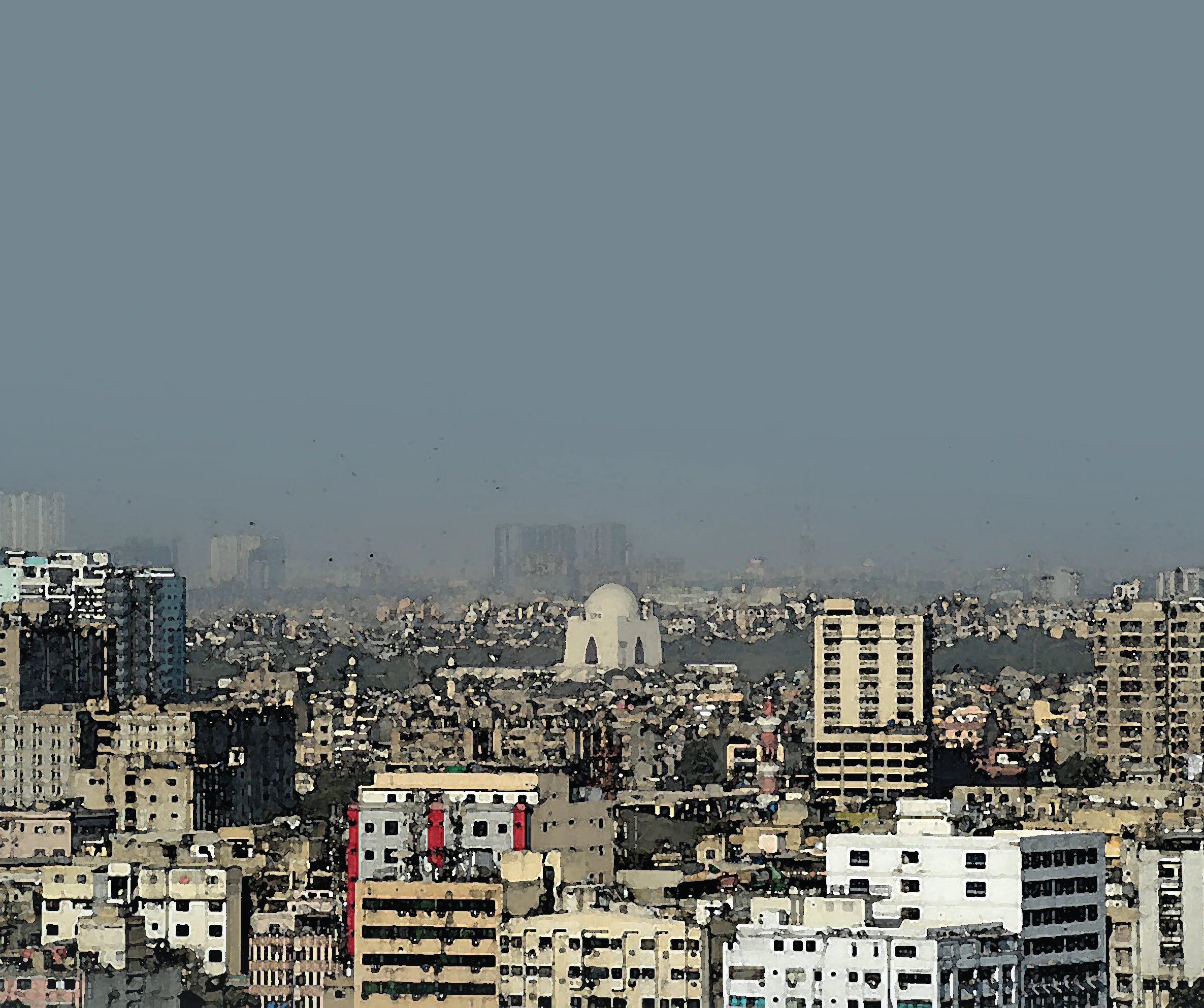
My association with Karachi started in 1959 when I first arrived here from Lahore, and I fell in love with the city because of its mild climate and friendly, all-embracing atmosphere. While I spent more than two decades living abroad, my heart and mind remained glued to Pakistan, which I kept visiting periodically. Very early during my stay abroad, I learned that even though Western countries offered excellent facilities and living conditions, because of our customs and traditions, our post-retirement age spent there could be very miserable, and my association with some long-term Pakistani residents there only confirmed it.
Therefore, in January 1989, I returned to Pakistan permanently and have been here ever since. And that means my association with Karachi lasts 65 years, which enables me to talk about Karachi based on personal experience and first-hand knowledge.
Unfortunately, while all round decay has been familiar to the whole country, Karachi has been doubly hit because of the rural/urban divide in Sindh, where the interior Sindh-based Pakistan People’s Party (PPP) rules the whole province, facilitated by the massive under-count of Karachi’s mixed population, where Urdu-speaking people - mohajirs for short - still form the largest single group.
The Peoples Party’s government in Sindh - with scant interest in Karachi and the people of Karachi - except for what it can pinch out of the city’s resources - has brought the city to a stage where you name any problem like absence of empowered local government, inflation, water, gas scarcity and electricity load-shedding, public transport, irregular traffic, broken roads, unsanitary conditions, education and health facilities, etc., and you will find it here, including population explosion which exacerbates every problem.
I remember, designated as the capital of Pakistan by Quaid-e-Azam, Karachi used to be in fair shape in the fifties, progressing at a fast pace, and was a pleasure to live in. Despite the resource deficit, it was pretty well-managed and had coped adequately with migrants from India as well as economic migrants from the rest of the country.
However, things started worsening after the military takeover by Ayub Khan, who deprived Karachi of its capital status. And while Quaid-e-Azam’s government had managed to operate efficiently from a barrack-style secretariat, Ayub Khan would have nothing less than an architect-designed capital, a building on which he squandered many scarce resources that could have been spent more productively.
Also, with his son, Ayub Khan punished the people of Karachi for supporting Mohtarma Fatima Jinnah, who stood as a presidential candidate against him. And apart from discrimination against Urdu-speaking people - mohajirs for short - on a government level, various alliances comprising people of other ethnicities were formed against mohajirs. Also, Ayub Khan started military takeovers, which, apart from Pakistan’s breakup, resulted in more military takeovers and prevented democracy from firming up in Pakistan. The anti-mohajir trend continued in Karachi even after Ayub Khan’s rule ended. Finally, mohajirs had to form the All Pakistan Mohajir Students Organisation (AMPSO) in 1976, followed by Mohajir Qaumi Movement (MQM) in 1984 to defend themselves against the combined onslaught. The fact that the APMSO and the MQM were formed nearly three decades after the creation of Pakistan clearly means that mohajirs were not really ethnic-minded but were forced to get organized for self-defence.
Unfortunately, under Altaf Hussain, MQM, which was formed basically to safeguard the interests of mohajirs, got intoxicated with its power and started mistreating others, and had to be cut to size.
After that, during Gen. During Musharraf’s tenure, with the local government’s power restored and resources made available, MQM’s mayor, Syed Mustafa Kamal, transformed Karachi into a beautiful and modern city. Jamaat-e-Islami’s mayor, Niamatullah Khan, had also substantially improved the city. However, the PPP’s downsizing and disempowerment of the local government have destroyed the city’s infrastructure.


The writer is a freelance contributor with interest in regional, South Asian and international affairs. He can be reached at hashmi_srh@hotmail.com
Leave a Reply