



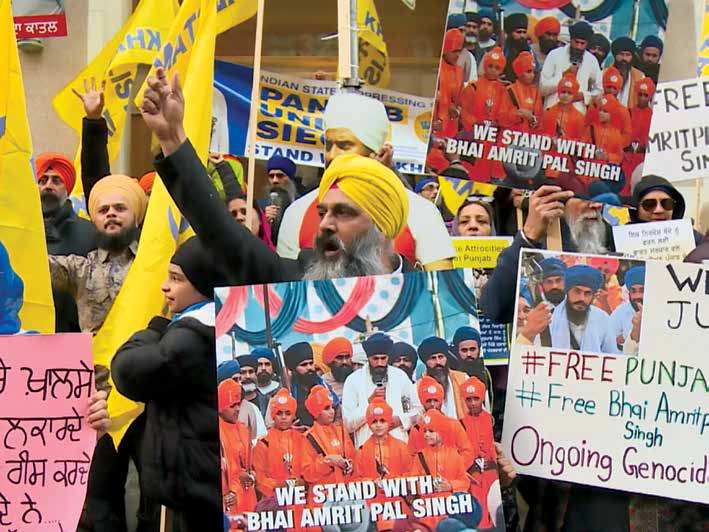
In the vast tapestry of India’s socio-political landscape, the Sikh community stands as a distinct thread with a history woven in rich traditions and complex grievances. Rooted in a struggle for identity and political autonomy, the call for Sikh self-determination has sparked tensions that reverberate not only within India but also globally.
The Sikh community’s grievances against India can be traced back to historical incidents that have fuelled a sense of alienation. One significant episode is Operation Blue Star in 1984, where the Indian government, under the then prime ministership of Indira Gandhi, ordered a military operation to flush out armed militants from the Golden Temple in Amritsar. The operation, however, resulted in a tragic loss of civilian lives and extensive damage to the holy Sikh shrine, leaving scars that still run deep.
Following the assassination of Indira Gandhi by her Sikh bodyguards in the aftermath of Operation Blue Star, anti-Sikh riots erupted in 1984, leading to widespread violence against the Sikh community. The failure of the government to prevent or adequately address these atrocities intensified feelings of persecution among Sikhs and laid the groundwork for a growing demand for political sovereignty.
The roots of the calls for Sikh self-determination lie in a desire to safeguard the distinct Sikh identity and ensure the protection of their religious institutions. The Anandpur Sahib Resolution, a political document put forth by the Akali Dal in 1973, outlined the demands for regional autonomy, economic rights, and protection of Sikh culture. While the resolution did not explicitly call for secession, it laid the groundwork for a vision of self-governance within the framework of the Indian constitution.
Despite the historical context, the current Indian government, led by Prime Minister Narendra Modi, perceives calls for Sikh self-determination as a direct challenge to the unity and integrity of the nation. The fear of territorial disintegration and the potential precedence it might set for other ethno-religious groups within India fuels the government’s resistance to such demands.
Modi’s government, ever wary of internal dissent, views any hint of separatism as a threat to its authoritative grip on power. The global diaspora of Sikhs, particularly in influential countries like the U.S. and Canada, amplifies the reach and impact of their calls for political sovereignty. For Modi’s administration, these international voices raise concerns about tarnishing India’s image on the global stage and potentially straining diplomatic relations. As the Sikh diaspora becomes increasingly vocal on the global stage, the Modi government perceives calls for political autonomy as a direct challenge to national unity. The fear of territorial disintegration and the potential influence of these voices on India’s international image fuel the government’s defensive stance against Sikh self-determination. The case of the alleged plot on U.S. soil highlights the lengths to which the Indian government may go to suppress dissent, even risking strained relations with powerful nations like the U.S. and Canada.
In the wake of recent revelations by the U.S. Department of Justice exposing an alleged plot to assassinate a Sikh activist on American soil and Canadian Prime Minister Justin Trudeau’s accusations against the Government of India in the murder of Sikh Canadian leader Hardeep Singh Nijjar, the international spotlight intensifies on the complex web of tensions between the Sikh community and the Indian government.
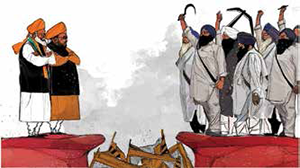 While media coverage has predominantly cantered on India’s perceived descent into authoritarianism and the alleged state-sponsored persecution of minorities under Prime Minister Narendra Modi, there remains a crucial omission in the discourse — an examination of the underlying context shaping these conflicts. The complexity of the issue is further compounded by the geopolitics at play. India, as a rising economic and strategic power, seeks to maintain strong ties with major global players. Any indication of internal strife or perceived suppression of minority rights could undermine India’s standing on the international stage. Consequently, the Modi government adopts a defensive stance against calls for Sikh self-determination, fearing the potential fallout in its relationships with influential nations.


Salis Malik is a freelance journalist and columnist based in Islamabad. He can be reached on Facebook @salismalik7777
Leave a Reply