



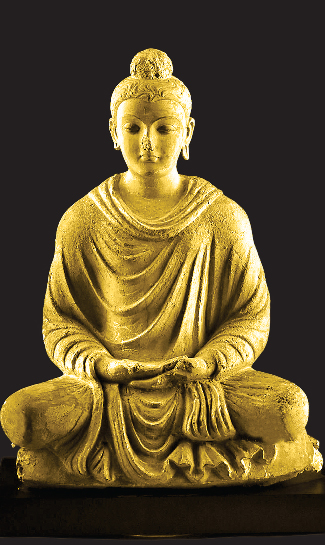
 Pakistan is endowed with a large number of ancient sites and historic structures. Indeed, these historic assets are the country’s link with the past.
In an age when globalization is all-pervasive, it is Pakistan’s ancient linkage that provides a distinct identity. It seems to be a well-kept secret from the outside world that Pakistan is a treasure house of ancient heritage spanning over scores of centuries.
Pakistan is home to Mehrgarh, Mohenjo Daro and Harappa. It is the land of the spectacular Gandhara civilization. As the seat of Buddhism, it has the devotional carvings of the Hindu Shahi temples of the Salt Range and Tharparkar, the stately funerary clusters of Makli, Multan and Uch Sharif and a fusion of local trabeated and imported arcuate, representing successive Sultanate dynasties. The chahar-baghs are heart-expanding. And then, there are jewels like edifices of the greatest kingdom of the world, established by the young ruler of Farghana. The Sikhs have emulated the Great Moghuls and the shared legacy of eclectic architecture with its European overtones, is a bouquet of the British who colonized this land.
It is not only the ancient sites and historic monuments but equally the historical urban cores, stretching from the peaks of the Khyber in the farthest north to the southern-most edge of the mighty Indus River, Peshawar, Multan, Thatta and Karachi, and scores of other living cities with their historic environments. They are all valuable in the search for and understanding of the cultural diversity of this land. Buddhism took roots some 2300 ago under the Mauryan king Ashoka in areas today forming Pakistan. It has a long history over time, being part of areas within Bactria, the Indo-Greek Kingdom, the Kushan Empire, ancient India with the Maurya Empire of Ashoka, the Pala Empire, the Punjab region, and Indus River Valley areas.
Talking about Buddhist heritage alone, there are hundreds of sites scattered all over Pakistan. Among them are the Dharmarajika Stupa in Takht-i-Bahi in Khyber Pakhtunkhwa, the Votive Stupa, Shinggardar Stupa, the Amluk Dara Stupa situated in Taxila (previously known as Takshashila) and an iconic Buddha statue in Swat.
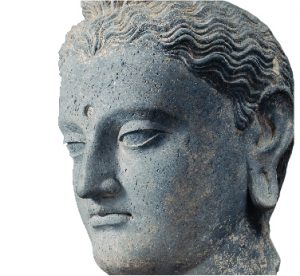 The city of Taxila, about 35 kilometers from Islamabad, with its riches of archeological sites, is generally regarded as the first stop by foreign tourists, particularly Buddhists. Most of the Buddhist archeological sites in Taxila were built between 600 BC and 500 AD and are located around the Taxila Museum. For over a thousand years during the heyday of the Gandhara civilization, Taxila remained a centre for promoting sculpture, architecture and education in Buddhism. Over 50 sites of archeological importance are scattered within a radius of 30 kilometers around Taxila and all of them are based on the life of Lord Buddha.


The writer is a Lahore-based freelance journalist, columnist and retired Deputy Controller (News), Radio Pakistan, Islamabad, He can be reached at zahidriffat@gmail.com
Leave a Reply