



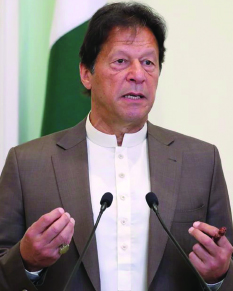
 Censure has its pitfalls. While constructive criticism provides an opportunity for improvement, a myopic, ill-conceived exercise in fault-finding often has the opposite effect. The controversy sparked by Prime Minister Imran Khan’s scathing dressing-down to officers in the Foreign Service revealed the dangerous consequences of providing manifestly ill-founded criticism.
During a virtual meeting in early May with Pakistani envoys, the premier castigated diplomatic missions for cold-shouldering the labour classes. Through his impassioned diatribe, the Prime Minister also censured top ambassadors for struggling to attract foreign investment for their country. To add insult to injury, Imran Khan compared their performance with that of Indian envoys who had been far more triumphant in drawing investment into their country.
At first glance, the premier’s remarks drew attention to the unprofessional practices that run rampant at diplomatic missions. If the litany of complaints by overseas Pakistanis was to serve as a gauge, Pakistan’s consular services are in desperate need of an overhaul. Imran’s claim that the indifference shown towards labour communities was the product of a colonial mindset was wildly anachronistic as the new breed of foreign service officers have never experienced colonial rule. Even so, any complaints about inefficiencies at diplomatic missions must be taken seriously.
The issue also had a deeper structural basis that could not be tackled with an admonition from the head of government. Imran Khan’s criticism was, therefore, little more than a knee-jerk reaction that failed to acknowledge the intricacies of the matter. If the Prime Minister had taken a broader view of the problem, the situation would not have spiralled out of control.
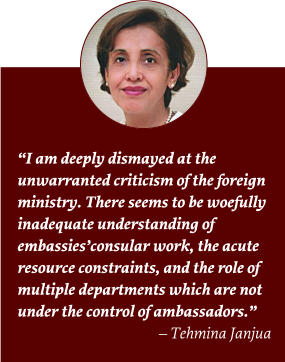
In the wake of Imran’s remarks, existing and retired officers of the Foreign Service voiced their reservations about his attempts to publicly ridicule an organization that had remained on its feet despite being mired in a deep structural malaise. Former foreign secretary Tehmina Janjua expressed her concerns over the premier’s “unwarranted criticism” that presented a myopic view of the nature of consular work and overlooked the resource constraints under which the Foreign Service operated. Salman Bashir, another ex-foreign secretary, perceived the PM’s statements as both demoralizing and somewhat ill-informed as they failed to recognize the internal processes through which usual consular services are provided to Pakistani communities.
Pro-government skeptics are advised against dismissing these reactions. The statements not only presented a trenchant critique of Imran’s blame game, but also demonstrated an awareness of the structural flaws within the Foreign Office. A vast majority of reactions from former officers remained cognizant of these challenges.
 A letter to the Prime Minister, which had been penned by Association of Former Ambassadors President Inamul Haque, offered an incisive account of the structural challenges that assail diplomatic missions. According to Haque, any attempt to criticize the Foreign Service without an impartial inquiry or a holistic understanding of its overall activities was unjustified.

The writer is a journalist and author. He analyses international issues and can be reached at tahakehar2@gmail.com
Leave a Reply