
Region
Protesting Anarchy
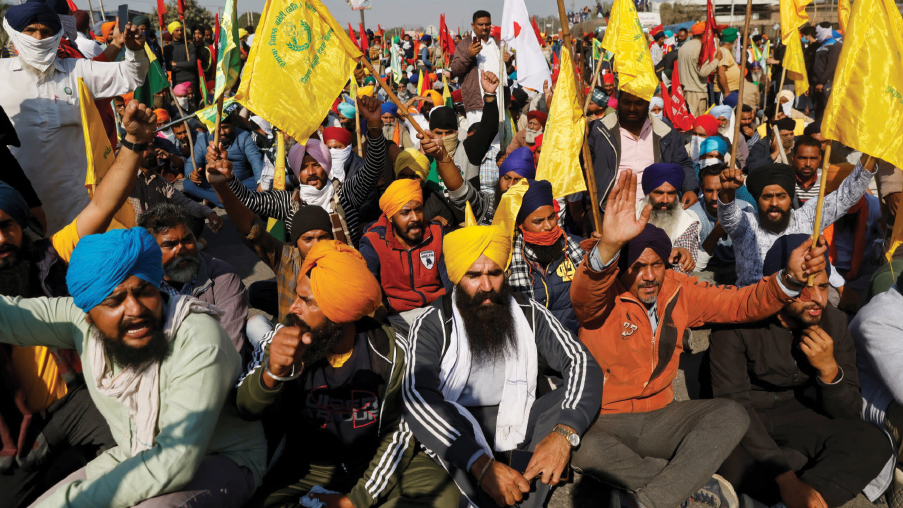
Indian farmers have been protesting since November 2020, seeking repeal of three new farm laws and demanding minimum support prices for their produce.

2020 highlighted the resilience of protests around the globe. Despite the greatest public health challenge in over a century, the viral threat, lockdowns, and the increasingly repressive environment, protests remained an integral part of the global political landscape. How would one feel telling one’s grandkids about the protests one has attended in life - and if those protests have brought significant change. It always feels good to be instrumental in bringing change in the best interests of the masses. Did you ever feel that your voice was unheard unless it becomes a voice of the masses to influence government policy? Have you ever witnessed a non-violent protest turn aggressively violent? Something similar is happening to the farmers’ protests in India. Before exploring mishandling of the issue and how it swelled, let us understand the concept of public protest.
Protest is an expression of complaint, condemnation or opposition towards any idea or action. Generally, protests are designed to express disagreement against a socio-political policy of a government. Even a statement by an individual can cause mass demonstrations or protestors may undertake direct action in an attempt to enact the desired changes themselves. Protests can occur in different forms such as a rally or demonstrations, marches, vigil, picket, civil disobedience, information distribution, symbolic displays, attacks, riots (mob violence) and vandalism, slowing down work activities, boycott, silent protests, press conferences, prayers, walks, lawsuits and online protests.
Most of the times, protests are of a short duration and, in some cases, they extend for a long time. In response, usually countries opt for protest policing by deploying armoured vehicles and use of force against protesters. In such responses by governments, protests may assume the form of open civil disobedience or adopt more sensitive forms of resistance against the restrictions. A protest itself may at times face a counter-protest. In such cases, counter-protesters display their support for the person, policy, or action of the government. Protesters and counter-protesters can sometimes violently clash.
In the last decade, some popular protests include the Arab Spring, Occupy Movement, Egyptian coup d’état, Black Lives Matter, Umbrella Movement in Hong Kong, Candlelight Struggle in South Korea, March for Our Life in the USA, Bolivian Protests, Belarusian Protests, USA Election Protests, Anti-Lockdown Protests during Covid19, Storming the Capitol in Washington D.C., Citizenship Amendment Bill (CAB) Protests in India, etc. The most recent protest in the South Asian region is happening in India against the agricultural policy of Modi’s government.
The Indian farmers’ protest is an ongoing protest against three acts of the Farm Bill which was passed by the parliament of India in September 2020. Several farmers’ outfits announced an intensified agitation against the Bill and called for a ‘Bharat Bandh’, demanding repealof the Farm Bill. Since the proposal of these laws, different protests have come underway in different states of India. These protests are the first large-scale farmer protests since Modi’s government came to power in 2014. The BJP reaction was devastating. For instance, on 26 November 2020, farmers from Haryana were stopped from entering Delhi by the Haryana police. At the border near Ambala, protesters were struck with water cannons and tear gas shells by the police; protestors threw stones and tossed police barricades into the river.
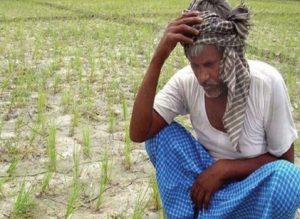
Media reported that trenches were dug by the police on certain routes into Delhi; the Haryana government dug the National Highway connecting Haryana and Delhi. Sand-filled trucks and bulldozers were also placed in the path of the march to Delhi. Such reaction explains the egocentric nature of the current Indian government. Farmers have been on the boil in India for some years now. More than half of the Indians work on farms, but farming accounts for barely a sixth of the country’s GDP. Declining productivity and lack of modernization have long hobbled progress. Plot sizes are shrinking, as are incomes from farming. Prices can be wildly erratic as middlemen form cartels and gobble up much of the profits.
The anger over injustice to farmers was brewing. Now it’s getting channelized through protests against the new Farm Bill. At the root of this anger is the Indian farmers’ deep distrust of market reforms. They fear losing their lands and income in the absence of the government’s control over pricing decisions and letting big business giants start deciding prices. They believe that open markets work in countries with less corruption and more regulation. Moreover, it appears that these laws are not supported by sufficient regulation and are not addressing all the concerns, thus producing uncertainty and confusion. What appears to be clear now is that Mr. Modi’s farm reforms were not thoroughly thought through.
In these times of the pandemic, farmers are being pushed without consulting the main stakeholders to go against India’s democratic appearance and federalist traditions. Further, associating a genuine farmers’ protest to amovement like ‘Khalistan’ represents the lop-sided mindset of the BJP. This is what they are also doing in Indian Occupied Kashmir, not realizing the core concern of the Kashmiris. They are ignoring the Kashmiri people’s demands by associating them with a foreign-funded campaign. It is time they thought more realistically.
The moral of the story is that Indian agriculture needs deeper structural reforms after consultations with stakeholders and political parties. At present, agricultural market reforms are perceived by farmers as totally political that would benefit Indian business tycoons. Mr. Modi does not seem to be bending from his stance. This will result in more vandalism, further aggravate the situation and lead to more social anarchy.![]()
The writer is a columnist and broadcast journalist. He teaches at UVAS Business School in Lahore and can be reached at mali.hamza@yahoo.com |
|
Cover Story
|
|
News Buzz
|
Leave a Reply Cancel reply |
Update |


Worth a read!!!!