



Pakistan has a coastline of over 1,000 km, with beautiful virgin beaches. Instead of pursuing a “kill and dump” policy by the Establishment if these beaches are developed, the country can fetch millions of dollars in eco-tourism. Sri Lanka has focused on education and solely depends on tourism. Pakistan can replicate the Sri Lankan experience by providing basic good education to the impoverished Baluch and Sindhi youth. Education liberates and is reciprocal. While the student learns from the teacher, the teacher learns from the student.
Bad policies, greed and adherence to unscientific policies have badly damaged the image of Pakistan that once attracted tourists from across the world, whether it was in the serene desert of Tharparkar adjoining the Great Indian Desert of Rajasthan, along the Sindh-Balochistan coastal belt or in Dadu and Badin districts.
People live in fear while an inept bureaucracy, in connivance with donor agencies, is minting money. These bureaucrats have accumulated large sums of money through kickbacks and have no affinity with nature and the local populace. Bureaucratic capital is playing a big role in Pakistan’s ailing economy. The youth is desperate to find a livelihood and, in desperation, often resorts to violence that is not only harmful for their health but also for the society. Massive corruption is nibbling the very social fabric of Pakistani society.
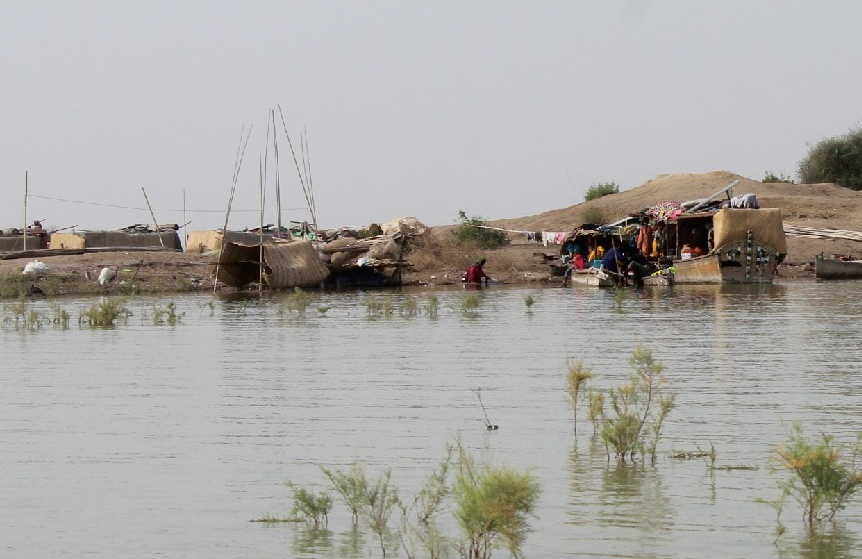
Take the example of Manchar Lake. Located 18 kilometers west of Sehwan in Sindh’s Dadu district, some 300 kilometers north of Karachi, Manchar is a vast natural depression surrounded by the Kirthar Range hills in the West, the Lakki hills in the East and a flood embankment in the Northeast. It is Pakistan’s biggest freshwater lake; some even say it is Asia’s biggest lake, though that is debatable. But today it would be more apt to describe Manchar as a grim cesspool of agricultural effluents, including pesticides.
 The remodeled drain -- now called the Right Bank Outfall Drain -- did not work and was redirected to Manchar. The authorities assumed that freshwater from the Indus and from the torrents that gush down the Kirthar hills during the rainy season -- the two sources of the lake -- would dilute the effluents. That was a big mistake.

The writer is a veteran journalist and can be reached at shahidhusain01 |
|
Cover Story
|
|
News Buzz
|
Leave a Reply |
Update |
Sindhi and Baloch youth should save this lake and ensure that the Federal Government funds and builds water treatment plants to clean the water that flows into the drain.
We have over 1,000-km long coastal belt with beautiful virgin beaches. We have also 7,000-year heritage in Mehergarh, Baluchistan. If we develop our beaches and preserve rich heritage and ensure good schooling to our desperate youth we can earn millions of dollars in eco-tourism.