



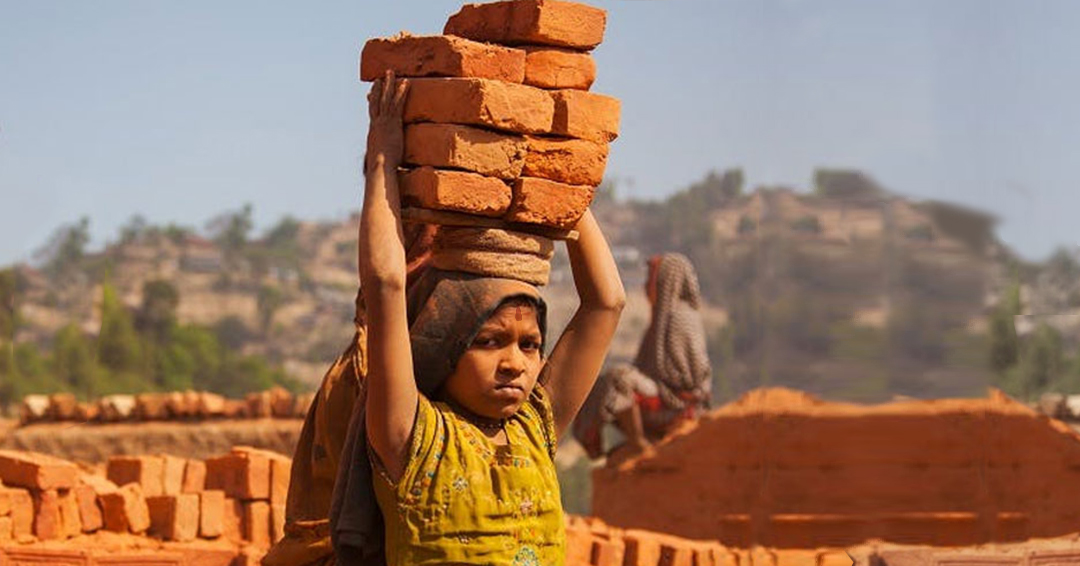
Balam Oad, a resident of Mirpur Khas city of the Sindh province, is one of the countless victims of an unequal society that has been around for thousands of years. A Hindu by faith, Oad belonged to a caste, which was recognised as the Schedule Caste by the government of Pakistan in 1956. Imposed due to coronavirus pandemic, a never-ending lockdown left him jobless for a while.
Since there was no happy ending to his perpetual suffering, Balam Oad, burdened with heavy loans with no source of income to feed his family, decided to hang himself to end his misery for eternity. As one would rightly expect, he finished his life in the middle of October, 2020, leaving many burning questions behind, coupled with an ever-existing suicidal legacy that truly defines the lives of the children of a lesser god.
The ubiquitous disparity of resources among the different segments of the population exposes the dark side of the so-called human development that is subjective, indeterminate and above all, conjectural. Going hand in hand with agricultural development, together with the ensuing progression of farming and cultivation practices, the human society also started going through compartmentalization and segregation based on social inequality and ethnic, tribal, sectarian or sectional disparities. It was not until humans learned the art of agriculture and abandoned nomadic life, no one was superior or inferior to others and thus all were considered as equal. When seen through the chronicles of history, the South Asia region appears to have had an extremely segregated ambience, ruled by the 'varna' or caste-based social order.
Having pushed down the caste ladder, the old-long miseries of the lowest communities of the prevailing hierarchical order always remain the same even today, making no difference to their inherited plight and their innate state of servitude. The low-caste groups were blatantly persecuted in ancient and medieval times and they are still exploited and victimized at the hands of the upper castes at every level; socially, economically and even sexually.
In his in-depth and thoroughly researched book “Bonded Labour: Tackling the System of Slavery in South Asia," Sidarth Kara, an academician and expert on issues related to human trafficking, slavery and forced labour, finds out some three hundred million scheduled caste people, living in the South Asian region alone. According to Kara, more than 80 per cent bonded labourers in the world are from South Asia, while 97 per cent of the world's bonded labourers belong to the lower castes and ethnic groups, who are severely impoverished and are highly exploited by the upper crust because of their so-called caste supremacy.
In Pakistan, a large number of the lower and scheduled-caste Hindus consist of Kohli, Maghwar, Bheel, Bagri, Balmiki and Oad castes, mostly residing in southern districts of Sind. They can be rightly referred to as the poorest of the poor, since over 80 per cent of scheduled caste members happen to be landless, while the rest of them are lucky enough to own a small piece of land, measuring from one and five hectares in size, and that too in non-irrigated desert areas.
Besides agriculture, livestock rearing is the generations-old occupation of most of the scheduled-caste Hindus, living in the Thar Desert and its surrounding districts. However, recurring droughts have made livestock more of a liability than an asset to them. To secure their livelihood, they have been left with no option, but to migrate to nearby irrigated areas, along with herds of cows and goats. In the given scenario, most of them resort to loans and take on a higher burden of debt just to make ends meet. Given their economic vulnerability, a decisive lot of the cash-strapped scheduled-caste Hindus find themselves unable to pay off the rising debt pile and thus are easily trapped in a notorious debt-bondage system.
A close scrutiny of the profiles of bonded labourers suggests that there is a congruent relationship between the bonded labour and the caste system. Released from different parts of Sindh, as per some surveys carried out by local NGOs, more than 90 per cent of bonded labourers comprise scheduled-caste Hindus. Thanks to the consistent efforts of the civil society, thousands of bonded labourers are freed every year on court orders and are discharged from all the obligations to render their bonded labour.
Most importantly, indebtedness is one of the main causes behind the recent surge of suicide incidents committed by the members of the scheduled caste. Like Balam Oad, many unfortunate, debt-ridden souls in southern Sindh opt for ending their lives as a last resort to evade onerous loan burden. Between 2014 to 2019, according to the Sind Police, as many as 1287 persons which included 681 Muslims and 606 Hindus, committed suicide across the province. In Hindus, the high number of suicide cases were mainly reported from scheduled-caste members, owing to caste-based discrimination, centuries-long marginalisation as well as a continued denial of human rights by the upper caste.
Suicide is an extreme response by a person who experiences discrimination, harassment and social exclusion. Thus, a large number of suicide cases emerging from scheduled-caste communities of Sind expose their vulnerability and social exclusion, an inherited scourge that must come to an end. If it doesn't, the likes of Balam Oad would keep succumbing to the same fate that is shamelessly foisted on marginalised communities by an unjust and unequal society. 

The writer is a free-lance contributor based in Islamabad. He can be reached at ahmedimtiaz2609 |
|
Cover Story
|
|
News Buzz
|
Update |
Leave a Reply