

Region
Price Spiral
Impact of Covid-19 and a poor-performing economy combined to create food and utility
price inflation in Pakistan. There is some hope for recovery in the coming years.

Saleema, 55, a housemaid in a middle-class family, requested for increase in her salary claiming that both her sons-in-law had lost their jobs at their respective companies and she had to support them. Mrs. Maira, however, was in a fix. She was often helping her maid with monetary support even in these bleak times, in addition to her regular salary; but it was also true that her husband faced huge losses in his business and her son’s salary was drastically cut; his career in the organization also hanged in the balance.
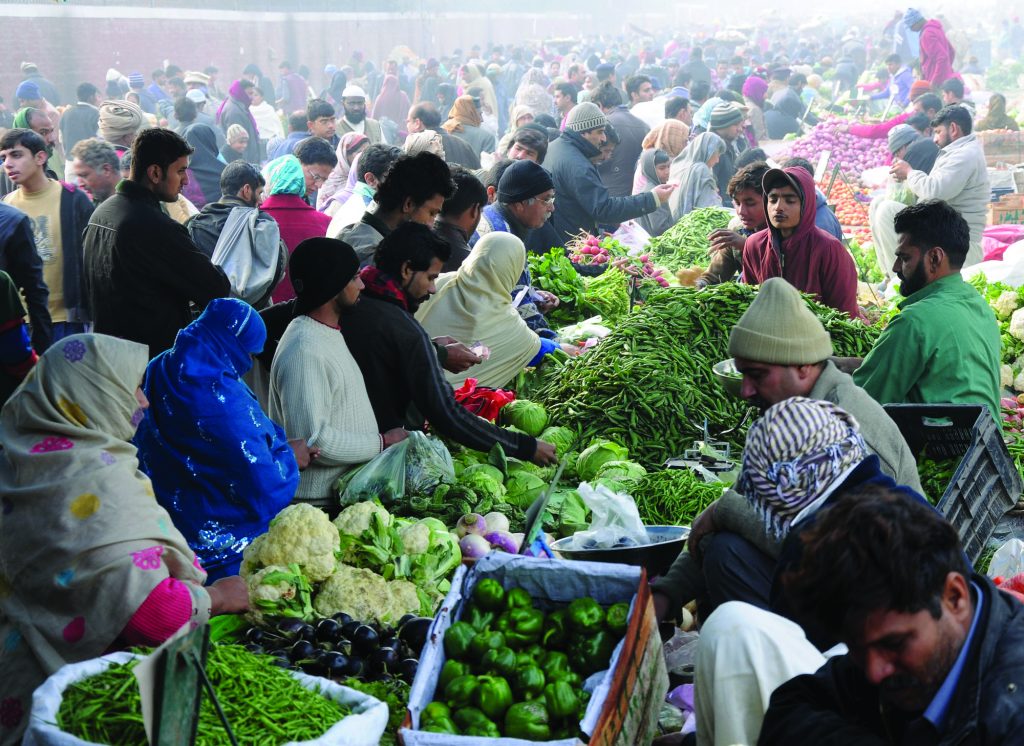
The data made available by the Pakistan Bureau of Statistics (PBS), unveils that Food Inflation remained between 10.4% and 19.5% in urban areas while in rural areas it ranged between 12.6% and 23.8%. Food inflation in Pakistan has been in double digits since August 2019, a sad statistic which is self-explanatory in nature. Multiple factors brought us to the current state of affairs.
The sons-in-law of Saleema were not the only ones. More than 10 million Pakistanis were left jobless, piling on to the miseries of those families who have already been crushed under the surge of food inflation. Indeed, a vicious cycle pursued with joblessness, increased prices, reduced availability and shortages, removal of subsidies and imposing of surcharges and, most importantly, lack of experienced personnel making sound decisions at the helm of affairs; all aspects leading to an overall collapse.
Massive influence came from the dollar rates that soared from Rs.110 at the beginning of 2018 to beyond Rs.160 in 2020 - an increase of almost 45 percent in less than 2 years. All imports were directly impacted. Once even the Prime Minister claimed that he himself was not aware of the increase in the dollar rate! There was panic buying of dollars and there was a time that it was extremely difficult for the end-consumer to get foreign currency from any currency dealer at the prevalent rates. The imports were consciously decreased to strengthen the rupee against th dollar and also to reduce the current account deficit. Increasing exports resulted in shortages and increased prices locally.
In the last two years, the crisis due to shortages, increased prices and mafia activity in some of the staples such as wheat, sugar and even vegetables like onions and tomatoes, ruled the headlines. The prices of lentils, dairy products, bakery items, eggs, poultry and other meat products leapfrogged as there was absolutely no check and control on the official prices; instead there was a huge disparity between official and actual prices of almost all commodities. Federal and provincial governments and local authorities were not on the same page.
The gradual removal of subsidies and adjustment of previous bills not only increased the bills of almost all utilities but even pushed the final bill into another slab with higher rates. The income tax rate too shot up. The mandatory introduction of a copy of the CNIC and receipts for daily transactions further ignited the traders’ sentiment. Meeting FATF’s requirements and ensuring that the entire economy could be digitalized separating white, grey and black from each other, hit the decades old system, its users, abusers and gainers alike. Pakistan did meet 21 out of the 27 points of action asked for by FATF but was still found wanting and given a period till February 2021 to meet the other 6 requirements.
When a system is bent head-over-heels to clear itself of all the wrongs that have been done over a number of decades, it cannot come out with clean hands.
Decreasing and removing subsidies and application of taxes, surcharges and duties is likely to have better long-term effects but the common man was hard hit by the system being fixed, all at once. Transfer of cars and property through bank accounts, converting non-filers into filers and introduction of a biometric system simultaneously, created issues for the common man as no relief was provided or even considered by the government. Historically, it was the norm to see senior citizens and pensioners standing in queues in scorching heat to collect their pensions. Even during lockdown, social distancing was adopted with the customers being made to stand even outside.
The rate of profit returns on saving schemes, which eventually becomes the last resort for those who want to invest in relatively safe options, especially after retirement and mostly cater to white collared and lower income groups, were reduced from a range of 13 to 15 percent since the beginning of 2019 to around 8 to 11 percent currently.
When a system is bent head-over-heels to clear itself of all the wrongs that have been done over a number of decades, it cannot come out with clean hands. Indeed, with a young, novice and mostly inexperienced team making crucial financial decisions at the highest level, it is only obvious that mistakes become imperative. It was only logical that almost all ministries were continuously shuffled or swapped. The same old faces that were there in the last few governments were brought back to ensure that the entire economy did not derail.
While it seemed like everything was falling apart economically, maybe nature had worse in her store. During the first COVID-19 wave, which further escalated the uphill surge of food inflation, buying capacity was deeply tarnished for everyone. The causes that led to an eventual breakdown of the economic engine across the globe began with a virus causing a global lockdown. Decrease in petrol consumption, panic selling in global stock exchanges, etc. brought down the prices of investments and with that people’s buying power. Joblessness prevailed. Terminations, resignations, forced annual leaves and leaves without pay became the order of the day. Understaffing resulted in increased workload on the remaining workforce as there was no other alternative. Opportunistic companies and organizations that were still continuing to show growth in their respective sectors refused annual increments, promotions, incentives and bonuses while scaring their employees with the probability of job or salary cuts. It is true that many governments announced bailout packages and NGOs stood up to the task, helping the suffering at the ground level, but overall it was a fight against Nature.
Food inflation is expected to be at 9.5% by the end of this quarter, according to Trading Economics global macro models and analysts’ expectations. They estimated food inflation in Pakistan will stand at 5.5% in the coming year and it is suggested that it is likely to trend at 4 percent subsequently. The route is still foggy. ![]()
The writer is a physician, healthcare leader, traveller and writer. He tweets as @Ali_Shahid82 and can also be reached at kalishahid@hotmail.com |
|
Cover Story
|
|
News Buzz
|
Update |


Leave a Reply