

International/Kuala Lumpur
Chaos and Challenges
The democratic process has been flouted and the will of the people has been undermined in Malaysia to select a more pliant regime.
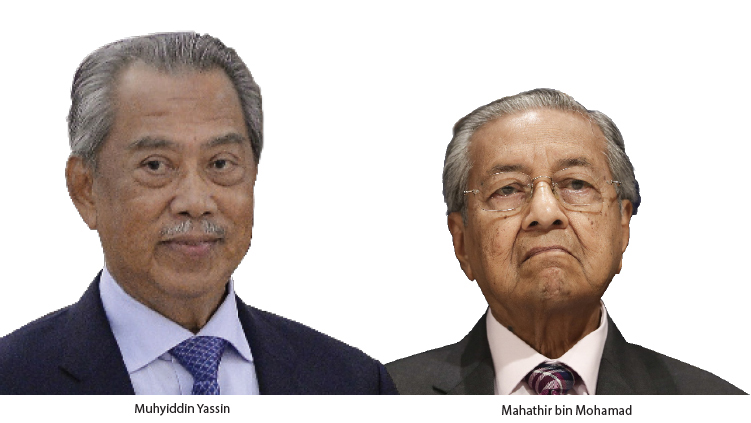
Over the last four months, Malaysia has been negotiating the complex political minefields that were triggered by the unexpected resignation of its former premier Mahathir Mohamad. If the testimony of former cabinet minister Syed Saddiq is to serve as a gauge, an “illegitimate back-door government”, dominated by defectors and kleptocrats, has seized the reins in the Southeast Asian nation and the roots of democracy have been weakened. Political analysts fear that this marks the emergence of a short-cycle that could have political and economic implications.
February 2020 will go in the country’s history as a time when a power struggle that verged on a dramatic game of thrones beset the country. On February 24, Tan Sri Muhyiddin Yassin –president of Parti Pribumi Bersatu Malaysia – left the ruling Pakatan Harapan (PH) coalition. In addition, 11 MPs associated with Parti Keadilan Rakyat (PKR) also jumped ship under the influence of their party’s deputy president Azmin Ali. In the wake of these defections, the ruling coalition collapsed and Mahathir stepped down from the top slot. His decision was fuelled by the desire to consolidate his position amid political wrangling.
Undeterred by the crisis that was simmering within the country, Mahathir – who was appointed the interim prime minister by the king until a new leader was selected – expressed a desire to establish a unity government comprising officials who wouldn’t be easily swayed by party ideologies and politics. A week later, the king appointed Muhyiddin Yassin as the new premier. Yassin was backed by the United Malays National Organisation (UMNO), which was ousted in the 2018 polls following economic mismanagement of the 1Malaysia Development Bhd.
A quick glance at these puzzling developments reveals that the democratic process has been flouted and the will of the people has been undermined to select a more pliant regime. While the political legitimacy of the Yassin-led government appears questionable, Mahathir has also been viewed as the architect of his own political downfall. The former prime minister had pledged to hand over power to his chosen successor Datuk Seri Anwar Ibrahim. In the absence of a clear timeline for this transfer of power, skeptics feared that the erstwhile PM would monopolize political authority and backpedal on his promise.
Mahathir’s chequered relationship with Ibrahim added to these suspicions. It is difficult to forget how Mahathir sacked Ibrahim after the 1998 financial crisis and had him imprisoned in a veiled attempt to remove him from the political arena. Despite these justifications, democratic ideals have been compromised because the views of the electorate haven’t been accounted for. If these short cycles of governance become the norm, Malaysia’s democratic order will be dismantled even further.
With the end of the Mahathir-led regime, it appears that his reformist agenda may steadily lose momentum. The old order, with its corrupt practices and selective policies, is likely to resurface and produce political dissonance. Analysts who are well-placed to comment on the development have predicted that the new regime may align itself closely with the Malay-Muslim majority. A vast majority of ethnic Indian and Chinese minority groups in Malaysia had been eagerly waiting for Ibrahim to assume premiership and ensure that all economic entitlements are provided on the basis of need rather than race-related considerations. Mahathir’s exit and Yassin’s meteoric rise to political power makes these policy initiatives seem even more unattainable than they were before.
From a strictly economic standpoint, the shortening of Malaysia’s political cycle might dampen investor confidence. Though the country has attracted considerable investment in the past, it may need to expand its sources of government revenue. At this critical juncture, the Yassin-led government has yet to underscore its strategies to achieve fiscal aims. While it is difficult to gauge the nature of the new regime’s policies, seemingly undemocratic political administrations tend to adopt a narrow approach towards taxation and expenditure. What’s more, the coronavirus outbreak will impact Malaysia’s export and GDP growth rate. The combined economic effect of the outbreak and the political instability that has laid siege to the Southeast nation might become difficult to endure.
On May 9, 2020, Mahathir and Ibrahim issued a joint statement and assured the nation that they had set aside their disagreements and wish to “return the people’s mandate to the rightful owners”. Though this is a well-meaning initiative, it is unlikely to have the desired effect in the status quo. Once the PH coalition was elbowed away in the centre, state governments in Melaka, Perak and Johor were also subjected to takeovers by the new ruling alliance.
It is difficult to view the truce between Mahathir and Ibrahim as anything other than an alliance of convenience to oust the ruling coalition. Throughout the ongoing turmoil, Ibrahim has been billed as a political player who remains on the fringes because he lacks the support of rural voters. In Malaysia’s fractured political landscape, where the quest to acquire the coveted prime ministerial slot dictates political maneuverings, the people stand the risk of losing their voice.
The coronavirus pandemic has added an additional layer of complexity to the political cataclysms within the Southeast Asian nation. In these uncertain times, political upheavals aren’t as important as Malaysia’s economic wellbeing. Under these circumstances, there appears to be no end in sight for the political crisis in the not-so-distant future. Faced with these challenges, political players will need to remain circumspect and avoid any maneuverings that could plunge the country into further chaos. ![]()
The writer is a journalist and author. He analyses international issues and can be reached at tahakehar2 |
|
Cover Story
|
|
Social Roundup
|
|
News Buzz
|
Update |


Leave a Reply