
A Right Royal Conundrum
Britain has been haggling over the nation’s withdrawal from the European Union, the process known as Brexit, since the referendum in 2016.

The United Kingdom is holding elections once again and the country is creating a sort of electoral history as it goes to elections for the fourth time in the last five years. At the heart of the matter is the desire by the British Prime Minister Boris Johnson to break the political deadlock. There is a clear division in the British parliament on Brexit and it is said that so far the only clear decision the Parliament has given since the 2016 Brexit referendum is giving the formal notice to quit under Article 50 of the European Union Lisbon Treaty. That set into motion the forty eight months notice on the way to depart from the EU by March 2019 – set as the formal divorce date.
The deal remained unacceptable and what held it up and created huge disagreement were Britain’s interests seen by many as vital. Three factors stand out that make the Brexit deal controversial. Firstly, Britain is an important export market and remains the biggest source of foreign investment. Britain’s EU membership had helped establish its position as a global financial centre. With the announcement of Brexit, some major companies started working on the possibility of re-locating. The UK government has already made an assessment that under Brexit, the UK economy will go down by at least 4 to 9 percent than it would if Britain remained in the bloc.
The second factor is the free movement of people. Brexit would end the right of the people elsewhere in Europe to live and work in Britain and the same will be the case for people of Britain to work and live elsewhere in Europe. Some see this element of the deal as a political triumph as their jobs will be secure and no new immigrants will come to Britain. But the younger lot looks at this as a great absence of opportunity as they would not be able to pursue their studies abroad or seek and get employment in the EU bloc. Britain is divided today on similar lines that it was divided when it sought the 2016 referendum on the matter. The governing conservatives and the Labour opposition exhibit deep polarization within the parties as well as the Parliament.
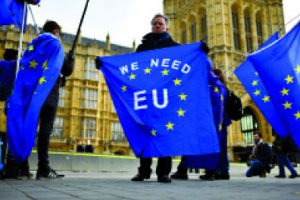
Prime Minister Boris Johnson’s announcement of the Oct 2019 draft deal was met with opposition by the Democratic Unionist Party of Northern Ireland which clearly stated that it will not support the proposal. Their support was very crucial for Prime Minister Boris Johnson to get the deal approved by the Parliament. The opposition Labour Party was already against the deal as it clearly maintained a position that the deal or the agreement must be put through a public vote. This gave the British public the choice of approving departure from the EU on Prime Minister Johnson’s terms or decide for a second referendum on the issue.
The third and the most important factor is Britain’s only land border with the EU – popularly termed as ‘the invisible line’ between Ireland which is a sister country of the EU bloc and Northern Ireland which is part of the United Kingdom. Any checkposts that may be planned and built on this border will directly affect the ‘Good Friday Agreement of 1998’ which brought an end to decades of violence in Northern Ireland.

Theresa May, the former UK Prime Minister, envisaged keeping the UK in a trading relationship with the EU until a final deal to avoid a hard border could be agreed upon. Mr. Johnson’s proposal on the other hand sought to take Britain out of the EU but effectively leave Northern Ireland in the EU bloc’s custom union and single market. The Democratic Unionist party opposed this as it does not want Northern Ireland to diverge from the rest of the United Kingdom.
Mr. Johnson took office in July 2019 and promised to take Britain out of the Bloc by 31st October. That didn’t happen. Now when the United Kingdom couldn’t leave the bloc on the proposed date with or without the deal, the rebels in the Prime Minister’s party and the opposition combined to get hold of the entire Brexit process. The choices were now very clear - either to further seek an extension from the EU or hold a general elections
In a 650-member parliament, a party needs 326 seats to form a majority government. There could most likely be a hung Parliament. There would be a joint parliamentary agreement on Brexit or the deal and a process that would make that possible remains a foregone conclusion.
The United Kingdom, even after the elections, may still be seeking a parliamentary consensus on an agreed Brexit deal. The only positive coming out of the entire Brexit process is the importance of democratic norms and the value that the liberal democratic world gives to politics of consensus and the rule of the majority.![]()
The writer is a member of the Faculty of Contemporary Studies at NDU, Islamabad. He can be reached at muhammadaliehsan1@hotmail.com |
|
Cover Story
|
|
Interview
A Right Royal Conundrum |
|
Around Town
|
|
Tribute
|
Update
|


Leave a Reply