


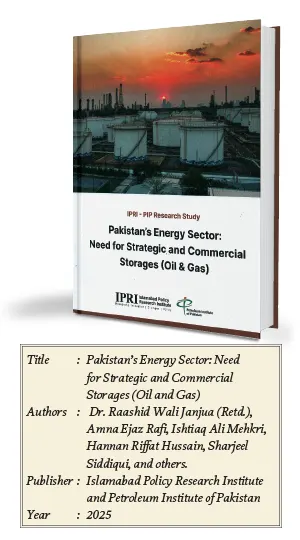
 As we face significant challenges from geopolitical tremors, which have sent massive shockwaves through the global oil and gas markets in a matter of weeks, the book titled “Pakistan’s Energy Sector: Need for Strategic and Commercial Storages (Oil and Gas)”, a joint publication by Islamabad Policy Research Institute and Petroleum Institute of Pakistan, provides a vital and timely roadmap on developing crucial storage facilities. Unlike a dry academic text focused heavily on theories and methodologies, this is a comprehensive document that can help a developing economy such as Pakistan navigate the turbulent waters of procuring energy resources. This document provides detailed data analysis for academics, industry stakeholders, and policymakers. It offers a look at economic vulnerabilities stemming from a lack of storage facilities and underscores the need for immediate structural reforms to achieve better energy security and sovereign energy independence.
The most important feature of this book is that it meticulously dissects the petroleum sector and criticizes reactive, rather than proactive, energy management policies that result in price shocks being passed on to end users in Pakistan. The book provides a sobering diagnosis of how a fragmented policy framework has stifled long-term investments in critical storage facilities, making it an important read for someone interested in improving energy management within Pakistan. This is thus an indispensable read for them.
The book addresses realities of the sector, such as the underinvestment in upstream exploration in Pakistan, the unpredictability of OPEC production quotas, and the fragility of the maritime chokepoints, such as the Strait of Hormuz. It argues that although the transition to renewable energies is inevitable, oil and natural gas will remain critical baseload and transition fuels for several years to come. Therefore, the book addresses the anxieties and the strategic pivot that is dominating the boardrooms of energy companies today.
The book champions the need for commercial and strategic oil and gas storage facilities in Pakistan. In fact, the stress on the need for such facilities is the crown jewel of all recommendations made in this publication. The authors highlight the lack of oil and gas storage facilities in the country, emphasizing that the economy remains hostage to the spot market.
Considering the omissions in the book, a discussion on the transition towards renewable energy sources, specifically the intersection of solar power generation and utility-scale battery storage, would add an interesting perspective in terms of modern energy management in the book, as the government may face a trade-off between battery storage and oil and gas storage facilities in the future.
The current shift from net metering to net billing shows that battery storage will likely become a pressing commercial need in the near future. Further, the book fails to question the long-term viability of oil and gas imports, particularly as oil prices become more volatile and rising investments in solar energy generation threaten demand for oil and gas. Volatile energy inputs not only impose a structural deadweight on the economy but also create an anti-export bias, leading to inefficiencies and reduced competitiveness.
In essence, this book is a heavy-hitting, thought-provoking read that strips away the complacency often found in studies targeted towards specific policymakers. By brilliantly tying global industry challenges to the urgent, specific need for strategic storage infrastructure in Pakistan, the book transitions from mere analysis to an actionable document. It is a highly recommended read for anyone invested in how nations can shield themselves from global volatility and chart a course toward resilient, sovereign energy independence.
Leave a Reply