


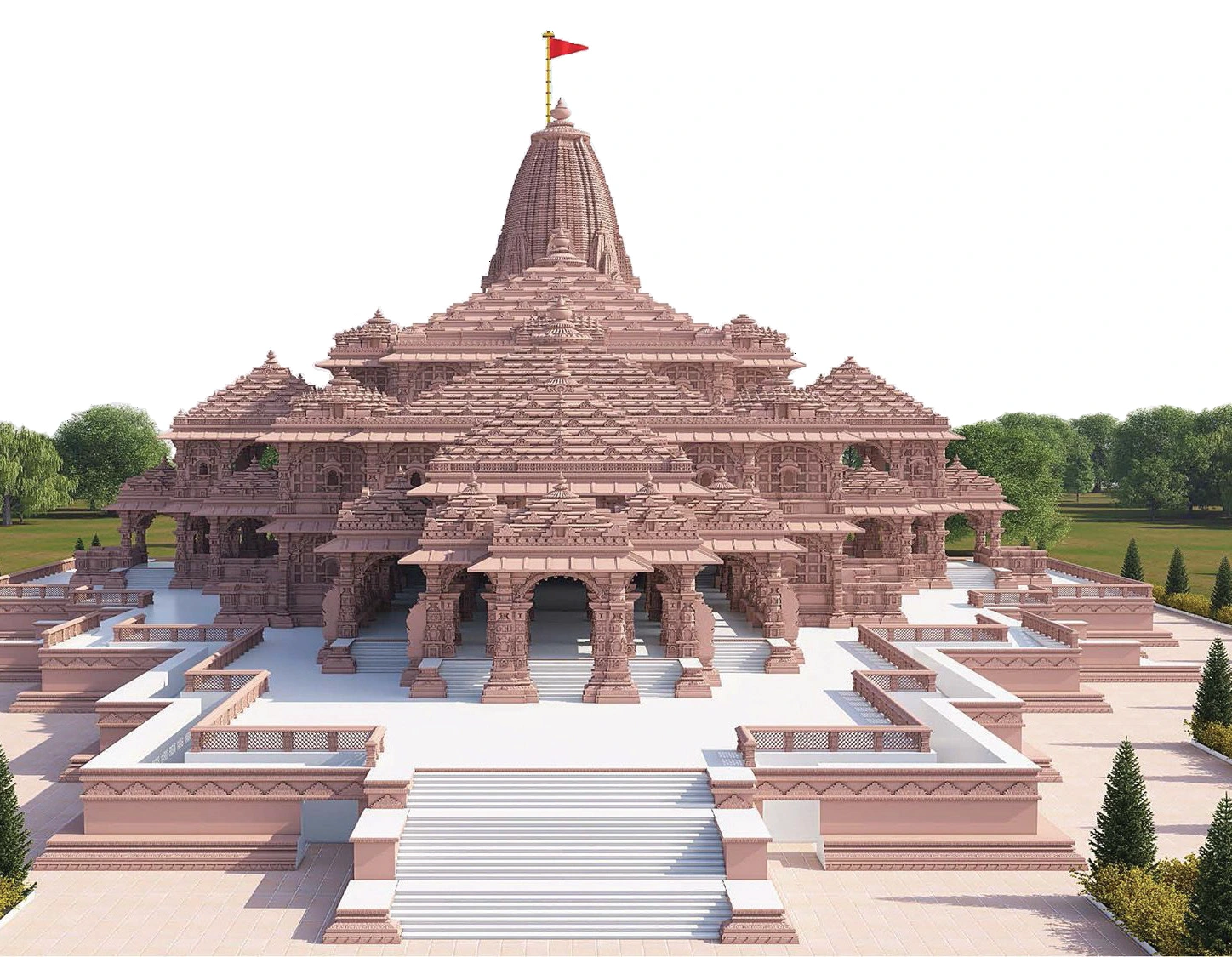
The opening of the Ram Janmabhoomi Temple on January 22, 2024, has enormous implications for India’s political landscape. This event, which was a magnificent spectacle with the installation of Lord Rama’s statue, was more than a religious celebration; it was also a political move that will define the narrative and dynamics leading up to the 2024 parliamentary elections.
First, one must understand the historical backdrop and the more considerable socio-political consequences to realize its potential influence fully. For numerous decades, the Ram Janmabhoomi issue has been a focal point of Indian politics, notably in the 1990s, when it resulted in a dramatic change. The intended inauguration of the temple is an upshot of three decades of work, exhibiting a consistent and deliberate approach by specific political and ideological groupings. This is more than just a religious structure; it is a symbol, an effective means for political mobilization.
The timing of the ceremony, barely months before the forthcoming Lok Sabha elections, shows a planned attempt by the ruling party to use the temple’s significance for electoral benefits. The governing party is expected to capitalize on this occasion by widely disseminating the temple’s message nationwide through social media and traditional means. The invitation by the RSS chairman Mohan Bhagwat for people to arrange celebrations near their homes reflects a determined attempt by affiliated groups to make the inauguration into a widespread people’s festival, building a sense of communal pride and identity among the majority community. This event’s socio-political influence reaches beyond the religious arena.
The rise of the “Hindu” electorate as a serious political force should not be underestimated. Over the years, the Ram Janmabhoomi issue has helped to shape a particular political awareness among this group. The “Ram memory” notion has shown tremendous mobilizational power, crossing conventional caste and communal fault lines. It has been crucial in cementing support for the BJP, propelling the party to its current position as a dominating force on the national scene.
The opening of the Ram Janmabhoomi temple marks a strategic trifecta for the BJP. For starters, it allows the party to highlight the settlement of a long-standing and contentious subject recurring in its electoral manifestos. The fulfillment of this promise creates a compelling narrative that strengthens the party’s trust among its voting base.
Second, it boosts Prime Minister Narendra Modi’s political capital, establishing him as a leader who keeps promises. The image of a leader who can deliver on promises is a powerful political asset, especially during an election run-up. Finally, the temple’s emphasis on Hindu pride will likely generate a more united voting bloc within the Hindu population. This unity might translate into political success for the BJP since voters are more inclined to support a party that shares their cultural and religious identities. As a result, opposition parties, including the Indian National Congress (INC), Samajwadi Party, Nationalist Congress Party (NCP), and the All India Trinamool Congress (TMC) are facing a strategic dilemma. The temple inauguration will lead to the revitalization of Hindutva identity, which needs a recalibration of their political narratives.
One likely solution is forming a narrative centered on “soft Hindutva,” in which opposition parties strive to address the concerns of the Hindu voters without ultimately adopting the more extreme components of Hindutva philosophy. This strategic move illustrates the agility and pragmatism necessary in a shifting political situation. Furthermore, the temple’s opening may upend the conventional caste-based quota politics on which many opposition parties rely. The concentration of the Hindu electorate behind a narrative of religious pride may obscure conventional fault lines, necessitating novel ways for the opposition parties to communicate with voters.
The inauguration of the Ram Janmabhoomi Temple and its political ramifications highlight the intricate interplay between religion and politics in India. While the construction of religious structures and celebrating cultural identity are integral aspects of a diverse and pluralistic society, navigating these dynamics with a commitment to inclusivity and secular governance is crucial. The potential polarization and consolidation along religious lines underscore the need for a nuanced and balanced approach to address the diverse needs and aspirations of the Indian populace.
As India navigates this crucial juncture in its political landscape, political leaders and citizens alike need to engage in constructive dialogue that transcends religious and ideological divides. While the temple inauguration may serve as a moment of celebration for some, it should not overshadow the larger goals of socio-economic development, inclusivity, and communal harmony. A robust democracy thrives when diverse voices are heard and accommodated, ensuring that the tapestry of India’s rich cultural and religious heritage remains vibrant and inclusive.

The writer has done his Masters in Defence and Strategic Studies. He can be reached at daniyaltalat2013@gmail.com
Leave a Reply