



 The valley of Kashmir has remained a flashpoint between the two South Asian nations - Pakistan and India. The two countries are locked in a contest and cold-war mentality since 1947. In the backdrop of India’s illegal and forceful occupation of the major part of the Kashmir valley against popular public will, the people have always resented the oppressive Indian regime. Courtesy of this Indian aggression, the region remained charged with turmoil and instability.
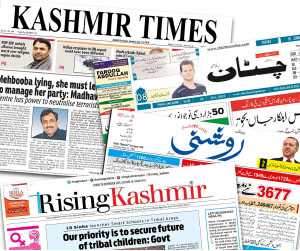
The people of Indian-occupied Kashmir have been suffering the repressive regime for decades. From demographic transitions of turning Muslims into a minority to undoing its long held autonomous status; from warnings of impending genocide to the worst records of human rights violation, the Indian administration continues to shrink space for its citizens through Draconian measures. One of the such dictatorial tactic is the media coup - a communication and media blackout of Kashmiris. The media has faced authoritarian curbs and duress ever since the Kashmiri freedom fighters rose against the Indian oppressive regime and faced Indian troops, to join Pakistan or emerge as independent state altogether. The ensuing fighting resulted in deaths and displacement of thousands. Despite the tensions and Indian pressure, occupied Kashmir’s media thrived - only to be stricken down in the aftermath of Mr. Modi’s ascension as PM.
Though the people of Indian occupied Kashmir and journalists faced serious threats and worked in a warlike situation, revoking of the autonomous status of the region in August 2019 worsened the plight of the media. Amid frequent blackouts and curfews and international isolation from mainstream global coverage, local media and journalists have been the only sources of information in the valley.
Following the undoing of the autonomous status of the region, the coercion and harassment of journalists escalated to an unprecedented proportion. The government has enforced harsh media policies to tighten state censorship and curb independent reporting and journalism. Around four dozen journalists were raided, arrested and questioned on the charges of sedition and under counterterrorism laws. Many media people have been restricted from flying abroad.
The crackdown against the media and journalists is manifested in many other instances, such as extra-judicial detention of journalist Sajjad Gul under the controversial Public Safety Act (PSA) and the closure of the Kashmir Press Club in January, 2022.
The Kashmir Press Club had emerged as an important platform for journalists for support to colleagues facing government wrath. As the region’s largest registered body of professional journalists with membership over 300, the closure of KPC is the Indian government’s formal acknowledgment of treating media as a threat to a repressive regime. Despite the suffocation, the local press always worked under great strain.
However, the silver lock hanging at the KPC’s black gate in the heart of Srinagar is a reflection of India’s latest onslaught on the suffocating plight of media in the valley.
Media persons from other countries are not permitted to visit and report on Kashmir without the prior permission of the Indian Home Ministry. Though an exceptional rarity, the foreign correspondents permitted have to undergo deliberate strenuous procedures.
Human rights groups and organisations have not escaped Indian wrath. They are raided, apprehended and punished under anti-terror and oppressive laws.


The writer is based in Kandhkot, Sindh. He can be reached at alihassanb.34@gmail.com
Leave a Reply