Yameen, who was elected in 2013, was accused of a crackdown on political rivals, courts and the media. But he was replaced by opposition leader Solih after a shock election result in 2018.
All member countries of the Commonwealth must subscribe to the values and principles of the Commonwealth charter.
The islands, which became a multi-party democracy in 2008 after decades of autocratic rule, had been in political turmoil since its first democratically elected president, Mohamed Nasheed, announced his resignation in 2012, after a mutiny by the police and weeks of demonstrations against his order to arrest a senior judge. He later said he was forced out in a coup.
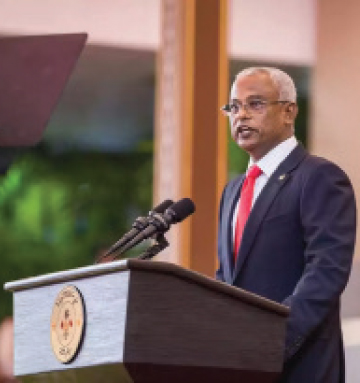
President Ibrahim “Ibu” Mohamed Solih, a campaigner for democracy during decades of autocratic rule was elected in 2018. He promised change and swiftly applied to rejoin the Commonwealth. The country was re-admitted at one minute past midnight on 1 February 2020. But the return was not a cakewalk. The Maldives had to show evidence of functioning democratic processes and popular support for being part of the family of nations. It also faced an assessment, including two site visits and consultations, in accordance with the rules and procedures agreed by the Commonwealth heads of government in Kampala in 2007.
During his election campaign, Solih vowed to promote human rights and, since his surprise win, political prisoners have been freed and exiled opposition figures have returned to the islands.
Shortly after taking power, he wrote to the secretary general, expressing interest in rejoining the Commonwealth, before making an official application.
Solih welcomed the Maldives’ return to the Commonwealth, saying, “Today is a happy day for Maldivians as we return to the family of Commonwealth nations. As a young democracy, the Commonwealth’s foundational values of the promotion of democracy, human rights, good governance, multilateralism and world peace remain relevant to us more than ever.
“We gratefully acknowledge the support and help of the Commonwealth to the Maldivian democratic movement, and we look forward to the support of fellow member states to ensure the long-term entrenchment of these values in our society.”
All member countries of the Commonwealth must subscribe to the values and principles of the Commonwealth charter, including a commitment to the development of free and democratic societies and the promotion of peace and prosperity.
The Maldives, which last joined the Commonwealth in 1982, will now be part of the Commonwealth heads of government meeting in Kigali, Rwanda, in June.
It submitted a request in December 2018, to rejoin, when President Ibrahim Mohamed Solih wrote to Commonwealth Secretary General Patricia Scotland. "The reform process underway in the Maldives aligns with the values and principles of the Commonwealth and we encourage the nation to continue on this path," said Baroness Scotland, as she welcomed the country and its people back to the fold.
"Commonwealth members were pleased to note these developments and are happy once again to count the Maldives as a member of the family. Together we will support the Maldives to realize its ambitions," she said.
The readmission followed "due diligence", which included country assessment and consultations in accordance with the rules and procedures agreed by the Commonwealth Heads of Government (CHOGM) in Kampala in 2007.
The Commonwealth Secretariat said the assessment included two site visits to the country, followed by positive feedback given by a Commonwealth Observer Group which was present for the Parliamentary Elections in April 2019.
Members subsequently agreed to invite Maldives to submit a formal application, which it did on December 25, 2019. The country presented evidence of functioning democratic processes as well as popular support for re-joining
The Secretary-General then consulted with all 53 Commonwealth members and received no objections, before accepting the Maldives’ application for reentry, to end its international isolation.






Leave a Reply