

Hunza to become first
plastic bag-free zone
in Pakistan
The local government’s initiative ‘Clean Hunza Project’ paves the way for
multinationals such as Nestlé to act on their global commitment.

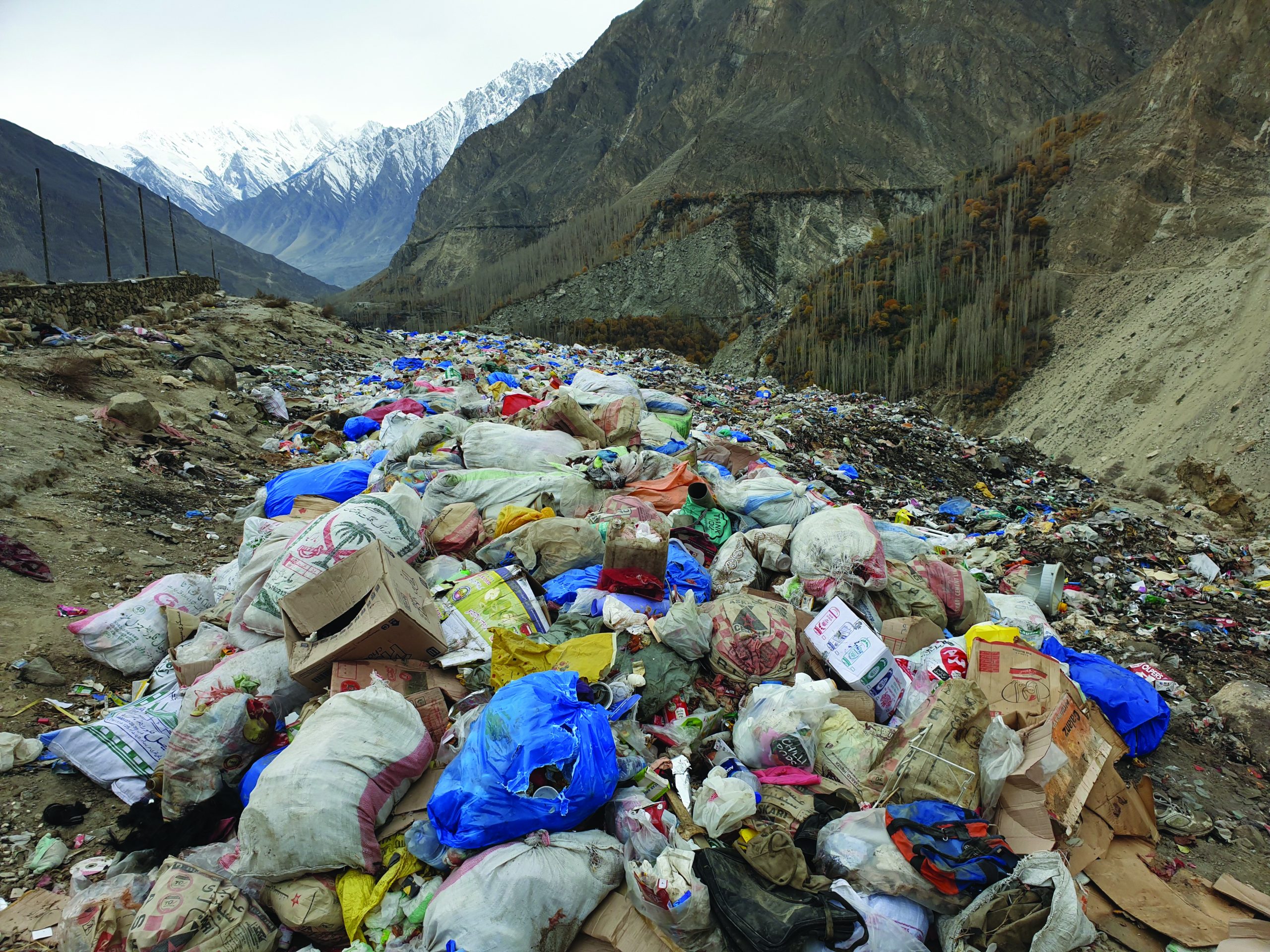
One of the five districts in Gilgit-Baltistan, Hunza is located on Karakoram Highway at an altitude of 8000 feet. In recent years, it has become a popular attraction for local and foreign tourist with approximately one million tourists visiting the region in 2018. This influx of tourists on the one hand has created income generation for the local community but on the other, it has become a reason for increasing plastic waste in the district.
The issue of plastic waste in the environment is one of the most pressing challenges the world faces today. Around 400 million tons of plastic are produced every year and is growing exponentially.
Plastic pollution is most visible in developing Asian and African nations, where garbage collection systems are often inefficient or nonexistent. Plastic trash has become so ubiquitous it has prompted efforts to write a global treaty negotiated by the United Nations.
Changing the way, we interact with packaging, as producers or consumers, requires us all to rethink the way we produce and consume.

Plastic packaging accounts for nearly half of all plastic waste globally, and much of it is thrown away within just a few minutes of its first use. Most plastic may be single-use, but that does not mean it is easily disposable. When discarded in landfills or in the environment, plastic can take up to a thousand years to decompose.
We are already unable to cope with the amount of plastic waste we generate, unless we rethink the way we manufacture, use and manage plastics. Ultimately, tackling one of the biggest environmental scourges of our time will require governments to regulate, businesses to innovate and individuals to act.
Only nine per cent of the nine billion tons of plastic the world has ever produced has been recycled. Most ends up in landfills, dumps or in the environment. If current consumption patterns continue, then by 2050 there will be around 12 billion tons of plastic litter in landfills and the environment.


A waste-free future is dependent on having the right collection, sorting and reprocessing infrastructure.
Many big multinational companies are aiming for 100% recyclable or reusable packaging by 2025. Despite this, only 14% of all plastic is actually recycled today.
Changing the system, requires collaboration and innovation on a global scale. By working with partners around the world, from materials scientists and packaging specialists to community groups and NGOs, governments and other companies, lasting and impactful change can be created, for people and the planet.
As the world’s largest food and beverages company, Nestlé has stepped up to meet this challenge in Pakistan, with the vision to ensure that none of their packaging, including plastics, ends up in landfills or as litter. They have also publicly committed to making 100% of its packaging recyclable or reusable by 2025. Nestlé Pakistan has started a pilot project “Clean Hunza Project” that will encourage waste segregation and its management in Hunza.
“Clean Hunza Project”, is part of District Council Hunza initiative to make it the first plastic bag free location in the country. Nestlé’s participation will focus on waste segregation on the recycling site and connecting further to recyclers downstream.
Presently, the waste segregation and management system in the area is managed by Gilgit-Baltistan Waste Management Company (GBWMC) and District Council Hunza. Tourists also bring a lot of packaged goods (bottles, carbonated drinks, paper-based packaged items, etc.) from down the country and eventually leave this waste in Hunza after consumption.
The project will focus on infrastructure development for a formal waste management system for Hunza with GBWMC and support from KADO for raising awareness in the communities, where Nestlé will support the GBWMC with trainings on segregation of waste, compressing and bailing at the waste segregation site. The plastics (PET and flexi package) and paper-based packaging collected, after bailing process, will be brought down the country for recycling.
Many big multinational companies are aiming for 100% recyclable or reusable packaging by 2025.
Commending the cause, Babar Sahibdin, Deputy Commissioner Hunza, said, “Under District Council Hunza initiative, Hunza leads as the first plastic bag-free location in Pakistan. Contribution of 10,000 reusable bags during 2020 by Nestlé will further strengthen this behaviour change mindset in the community as it will create awareness amongst the locals to stop using plastic bags and incline them towards a more environmentally friendly solution. We appreciate Nestlé for extending support for capacity building of our staff on waste segregation site, compressing, bailing and connecting to recyclers downstream.”
Waqar Ahmad, Head of Corporate Affairs, Nestlé Pakistan, while highlighting the company’s global commitment to tackle plastic waste, said, “This project marks the beginning of Nestlé Pakistan’s journey to reduce the environmental impact of plastic packaging by improving the management and recycling of various kinds of plastic packaging, in line with UN SDGs. Globally we aim to make 100% of our packaging recyclable and reusable by 2025.”
He further added, “The Clean Hunza Project is a pilot project with a focus on streamlining the management and recycling of plastic waste, with a forecast of increasing waste collection to 220,000 kgs by 2024. This project will result in lesser plastic ending up in water bodies downstream.”
The project, which will be first of its kind at such a high-altitude residential location, will make a positive environmental impact at both the local and national level.
It is believed that the answer to the complex plastics and packaging issue is to look into multiple solutions. It also requires a holistic view and a well-orchestrated effort.![]()
The writer is a freelance contributor and communications practitioner. She can be reached at |
|
Cover Story
|
|
Feature
|
|
News Buzz
|
Leave a Reply Cancel reply |
Update |


Like!! Great article post.Really thank you! Really Cool.