


A peculiar cruelty lies in watching a nation grow older without ever being permitted to mature. Pakistan has spent nearly eight decades pursuing the promise of political renewal, only to discover, with each successive dispensation, the familiar contours of an older betrayal. Governments change, generals retire, political adversaries exchange places, and the vocabulary of national salvation is dutifully refurbished. Yet beneath this procession of purported reformers lies an enduring arrangement: the appropriation of the state by those entrusted with its stewardship.
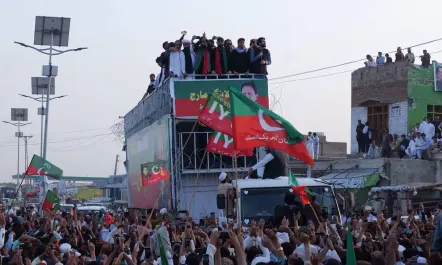
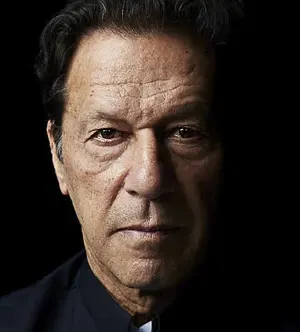
The confrontation between Imran Khan’s Pakistan Tehreek-e-Insaf (PTI) and Pakistan’s political and military establishment is the latest manifestation of this institutional malaise. But to regard it merely as a contest between Khan and his adversaries would be to mistake the symptoms for the disease. Pakistan’s predicament is more fundamental: a political economy in which authority has too often become a means of private enrichment, and public office an instrument of partisan preservation.
The roots of this arrangement predate Khan by decades. General Zia-ul-Haq’s seizure of power in 1977 did more than interrupt Pakistan’s democratic trajectory. His Islamisation programme furnished military rule with a vocabulary of moral legitimacy, while the Soviet invasion of Afghanistan transformed Pakistan into a major beneficiary of American strategic patronage. Foreign assistance strengthened the security establishment, but the political and ideological consequences of the Afghan jihad would burden subsequent generations. Religion, security and geopolitical expediency became mutually reinforcing instruments of statecraft.
The restoration of civilian rule in 1988 offered little structural reprieve. Benazir Bhutto and Nawaz Sharif spent the following decade alternating between government and opposition, their rivalry repeatedly facilitating interventions by unelected authorities. Bhutto’s administrations were dismissed in 1990 and 1996 amid allegations of corruption and maladministration; Sharif’s first government was dismissed in 1993, reinstated by the judiciary and subsequently brought to an end. The cycle culminated in General Pervez Musharraf’s coup in 1999. Four elected administrations had fallen within eleven years, each political rupture presented as an indispensable corrective to the failures of its predecessor.
The tragedy was not simply that civilian governments were destabilised. It was that their own antagonisms helped create the conditions for their displacement. Political parties treated their rivals’ exclusion as an opportunity rather than a warning, abandoning the principle of civilian supremacy whenever its suspension promised an immediate advantage.
Musharraf subsequently perfected another familiar expedient: the selective rehabilitation of political adversaries. His 2007 National Reconciliation Ordinance (NRO) offered relief from specified criminal proceedings, including cases involving corruption allegations, as part of an effort to secure political accommodation. Accountability, ostensibly a universal obligation, became negotiable in the interests of regime survival. The episode exposed how readily the language of national reconciliation could be appropriated for political expediency.
Nor did the return to civilian government dissolve the entanglement of political authority and private wealth. The 2016 Panama Papers disclosures revealed offshore companies linked to Nawaz Sharif’s children, prompting investigations and Sharif’s eventual disqualification from office in 2017, although subsequent acquittals complicated the original narrative of criminal culpability. Asif Ali Zardari’s political career has likewise been marked by recurring corruption allegations, prosecutions and contested legal proceedings. These histories cannot be reduced to presumptions of guilt; nevertheless, they illuminate a political culture in which questions of wealth, patronage and accountability remain inseparable from contests for office.
The relationship between institutional authority and economic influence constitutes another important dimension of Pakistan’s political economy. Over successive decades, non-commercial public institutions have developed substantial interests in property, industry and commercial enterprise. While these institutions have contributed to welfare provision, employment and economic development, their expanding commercial presence raises broader questions about the relationship between public institutions and market participation. As with civilian enterprises operating within the orbit of political power, the challenge lies in ensuring that economic activity is governed by consistent standards of transparency, competition and institutional accountability.


Based in Islamabad, the writer holds an undergraduate degree in Literary Studies from Eugene Lang College of Liberal Arts at The New School and an MPhil in South Asian Studies from the University of Cambridge. She can be reached at fathimahsheikh@gmail.com
Leave a Reply