


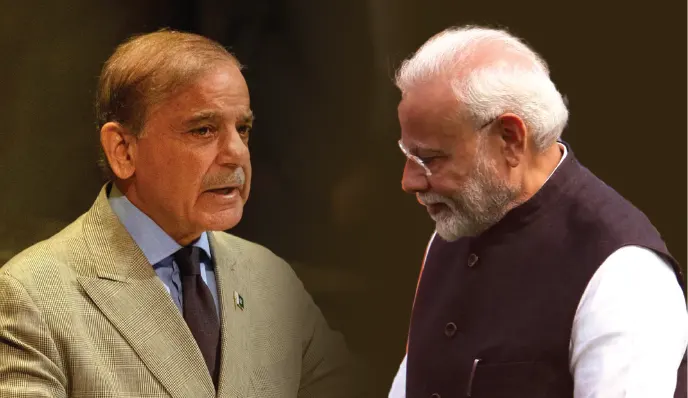
Recently, there has been growing speculation that India and Pakistan are engaged in back-channel talks aimed at resuming the stalled peace process. While such reports offer hope to those seeking lasting peace, the prospect remains distant, given the long history of rivalry and mistrust between the two countries, which has repeatedly hindered efforts to resume meaningful dialogue.
India and Pakistan have longstanding territorial disputes that must be resolved first. India, as the world’s largest democracy, with its vast territory and large population, has remained dismissive and arrogant towards Pakistan. This has been particularly evident when hardline governments have been in power. Critics argue that successive Indian governments have used anti-Muslim rhetoric to win elections.
After the partition of the subcontinent, Islam and Sikhism became the two principal minority religions, both perceived by some as challenges to a Hindu-majority society. Of the two, Muslims have always been at a disadvantage. As a result, some argue that Muslims are viewed through the lens of “Bhaiism” in India—that is, as vagabonds and as the cause of everything perceived to be wrong in society. This claim is reflected in the portrayal of Muslims in India’s domestic media as well as in films produced by the Indian film industry. This approach, rooted in the 1947 Partition, has also created a negative impression of Islam. It is because of this toxic impression spread in Indian society that the anti-Muslim card is played in the Indian elections as a threat to Indian and Hindu identity.
The same template is used for maligning Pakistan as a Muslim-majority country. As validated by some independent media reports, the Indian nationalist political leaders openly dream of Akhand Bharat—a concept drawing inspiration from the Zionist concept of Greater Israel. During his visit to Israel from 25–26 February 2026, Indian Prime Minister Modi declared Israel to be his Fatherland and called India his Motherland. It shows the kind of similarities India and Israel have in the political domain at the strategic level. In this context, the prospects for India-Pakistan talks appear overly optimistic. The chances of New Delhi getting into dialogue with Pakistan are bleak because Islamabad considers India a no-go destination for Pakistani citizens.
Role of Confidence-Building Measures (CBMs) in India-Pakistan Dialogue
For two or more states intending to enter into a dialogue process, substantial confidence-building measures (CBMs) are essential. Until confidence and trust are built, the chances of substantive talks remain improbable. Notwithstanding, the hopes and expectations for this engagement remain on the table on both sides and represent an essential first step towards sustained peace in South Asia. However, on the Indian side, the anti-Pakistan card is used for winning elections. Since 2016, when the BJP came into power in India, Pakistan has been blamed multiple times for sponsoring terrorism in Indian-held Kashmir to win general and state elections. So much so that there have been three brutal incidents over the past decade in which the Indian government did not hesitate to inflict casualties upon its own people by staging false-flag operations to gain public sympathy ahead of elections.
Three incidents are cited to support the argument that India has linked security crises with electoral politics. The first is the Uri attack of 18 September 2016, for which Pakistan was blamed. The attack occurred shortly before the state elections in Uttar Pradesh, Punjab, Uttarakhand, Goa, and Manipur, held in January 2017. The BJP used it as part of its election campaign. The second is the Pulwama attack on 14 February 2019, which occurred during the peak of the pre-election campaign and preceded the March 2019 Lok Sabha elections. The third is the Pahalgam attack on 22 April 2025, which took place ahead of the Bihar State Assembly elections scheduled for 6 October 2025. It is quite evident that the incident occurred at a time when the BJP was facing declining popularity in Bihar.


Based in Karachi, the writer is Vice Chancellor and Professor at DHA Suffa University (DSU). He is a defence analyst and an expert on strategic and security issues, and frequently writes for international and local journals, magazines, and newspapers. He can be reached at ahmedsaeedminhas81@dsu.edu.pk.
Leave a Reply