



The saying, often attributed to George Orwell, reminds us: “In a time of deceit, telling the truth is a revolutionary act.”
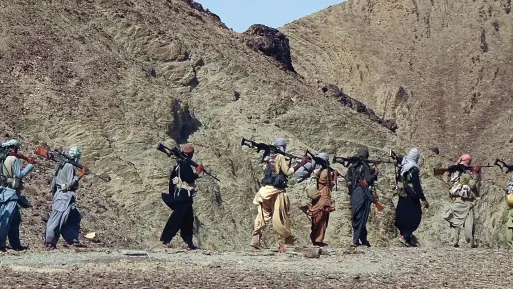
During the first week of July, Balochistan witnessed a wave of coordinated terrorist attacks across several locations, including the outskirts of Quetta, Ziarat, Noshki, and Bela-Winder, claiming numerous innocent lives. These were among the deadliest and most sophisticated coordinated attacks carried out this year by the Balochistan Liberation Army (BLA) and the Tehrik-e-Taliban Pakistan (TTP). In a particularly audacious strike, the BLA targeted an army convoy in the Bela-Winder region, creating an atmosphere of fear and insecurity.
Meanwhile, TTP militants attacked a police station in the restricted Mangi Dam area, killing nine police officers, including two Station House Officers (SHOs), and abducting eighteen law enforcement personnel. They were later executed, and their bodies were dumped in the surrounding area. Despite repeated distress calls, no security agency succeeded in rescuing them, leaving grieving families to mourn both the tragedy and the apparent failure of the state’s response. Whether the outpost was inadequately equipped or overwhelmed by surprise remains unclear. The TTP also carried out attacks in the Hanna Orak Valley, a popular recreational area on the outskirts of Quetta, killing several civilians.
The families of the victims from Hanna Orak and the Mangi Dam region staged protests for several days, organising well-attended sit-ins and blocking roads connecting the affected areas with Quetta. Sardar Akhtar Jan Mengal, President of the Balochistan National Party, addressed the protesters at the Mangi Dam sit-in, followed by Nawabzada Lashkari Raisani. Earlier, Akhtar Mengal had convened a multi-party conference in Quetta to discuss the rapidly deteriorating political and security situation in Balochistan. Their warnings, however, appeared to fall on deaf ears.
The conference sharply criticised the provincial government led by Mir Sarfraz Bugti, calling for its immediate dismissal on grounds of incompetence, unresponsiveness, corruption, and lack of public legitimacy. Similar accusations had previously been made by former provincial minister Sardar Abdul Rehman Khetran upon his resignation from the cabinet. There is little doubt that the PPP-backed provincial administration has lost public confidence. Its inability to address the worsening security situation over the past two years has become an increasing liability for the federal government.
As has become routine after such incidents, the federal leadership rushed to Balochistan and convened an emergency meeting of the Provincial Apex Committee on Security to demonstrate resolve against the insurgency. Prime Minister Shehbaz Sharif declared that military operations in the Shaban region would continue until the last insurgent was eliminated. Once again, responsibility for the escalating insurgency and militancy was largely attributed to Pakistan’s eastern neighbour. While rival states often exploit each other’s vulnerabilities in international politics, such external factors should not distract from addressing the country’s own internal weaknesses.
The authorities subsequently launched a large-scale operation in the Shaban region involving the police, the Frontier Corps (FC), and the regular army. Yet the federal government’s continued reliance on military measures suggests it remains unconvinced by growing calls for political dialogue and reconciliation with Baloch insurgents.
The current insurgency was reignited by the killing of Nawab Akbar Bugti and his burial under military supervision, contrary to Baloch traditions. The first insurgency followed Balochistan’s accession to Pakistan in April 1948 under Prince Abdul Karim, while the second erupted in 1955–56 in opposition to the One Unit scheme.
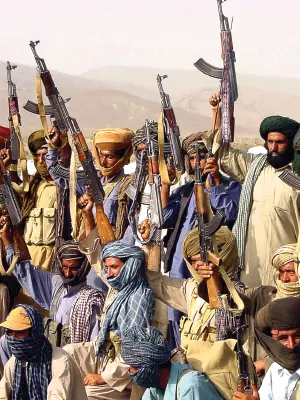 During the early 1960s, the Ayub Khan government sought reconciliation with Nawab Nauroz Khan Zarakzai. Trusting official assurances, the Nawab and his followers descended from the mountains and surrendered. Instead of reconciliation, they were arrested and imprisoned in Sukkur Jail. Seven of his sons and nephews were executed after trial, while the 85-year-old Nawab died in prison.


Based in Karachi, the author is a seasoned professional who previously served as a member of the Foreign Service of Pakistan and enjoyed a seven-year tenure as an Ambassador. Feel free to get in touch at brohialam7@gmail.com.
Leave a Reply