



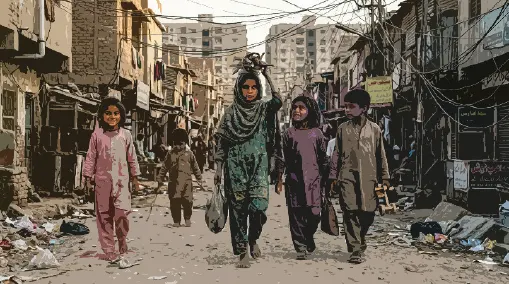
The Pakistan Institute of Education reports that over 26 million children in Pakistan are out of school, including more than 13 million girls. While these statistics might seem straightforward at first glance, they really highlight a serious situation in the country. The number is so huge that it surpasses the combined populations of 22 European countries. In fact, it’s almost equal to the entire population of Australia. Given how worrying this is, it’s important to look into what’s causing it, consider what the future holds for these children, and explore potential solutions at the policy level.
Before delving deeper into the issue, it would be worthwhile to mention the article “Why the Poor Reject Education,” recently written by Shahid Hafiz Kardar, a seasoned economist and former governor of the State Bank of Pakistan. The article focuses on out-of-school children and high dropout rates. While discussing the dismal state of education in Pakistan, Kardar concludes that people stay out of schools not because of a lack of infrastructure or accessibility alone, but because the system fails to deliver the promised returns of education. He elaborates that education is generally directly proportional to higher income; however, in Pakistan, education yields poor economic dividends.
Apart from poor economic returns, a lack of infrastructure, accessibility, and awareness, along with widespread poverty, forms a nexus that pushes children out of schools. According to available statistics, Pakistan lacks the capacity to integrate OOSC into the existing educational setup with its meagre education budget of less than 1 per cent of GDP. The current infrastructure is limited and cannot cater to the needs of an additional 26 million students.
Given the dire situation, it is imperative to shed light on the future of these OOSC. Judging from the present policies and budgetary allocations of both the federal and provincial governments, one can hardly paint an optimistic picture. The current policies of the governments, though strong in rhetoric and weak in implementation, offer little hope. Similarly, the share of education in the national budget remains inadequate.
Policies are tools that help us understand the future direction of any issue. Consistent and sincere policies indicate how a problem will be approached and addressed. The same applies to OOSC. Governments have introduced multiple emergency policies, yet none appear to have produced meaningful results.
To contextualise, the Government of Pakistan introduced the National Education Policy 2009 to address the issue. The policy emphasised free and compulsory education and aimed to improve literacy rates and reduce educational disparities by increasing spending, developing infrastructure, and enhancing teacher training.
In line with the policy, Article 25-A was introduced through the Eighteenth Amendment to the Constitution of Pakistan to provide free and compulsory education to children aged 5 to 16. Yet, it failed to produce meaningful results, as the number of out-of-school children has risen from around 5 million in 2009 to over 26 million in 2026.
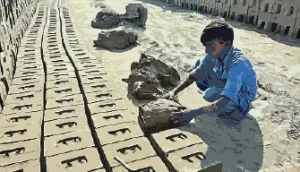 In addition to these constitutional and policy measures, similar efforts have been made in recent years. For instance, the Single National Curriculum was introduced. Likewise, the National Education Policy Development Framework 2024 has been adopted to address the issue of OOSC through skill development, IT integration, and teacher training.


Based in Larkana, Sindh, the writer is a freelance contributor and can be reached at sjatoi831@gmail.com
Leave a Reply