
Well-being
Beyond GDP and GNP
Bhutan is a model for other nations seeking a more holistic approach to development.

Though achieving enviable socio-economic and political developments is every country’s dream, only a few nations are ready to go the extra mile to reach the desired objectives. As things currently stand, most countries measure development in terms of Gross Domestic Product (GDP), Gross National Product (GNP), annual fiscal outcomes, industrial, service, and agricultural productivity, and the rest.
Although those above may determine a country’s prosperity in statistical terms, the ultimate objectives behind all of them lie in the contentment and happiness of the people. That is to say, hardly fewer societies care about the top end of development—happiness. Bhutan, a South Asian country, is a leading example. For the country, happiness is considered the ultimate end and success of all socio-economic means and statesmanship. Therefore, the country is famously known as the “land of happiness,” but why?
Bhutan is a unique and enchanting place located in the eastern Himalayas. Known for its commitment to measuring Gross National Happiness (GNH) rather than GDP, Bhutan stands out as a beacon of inclusion, holistic development, and cultural preservation.
One of Bhutan’s defining features is its emphasis on Gross National Happiness (GNI), a concept introduced by the country’s Fourth King, Jigme Singye Wangchuck. This alternative approach to development considers spiritual, physical, and environmental well-being, along with social and economic factors. The nine domains of GNH include psychological well-being, health, education, time use, cultural diversity and resilience, good governance, community vitality, ecological diversity and resilience, and living standards. This holistic perspective places the happiness and contentment of the people at the core of Bhutan’s policymaking. This philosophy, enshrined in its constitution, guides all government decision-making.
In addition to that, Bhutan stands out globally due to its dedication to environmental conservation. With stunning landscapes, pristine air, and a strong commitment to protecting the environment, it offers ample room for relaxation, coupled with a chance to connect with nature. Achieving carbon neutrality and having more than 70% of its land under forest cover, Bhutan boldly prioritizes sustainability, maintaining a delicate equilibrium between modernisation and preserving the environment for the well-being of future generations.
Bhutan’s culture is woven with rich traditions and vibrant festivals. The architecture reflects a harmonious blend of tradition and modernity, with dzongs (fortresses), monasteries, and prayer flags adorning the landscape. The Bhutanese people, known for their hospitality, actively participate in preserving their unique cultural heritage.
Simplicity lies at the very heart of Bhutan. The simplicity allows its citizens to focus less on material possessions, promotes a sense of gratitude, and reduces stress. These, in turn, reduce the number of distractions and irritants in life and lead to ultimate contentment. Similarly, a deep-seated quest for spirituality, mindfulness, and compassion adds to inner peace and serenity and helps cultivate contentment.
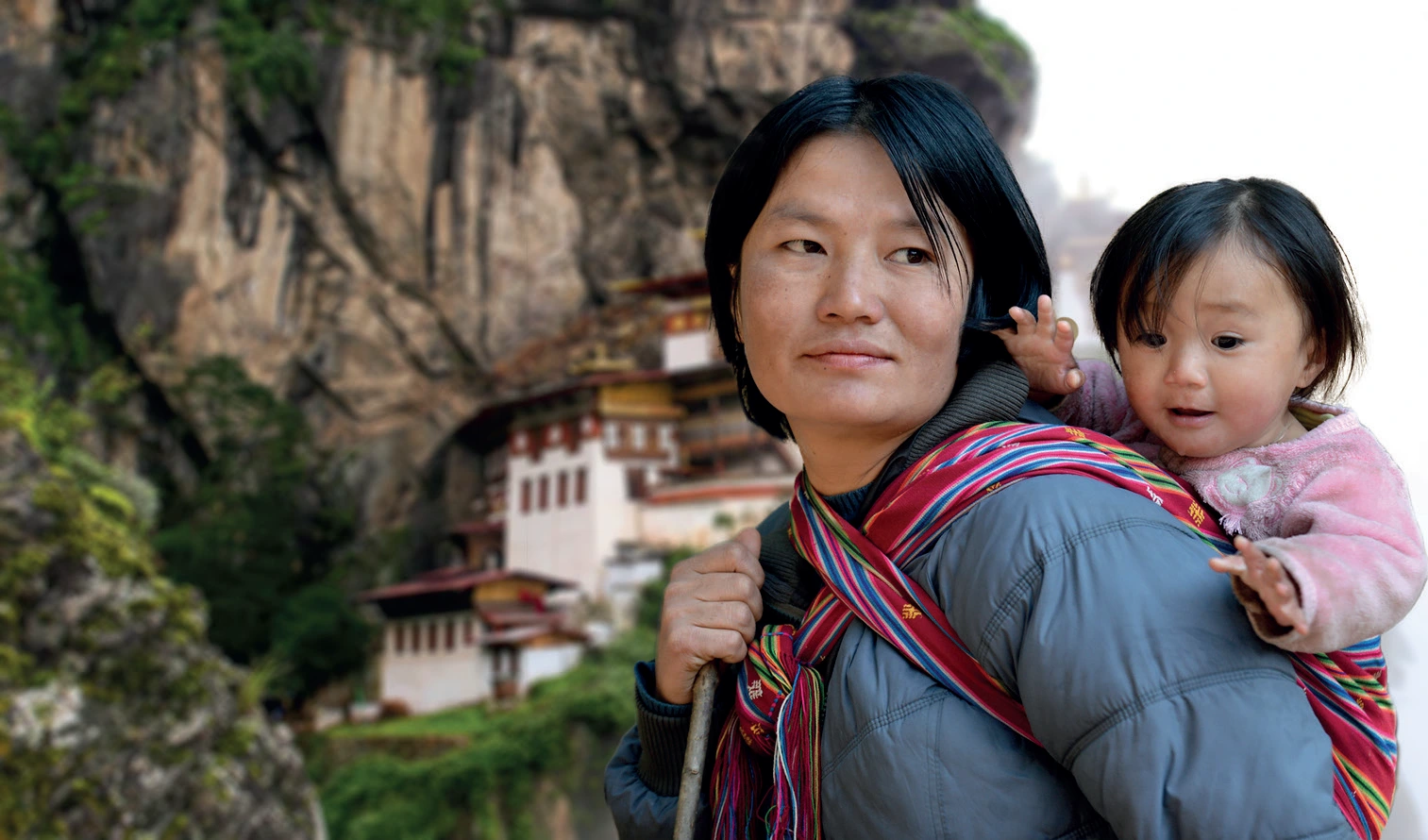
Furthermore, a strong sense of community, social bonds, family values, and an emphasis on peaceful coexistence and collective well-being foster a caring, collaborative, and supportive social fabric. Bhutan’s captivating allure emanates from its breathtaking natural scenery, spanning lush valleys in Paro and Punakha to the towering Himalayan peaks. The nation presents a visual feast featuring the iconic Tiger’s Nest Monastery perched gracefully on a cliff, embodying Bhutan’s spiritual and architectural magnificence. Yet, Bhutan grapples with persistent challenges in harmonizing modernisation with cultural conservation. Tourism, a vital economic contributor, demands a vigilant eye to prevent adverse environmental effects and preserve Bhutan’s traditional lifestyle.
Bhutan’s epithet, the land of happiness, is a model for other nations seeking a more holistic approach to development. Its commitment to Gross National Happiness (GNH), environmental conservation, and cultural heritage makes it a fascinating and inspiring nation. As Bhutan continues to navigate the complexities of the modern world, its pursuit of happiness stands as a testament to the enduring value of prioritizing well-being above all else. Therefore, it serves as a role model for fostering happiness, inclusion, and human well-being above everything else and invites other countries to act correspondingly.![]()

The writer is a freelance journalist. He can be reached at alihassanb.34@gmail.com
Nestlé Pakistan kicks off urban forest tree plantation
Indian Broadcaster Ameen Sayani died
Insights from Telenor Asia’s Digital Lives Decoded Study
NAPA pays tribute to Talat Hussain
Urdu Columnist Nazir Naji passes away
Cargill meets WHO’s recommended best practices
Oppenheimer leads early wins at BAFTA
China expands influence in Afghanistan
Bangladeshi Nobel winner convicted of violating labour laws
US stalls delivery of drones to India
Accolade for Adib Rizvi
Magazine contests Indian government order
Simi Kamal appointed Chair of the Board of IWMI
US wants Pakistan to probe election irregularities
King Charles marks first outing since cancer diagnosis


Leave a Reply