


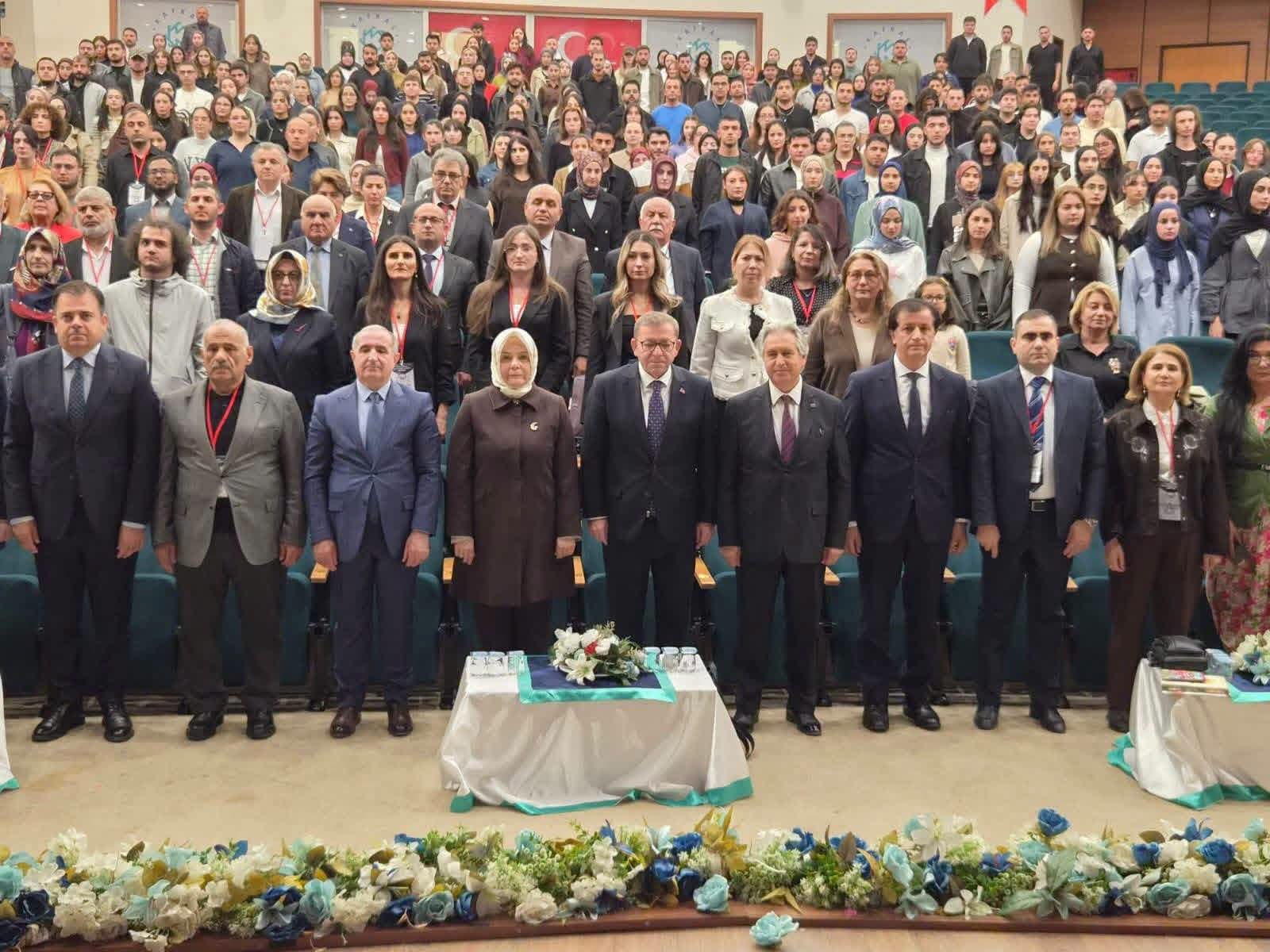
The eastern Turkish city of Kars is known for its historic castle, snow-covered landscape and rich archaeological heritage. But on October 23 and 24, 2026, it became a meeting point for scholars, writers and researchers working in children’s and young adult literature. At the heart of their discussions was a fundamental question: What kind of literature should reach the younger generation, how should it be presented to them, and how can its relevance be sustained in a rapidly changing world?
These questions are by no means confined to Türkiye. Those involved in writing, publishing and researching children's literature in Pakistan face many of the same challenges.
Organised by the Association of Children’s and Young Adult Literature Authors (ÇOGEYB), the 13th International Symposium brought together writers, researchers, publishers and university representatives from several countries. According to the organisers, 274 papers were received from 26 countries, with participants attending both in person and online.
The scale of participation was significant not merely in numerical terms. It reflected the growing recognition that children's literature is no longer limited to storytelling or supplementary educational material. It has evolved into a distinct field of research, intersecting with psychology, language, cultural identity, publishing ethics and emerging technologies.
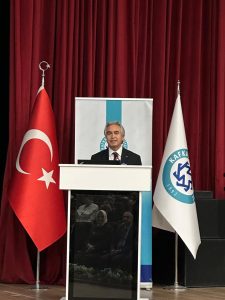 The opening ceremony on October 23 began with the Turkish national anthem, followed by formal introductions and addresses by prominent academic and public figures. Speakers included Bican Veysel Yıldız, president of the association; Prof Dr Hüsnü Kapu, rector of Kafkas University; Prof Dr Öztürk Emiroğlu, rector of Ardahan University; Kars Governor Ziya Polat; and the rectors of Artvin Çoruh, Iğdır and Bartın universities, alongside Kars Mayor Dr Ötüken Senger.
Among the distinguished speakers were Türkiye's Deputy Minister of National Education, Associate Prof Dr Celile Eren Ökten; President of the Turkish National Commission for UNESCO, Prof Dr Öcal Oğuz; President of the National Education Academy, Prof Dr Ali Fuat Arıcı; President of the Turkish Psychological Association, Prof Dr Gökhan Malçok; Chair of the Hans Christian Andersen Award Jury, Dr Shirin Kreidieh; and author and publisher Dr Melike Günyüz.
Their contributions highlighted the interconnected relationship between language, reading, psychological development and the transmission of cultural heritage to younger generations. Awards were also presented to Prof Dr Osman Mert and Prof Dr Öcal Oğuz in recognition of their contributions to linguistic and cultural studies.
Building a lasting institution
Bican Veysel Yıldız was the driving force behind the symposium. His opening remarks and the organisational details he shared suggested that he regarded this 13-year-old academic initiative as much more than an annual event. Preparations, international academic networking, the collection of research papers, publication of full-length contributions and efforts to establish a permanent institution were all part of a broader, interconnected vision.
His central role in sustaining the association's institutional identity and ensuring the continuity of the symposium was evident throughout the proceedings.
Yıldız explained that while this was the 13th international symposium specifically devoted to children's and young adult literature, the association had also organised two other academic symposia, bringing the total number of such events to 15.
He particularly emphasised the principle that researchers presenting oral papers were also required to submit complete written versions. The objective was to ensure that academic contributions did not remain confined to conference halls but were preserved and made accessible through subsequent publication. He also expressed the intention to publish the papers presented at the current symposium.
Pakistan has a substantial but scattered legacy of children's literature in Urdu.
An especially significant part of his address concerned the association's future plans. Referring to a building in Kağızman and the financial arrangements associated with it, he explained that efforts were underway to fulfil the legal requirements for establishing a foundation, including the provision of property and initial capital.
According to him, approximately five million Turkish lira would be required to meet the legal capital requirements, and the foundation's establishment was expected to be completed by December 15, 2026.
The proposed foundation would include a research institute dedicated to children's and young adult literature, envisaged as a permanent centre for academic collaboration between scholars in Türkiye and other countries.
Throughout his address, Yıldız returned to an important idea: the most valuable outcome of academic gatherings is the human relationships they create. Research papers can also be read online or in books, but understanding one another's intellectual concerns, building trust and developing a commitment to collaborative work require face-to-face interaction.
He thanked the host institutions, universities, government representatives and participants who had travelled from distant places to attend the event. At a time when conferences increasingly risk being reduced to certificates and paper counts, this emphasis on meaningful academic engagement was particularly noteworthy.
What makes a children's book worth publishing?
The presentation by Turkish publisher and author Dr Melike Günyüz was among the symposium's most thought-provoking contributions.
Her central argument was that the freedom to write and the decision to publish a manuscript as a book are two entirely different matters. Not every manuscript received by a publisher deserves to be published. In her view, the growing number of carelessly prepared manuscripts generated through artificial intelligence has made the process of selection and editorial scrutiny increasingly challenging.
She raised an unusual but important question about the selection of children's books: If a particular book never reaches a child, what would be missing from that child's experience of life?
This perspective challenges a familiar tendency in our own publishing environment: the assumption that a book is necessarily useful simply because it contains a moral lesson.
Günyüz described the editor as an accountable professional working between the author, the young reader and the publishing house. In the case of picture books, she argued, editorial responsibility extends beyond the written text to include colours, illustrations, page composition and the interpretation of visual meanings.
One important point emerging from discussions on the psychological significance of children's literature was that simply explaining the meaning of justice, honesty and compassion to children is not enough. What matters more is whether a story helps them understand the feelings of others and apply these values in their practical decisions.
Similarly, Kars Mayor Dr Ötüken Senger emphasised the importance of connecting history, local traditions, music and historical sites with the consciousness of younger generations. He argued that, alongside books, films, visual narratives and visits to historical places can also serve as effective means of cultural education.
Pakistan's academic contribution
A prominent trend among the papers presented at the symposium was the exploration of children's literature through difficult and often distressing human experiences.
What should children be told about war? At what age, and in what manner, should migration and displacement be introduced to them? How can writers maintain a balance between literary authenticity and psychological sensitivity when dealing with fear, violence and death?
These questions informed several important sessions. Another area of discussion focused on children's digital habits and their changing relationship with books.
Pakistan was represented in person by three academics: Dr Abdul Fareed Brohi, Dr Hafiz Waqas Khan and Muhammad Tariq Khan.
Dr Abdul Fareed Brohi, who heads the section dealing with children's literature at the Dawah Academy of the International Islamic University, Islamabad, presented a paper titled Child Protection and Development for Social Leadership: An Islamic Perspective. His presentation examined children's upbringing, care and collective social responsibility within the framework of Islamic thought. He also chaired a session during the first academic sitting.
Dr Hafiz Waqas Khan, head of the Department of Tarbiyah at Riphah International University, presented a paper exploring the concept of tarbiyah in young adult literature, its intellectual implications and its influence on youth identity. His discussion centred on how literary narratives can play either a constructive or detrimental role in shaping the minds and personalities of young people.
This scribe presented a paper titled Artificial Intelligence in Children's Publishing: Emerging Trends, Opportunities and Challenges in Pakistan. It examined the possibilities offered by artificial intelligence in story writing, translation, editing, and illustration, alongside concerns relating to cultural representation and editorial responsibility.
For the Pakistani participants, an important dimension of the symposium was the opportunity to establish personal and academic connections. Meetings with researchers and publishers working in different languages opened avenues for introducing Urdu children's literature, exploring translation opportunities and discussing joint research initiatives.
In particular, the relationship between Urdu literature and the literary traditions of Türkiye and Azerbaijan emerged as a promising area for further exploration beyond the formal conference programme.
However, translating these contacts into meaningful outcomes will require written institutional plans, carefully selected lists of books for translation and clearly defined arrangements concerning publishing rights.
The programme also included online presentations. These featured Dr Hafsa Fatima's paper, From Negative Narratives to Constructive Storytelling: An Islamic and Human Development Perspective on Children's Character Building, and Prof Dr Munazza Hayat's contribution, Hidden Trends and Negative Subtexts in Storybooks.
Azerbaijani researcher Prof Dr Marziya Najafova presented a paper on the representation of the Karabakh War and its impact on children in Azerbaijani literature. Dr Zakira Aliyeva examined the relationship between the communication needs of the younger generation and literary memory in the age of artificial intelligence.
The contributions of Prof Dr Vefa Savaşkan addressed the repetition of cultural and social stereotypes in AI-generated children's stories, as well as certain negative messages embedded in traditional tales.
Other sessions explored children's digital engagement, peer bullying, migration, war, trauma, picture books and the psychology of reading.
For instance, Prof Dr Raşit Koç examined Samad Behrangi's celebrated story The Little Black Fish through the principle of age-appropriate literature. Another paper presented research into how young readers perceive stories written using artificial intelligence.
The diversity of these subjects demonstrated that discussions on children's literature across different languages and societies are moving beyond the conventional idea of simply imparting a 'good moral lesson'.
Where literature meets culture
The symposium also offered a cultural dimension alongside its academic proceedings. Artists from the State Conservatory of Kafkas University presented music and folk dances from the Turkic world.
These performances connected the academic discussions with the cultural environment whose preservation and transmission to future generations had been repeatedly emphasised during the opening addresses.
Pakistan has a substantial but scattered legacy of children's literature in Urdu. It encompasses a long literary history, children's magazines, translations, editorial work and illustrated books. What is needed now is to organise this literary heritage through systematic research, reliable publishing standards and sustained literary exchange with other languages.
The meetings in Kars once again highlighted the possibility of researchers from Türkiye, Azerbaijan and Pakistan developing long-term collaborative projects to explore both the shared traditions and distinct cultural experiences reflected in children's literature.
The real test, however, begins after the conference: Can these conversations translate into research collaborations, literary translations and new books?
The writer is a well-known author currently based in Islamabad. He holds an M.Phil. degree, with a thesis titled "Urdu Magazines for Children in Pakistan: 1971 to 2000". He has received numerous awards for his literary contributions and has also served as an assistant editor for the magazines "Gogo" and "Sim Sim". In 2014, he became the editor of the monthly magazine "Jugmug Taray"; in 2016, he began serving as editor of "Monthly Sathee". He also contributed to the publication of the girls' magazine "Khilti Kalian". He currently edits the children's magazine "Bachon Ka Aashaina" and the corporate in-house magazine. He is the author of two children’s books: "Phool Ka Raaz" and "Inami Library".
Leave a Reply