


Carl von Clausewitz, the renowned Prussian general and military theorist, famously defined war as "the continuation of policy by other means."
In the contemporary era, however, conflict is no longer limited to direct military confrontation. States increasingly pursue political and strategic objectives through hybrid methods that operate below the threshold of total war, combining military, economic, information, cyber, and covert means to weaken adversaries without engaging in full-scale conventional conflict.
Although the term hybrid warfare had appeared earlier in strategic discourse, it was Frank Hoffman, a former U.S. Marine Corps officer and defence analyst, who popularised the concept in 2006. He described it as the coordinated use of different forms of warfare by adversaries to achieve political objectives. While there is no single universally accepted definition of hybrid warfare, it is generally understood as the combination of conventional military force with irregular, political, informational, economic, and cyber tools to exploit an adversary’s weaknesses. It often includes disinformation campaigns, cyberattacks, lawfare, economic coercion, terrorism, diplomacy, and foreign electoral interference.
While hybrid warfare has received greater attention in recent years, the associated strategies are not entirely new. Throughout history, states and military thinkers have relied on indirect and non-conventional methods to weaken adversaries alongside direct military force. Ancient strategists emphasized deception, psychological manipulation, espionage, economic pressure, and political subversion as important instruments of conflict. Chinese military strategist Sun Tzu highlighted this idea in his famous military treatise, the Art of War, arguing that “the supreme art of war is to subdue the enemy without fighting.” This idea reflects the central logic of modern hybrid warfare, whereby states seek to achieve strategic objectives without relying solely on conventional military force.
While the logic of indirect competition is centuries old, the character of warfare has evolved significantly with industrialisation and advances in military technology. The two World Wars demonstrated how states relied on conventional military power and industrial capacity to secure victory. However, the emergence of nuclear weapons fundamentally altered international conflict, making full-scale war between nuclear-armed states increasingly costly and risky due to fear of Mutual Assured Destruction (MAD). As a result, states gradually shifted towards indirect and non-conventional methods of dominance, including proxy warfare, cyber operations, disinformation campaigns, economic coercion and covert activities. Contemporary conflicts are therefore fought not only with conventional military force but increasingly across political, economic, informational and technological domains.
Traditional warfare primarily follows a state-centric approach, whereas hybrid warfare operates across multiple levels and dimensions. It extends far beyond the battlefield, influencing the political, economic, informational, and social foundations of a state, thereby posing serious challenges to national security. These characteristics make hybrid warfare particularly relevant in regions marked by enduring geopolitical rivalries, such as South Asia, where Pakistan has long confronted hybrid threats originating from India. Since independence, relations between India and Pakistan have remained characterised by persistent rivalry, with both states viewing each other through a security-centric lens.
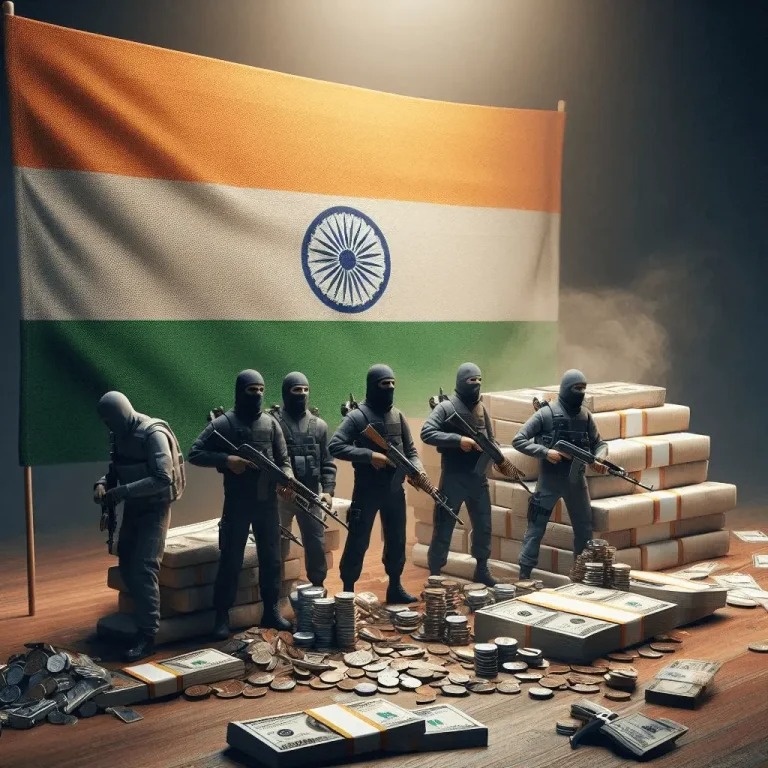
The security landscape of South Asia changed dramatically following the region's nuclearization. While conventional confrontation became costlier owing to the risk of nuclear escalation, India increasingly turned to hybrid methods to pursue its rivalry with Pakistan. According to Mushahid Hussain Syed, a senior politician and former Senator, India’s hybrid warfare posture is based on the “Triple Ds: Demise, Damage, and Destabilise.” Over the past two decades, Pakistan has remained exposed to such hybrid challenges, which target diplomatic, economic, water, informational, cyber, and security domains.
This approach reflects ideas traced to Chanakya Kautilya’s Arthashastra, which advocated psychological operations, espionage, subversion, and economic pressure to weaken adversaries from within. India employs similar tactics through economic coercion, cyber operations, disinformation campaigns, diplomatic pressure, and support for proxies.
The doctrine associated with Indian National Security Adviser Ajit Doval, commonly referred to as the "Doval Doctrine," is frequently cited in Pakistan as reflecting India's approach to hybrid warfare. While categorizing Pakistan as an enemy, Doval advocated a deep portfolio of covert operations against Pakistan, including promoting instability in the country by sponsoring terrorism and targeting ethno-religious, political, and socio-economic domains to create internal security instability.
For decades, India has not only been conducting terrorism as its state policy directly against Pakistan through its intelligence agency, the Research and Analysis Wing (RAW), and its proxies to destabilise the country; it has used and continues to use Afghanistan’s soil for perpetuating terrorist activities in Pakistan.
Former US Secretary of Defense Chuck Hegel stated in a talk on Afghanistan at Cameron University in Oklahoma in 2011 that India had been using Afghanistan as a “second front” against Pakistan. Today, India is not only a threat to the stability of the South Asian region but also a destabilising force for international security. It has been involved in terrorist activities in other countries as well, in particular Canada and the US. In 2024, the Canadian government expelled six Indian diplomats, including the Ambassador, following an investigation linking them to criminal activities and the murder of a Sikh national of Canada, Hardeep Singh Nijjar. Similarly, Nikhil Gupta, an Indian national, was convicted on 29 May 2026 in the US for plotting to assassinate a Sikh political activist, Gurpatwant Singh Pannun, at the direction of the Indian government. This constitutes irrefutable evidence that Indian state-sponsored terrorism poses a grave threat to regional and global peace and security.
India has long run a global disinformation campaign to damage Pakistan's international image.
Indian RAW also operates directly and through proxies to target Pakistan's economic infrastructure, particularly the China-Pakistan Economic Corridor (CPEC). The arrest of a serving Indian naval officer, Commander Kulbhushan Yadav, who was operating under the Muslim name of Mubarak Hussein Patel, a RAW agent handler assigned to coordinate and conduct terrorist activities in Pakistan, exposed India's covert network and its broader non-kinetic operations. India has also conducted covert operations aimed at disrupting China-Pakistan relations and undermining Chinese investment in Pakistan. India, through its proxies, carried out militant attacks, targeting Chinese nationals, including the 2021 Dasu bus attack and the 2022 suicide bombing at Karachi University that killed three Chinese teachers, as part of a broader effort to undermine CPEC and Pakistan-China cooperation.
India is now using water as a weapon against Pakistan, in violation of the 1960 World Bank-brokered Indus Waters Treaty (IWT). Following the Pahalgam incident in April 2025, India placed the Treaty in abeyance despite the absence of any such clause in the Treaty. Given that the IWT serves as a lifeline for millions of Pakistanis and supports over 90 per cent of the country’s crops, Pakistan’s National Security Committee (NSC) has warned that “any attempt to stop the flow or diversion of Pakistan’s water will be considered an act of war.”
India has long run a global disinformation campaign to damage Pakistan's international image. A December 2020 report by EU DisinfoLab exposed an extensive network, operated by the New Delhi-based Srivastava Group, that was active in Brussels and Geneva, comprising more than 750 fake media outlets, NGOs, and think tanks that were spreading misinformation and misleading narratives about Pakistan.
From weaponizing narratives and water to supporting proxies for fomenting terrorism, India continues to employ a range of hybrid tactics aimed at destabilising Pakistan. Despite these persistent efforts, Pakistan has successfully thwarted numerous Indian attempts to undermine its security and national interests, demonstrating that grey-zone operations remain an enduring but manageable challenge.
Pakistan has taken significant measures to counter hybrid threats across multiple domains, including strengthening cybersecurity, counterterrorism efforts, and efforts to counter disinformation. As hybrid warfare continues to evolve, sustained investment in technological innovation, institutional coordination, public awareness, and economic resilience will remain essential to safeguarding long-term national security.
In the present era, hybrid warfare has become an unavoidable reality, reshaping modern conflict and posing significant challenges to states worldwide. Wars are no longer fought solely through conventional military means, but increasingly through disinformation campaigns, cyber operations, economic pressure, covert activities and influence operations. Moving forward, strengthening institutional resilience, economic stability, technological advancement and national unity will remain essential for effectively countering the evolving challenges of hybrid warfare posed by India. 

The writer is a Research Assistant at the Centre for International Strategic Studies Sindh (CISSS), Karachi. He can be reached at alihamza@cisss.org.pk
Leave a Reply