



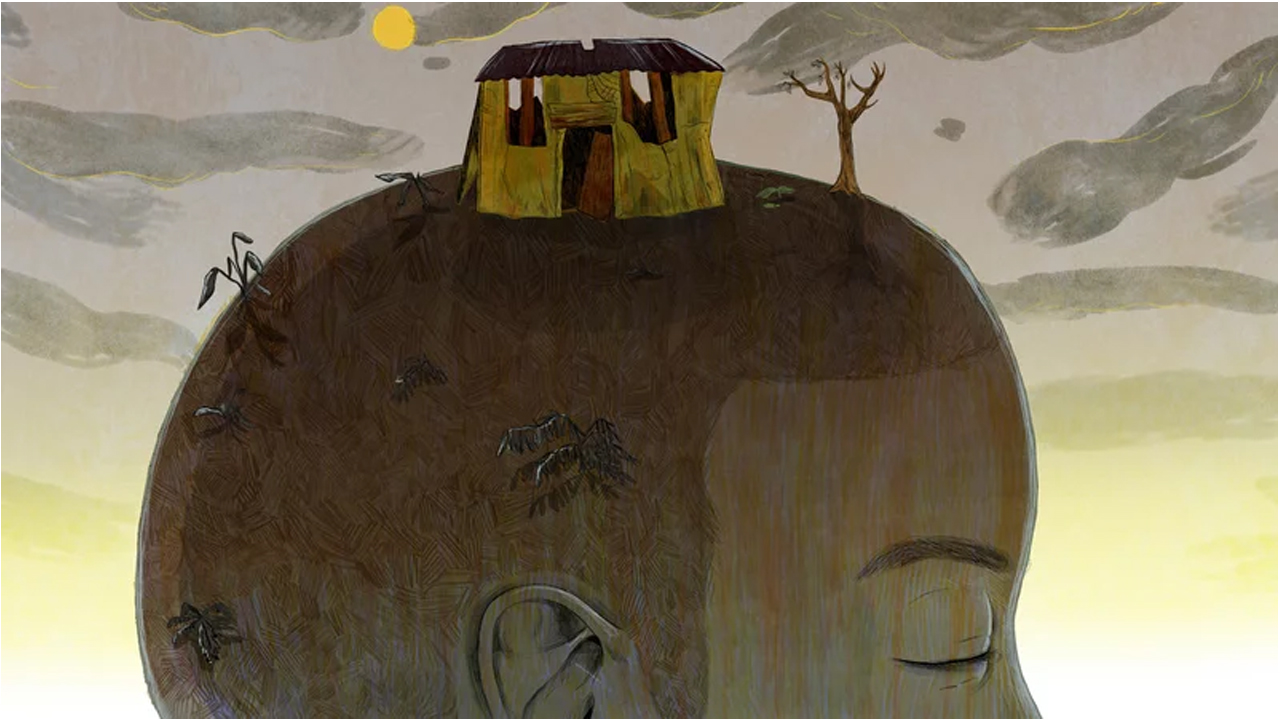
In Tharparkar, as of late, a man killed three of his kids by tossing them down a well and then continued to end his own life. A report distributed by the Sindh Mental Health Authority has uncovered high paces of self-destruction and psychological sickness in Tharparkar, one of the most ruined areas of Pakistan. While most psychological wellness research in Pakistan has happened in metropolitan and peri-metropolitan regions, this pivotal review is one of the first of its sort to be led in a ruined provincial region.
Some frightening disclosures have been made, for example, the way that most suicides are in the age bracket of 10-20 years which is immensely not quite the same as the rates generally found in the remainder of the country with most casualties being in the age scope of 20-35.
So for what reason youngsters from devastated networks are ending their lives and how do we stop this?
The Asian Development Bank gauges that around a fourth of Pakistanis live underneath the neediness line. The connection between neediness and poor actual wellbeing is notable, with the PM in his first discourse featuring the imp¬a¬cts of helpless sustenance on the strength of small kids from ruined families. Nonetheless, little consideration is being paid to mental issues because most of them are from neediness.
Understanding this, the World Organization for Mental Health chose 'Psychological well-being in an Inconsistent World' as the topic during the current year's Reality Psychological Wellness Day noticed this past Sunday.
The examination has shown that mental injuries related to destitution don't simply emerge because of material hardship yet additionally the self-insight that one has less when contrasted with others. Admittance to online media has made this considerably more articulated with a tick of a button permitting influenced youth to see the lavish ways of life of the privileged and draw unfortunate correlations with their satisfaction. This outcome might leads to hatred, despair and at last winds up in emotional well-being issues.
Mental health brings about a heap of issues for youth living in neediness. Compromised comprehension brings about helpless scholarly execution, early school dropouts and decreased efficiency. This further ensnares them into the endless loop of neediness by keeping them from getting profitable business and accomplishing their full acquiring potential. Poor financial conditions and the absence of work openings further compound these issues.
To manage the horrendous considerations and feelings, they frequently resort to undesirable practices, for example, substance misuse, which is consistently expanding with compulsion supposedly guaranteeing 700 lives each day in Pakistan, and self-destruction, most of whom are the disappointed youth.
Relocation of weight on others as outrage and animosity brings about broken relational connections prompting expanding paces of abusive behaviour at home and separation. Every one of these issues may likewise urge devastated youth to take up crimes, causing an expansion in savage wrongdoing, experiences with law requirements, and ensuing imprisonment.
It is no incident that in a new report 85% of male detainees in a nearby prison were experiencing misery. Combined with the cultural shame and absence of mindfulness about emotional well-being, the ruined youth influenced by psychological sickness additionally become defenseless against misuse. Occurrences of binding to trees, unsafe medicines by quacks and disregard by relatives are normal.
For us to address this emergency at a populace level, alongside supporting monetary strengthening, destitution easing programs need to address emotional wellness concerns. While government-run destitution easing projects, for example, the Ehsaas and Kamyab Jawan are pivotal in their degree, their effect is yet restricted since they don't resolve the mental issues that might be forestalling affectees from getting away from the pattern of neediness.
The best ideal opportunity to resolve mental issues is straightaway. Early discovery and intercession are likewise less expensive since it forestalls the beginning of extreme mental issues which require costlier specific administrations. Pakistan as of now has an immense organization of Essential Wellbeing Units that offer essential consideration in provincial regions. On the off chance that emotional wellness administrations were incorporated into this framework, numerous youthful, oppressed Pakistanis would have early admittance to mental medical services in their networks, permitting us to stop the issue from the beginning.
Besides, research has tracked down that each Rs 1,000 put resources into Mental health yields an arrival of Rs 5,000 to the public exchequer due to increa¬sed efficiency and diminished treatment costs.
It could be contended that the fundamental association between penury and mental health is the material need and monetary strengthening alone can be adequate in resolving the issue. Notwithstanding, this overlooks the way that mental issues cut across class and are likewise very predominant in higher-pay networks. Moreover, research has shown that the association between cash and mental prosperity just matters up forthright at which fundamental requirements are met. Thusly, destitution mitigation should work connected at the hip with emotional well-being intercessions to be successful.
Putting resources into penury easing is an intense and positive advance, by the current government, that might serve to put Pakistan in good shape. Nonetheless, to guarantee that the additions made in destitution lightening are not upset, sufficient consideration should be paid to the psychological wellness of devastated networks, especially youth. Allow us to promise then, at that point, to act to guarantee that ruined youth influenced by mental diseases are cared for so we can set up a better and more joyful Pakistan for all.

The writer is a student of BDS at Islam Medical and Dental College Sialkot. He is a freelance writer with a keen in writing about social issues. The writer tweets at @mussab_tariq
Leave a Reply