



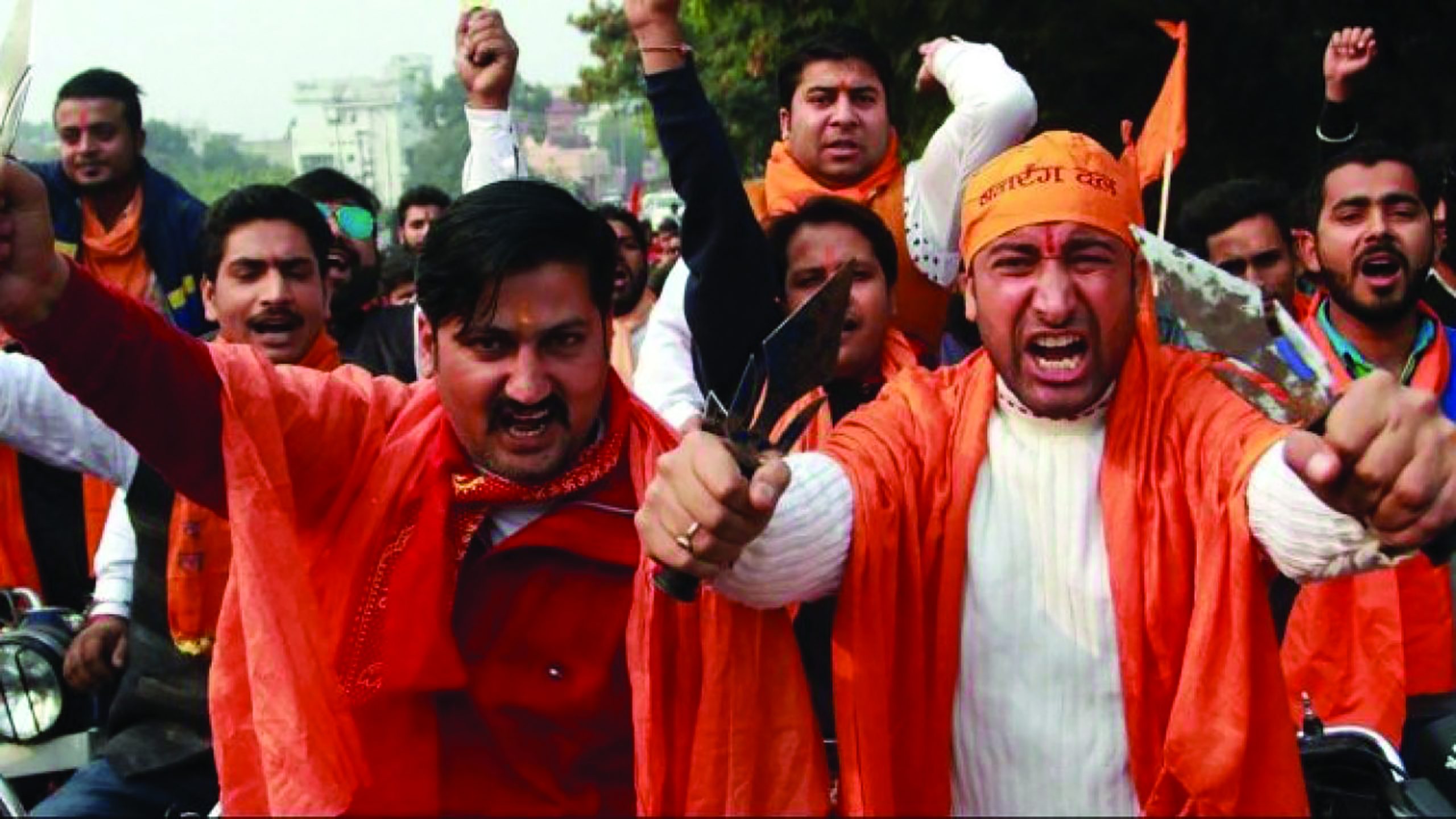
The term Hindutva was coined by V.D. Savarkar in his seminal essay which was published in 1923. But its roots went back over half a century earlier. Savarkar made it plain that “Hindutva is not identical with Hindu Dharma”. He was right. Hinduism is a noble and ancient faith. Hindutva is a modern and fascist concept.
Hindutva activists have now challenged the legitimacy of what is called caste reservations through which lower-caste groups benefit from quotas in the civil service and education. At independence in 1947, such reservations were a cardinal principle of the new state, compensating for the thousands of years of caste deprivation, a culture in which the so-called “untouchables” (those outside the caste system) could only work in impure trades – cleaning, including manual removal of domestic sewage, leather tanning and corpse removal. Yet, alongside a wider push to “decolonize” the education curriculum, Hindutva ideologues in India and the West, have gone into combat against caste reservations. They have done so by re-appropriating history: by claiming that the caste system was a colonial construction or a result of foreign “invasion”. In 2015, Mohan Bhagwat, the leader of the RSS, called for a review of the caste reservation policy. Mechanisms of governance such as the census and codification of laws under colonial rule undeniably led to a proliferation of political identities based on religious or caste affiliation in colonial India. But many scholars insist that it is historically inaccurate to claim that castes and a system of caste hierarchy did not exist before colonial rule.
Some scholars have claimed that caste was a colonial construction. A photograph of Rajputs from the 1860s classified them as high-caste Hindus. According to Hindutva supporters, in perpetuating caste reservations, previous Indian governments since 1947 have maintained this colonial system. To “decolonize India”, as Modi’s intellectual cheerleaders describe their project, means removing the caste system as part of a wider move of ridding India of the vestiges of the British colonial system. Some Indian scholars, working in Ghent in Belgium and in Karnataka in south-west India, have joined this spurious decolonization agenda, purporting to free modern Indians from their former rulers, Mughal (aka Muslim) “invaders” and British (aka Christian) “invaders”. Central to Hindutva is the idea that Indian religions are those born in India – and thus Hinduism, Sikhism, Buddhism, Jainism, etc., fall into this bracket. But followers of Islam or Christianity pray to a foreign religion and so are considered by some to be outside the Hindu nationalist fold. History books in schools are being rewritten to minimize the contribution of Muslims, while predominantly Muslim cities such as Allahabad and streets in countless towns are being renamed with more “appropriate” Hindu titles. Heroic founders of the new India, such as Mahatma Gandhi, are now being reassessed as divisive figures who undermined Hindu unity.
Under Modi, the gloves are off. Hindutva has acquired a menacing lease on life.


The writer is a legal practitioner and columnist. He tweets @legal_bias and can be reached at shahrukhmehboob4@gmail.com |
|
Cover Story
|
|
News Buzz
|
Update |
Leave a Reply