



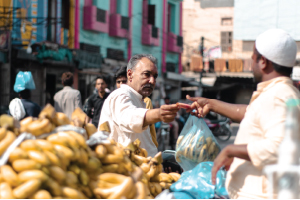
 The level of hunger and malnutrition in Pakistan is categorised as serious as the country currently ranks 92 out of 116 countries, says Global Hunger Index (GHI), one of the most important international reports for measuring hunger across the world. To make matters worse, even such South Asian nations as Bangladesh and Sri Lanka fare far better than Pakistan in the GHI rankings. Among the chief reasons behind the food insecurity crisis are extreme weather conditions due to climate change, economic and health challenges owing to Covid-19 pandemic and an overall lack of sufficient funds and financial resources to buy food.
However, in the case of Pakistan, the skyrocketing inflation is also badly affecting the purchasing power of a common man, adding to the food security crisis manifold. The same fact is endorsed by the World Food Programme (WFP). More’s the pity, food insecurity is getting worse day by day in the country, considering stagnant income levels due to weak economic growth. As per WFP estimates, about 43% people in Pakistan are food insecure while 18% of those have acute food insecurity.
According to figures revealed by the Pakistan Bureau of Statistics, the Consumer Price Index (CPI) increased by 11.5% in November 2021 when compared to the same month in 2020. Food inflation in urban areas increased by 11.9% while in rural areas it increased by 8.6%.
Pakistan lags behind in achieving Sustainable Development Goal (SDG) 2, which is related to ending hunger and ensuring access to safe, nutritious and sufficient food. Espousing a broader concept, the National Food Security Policy (NFSP) of Pakistan delineates major challenges facing the country in terms of achieving sustainable food security. As per NFSP revelations, among the major challenges bedevilling food security in the country are related to affordability for nutritious food by poor segments, improving quality and timely supply of agriculture inputs, developing infrastructure and technologies, efficient utilisation of land and water resources as well as addressing the requirements of market infrastructure.
Crop yield in Pakistan is quite low when compared to other countries. Traditional measures are still in practice while other countries have moved towards digital farming and have introduced a set of new technologies, such as data sciences, digital communication channels and automation to achieve higher production levels. As a negative corollary, agriculture imports have increased over the time period as domestic production is not adequate to meet the growing food demand. Apart from increase in demand, the total output level has miserably decreased owing to a range of issues, such as unavailability of basic inputs (e.g. water and quality seeds), extreme weather, decrease in cultivable land and a criminal negligence of the successive governments in ensuring the sustainable growth of the country’s agriculture sector.
 Currently, farmers in the Punjab province hint at a significant fall in wheat output this year because of unfavourable weather and high energy and fertiliser prices. The Indus River System Authority projects that water shortage for Rabi crops coupled with below normal rains will negatively affect the crop production in Punjab.


The writer is a senior research associate at the Sustainable Development Policy Institute (SDPI) in Islamabad. He can be reached at asifjaved@sdpi.org
Leave a Reply