



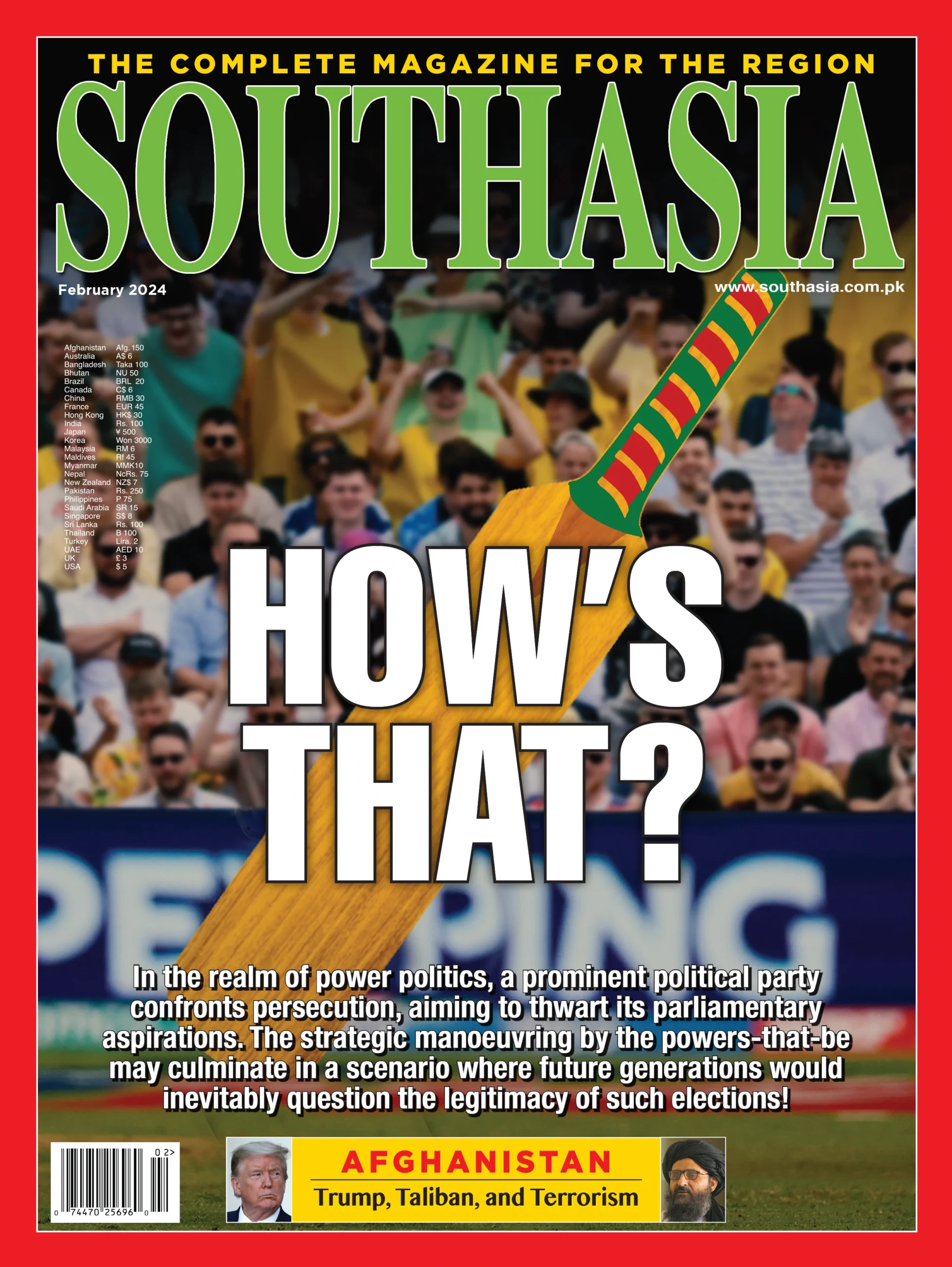
How’s That?
This is with reference to the cover story that appeared in the February 2024 issue of SouthAsia. Depriving one of the leading political parties of its election symbol was not unconstitutional. However, the caretaker government should have shown some sportsmanship by giving the party equal space, better to say, the extensively discussed level-playing field to contest in the recent general elections. Be that as it may, the time has come to move forward and work in tandem for the greater interest of the nation mired in deep-seated corruption and a formidable financial crisis. At this crucial juncture, it is necessary for all political stakeholders, including the Opposition and the civil-military bureaucracy, to sit and act together as the national economy needs a slew of reforms to put it back on the path of recovery and sustainable growth.
Mirza Arsalan Wahid,
Jhang, Pakistan.
Perpetual Economic Crisis
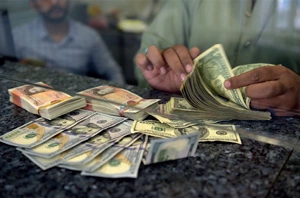 Pakistan has been losing its attractiveness as a business-friendly country, especially for foreign investors, for over a decade. To make things worse, the situation has adversely affected the country’s economic profile as multinational companies and foreign investors are now reluctant to invest in Pakistan. Apart from IT firms, a few international companies have been doing business in different sectors of the country for decades. Still, no more multinational businesses are willing to start their businesses in Pakistan, a much-needed aspect that could foster an atmosphere of competition even though the country of over 24 billion people, rich in natural resources and workforce, is no less than a paradise for investors. This should be changed now, and some drastic measures need to be taken to make Pakistan a business-friendly country.
Farman Ali,
Karachi, Pakistan.
Low Foreign Investment
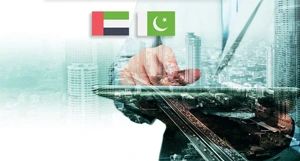 In our country, the trend of withdrawing capital from one’s business and investing it elsewhere has become a grim reality, weakening the national economy at a rate of knots. Much to our chagrin, the unemployment rate is also touching the sky. According to a media report, during the last twenty months, the Pakistani business class has invested heavily in the UAE’s real estate sector and set up import-export houses in Dubai. In Pakistan, on the other hand, foreign direct investment has fallen by a conservative estimate of 28% in the last 18 months, followed by a rapid decline in remittances and exports. This trend may become more detrimental and consequential if this situation is not addressed immediately. It is a worrying moment for the newly-elected government.
Huma Ilahi,
Sharjah, UAE.
PSL and Pakistan Cricket
 The 9th edition of the Pakistan Cricket League has recently been kicked off, which is good news for the cricket-crazy fans in the region. Although the PSL, as Pakistan’s leading brand, has come of age, it is time to reflect on its success in terms of producing quality cricketers able to represent Pakistan’s national cricket team internationally. In my opinion, the Pakistan Cricket Board (PCB) cannot rely merely on the PSL as a cricket nursery since much effort is required to find and nurture the best available talent in the country. If truth be told, consistent efforts are needed to discover the most promising players at the grassroots level.
Ayaz Ahmed,
Islamabad, Pakistan.
Point to Ponder
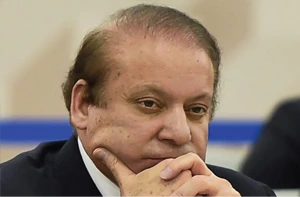 TThe election process has been completed successfully, and a new government has also been formed. When the election campaign was going on, many predictions were made about the results at the end of the electoral exercise. I think the Pakistan Muslim League-Nawaz (PML-N) as a political party has not been able to successfully adopt an effective strategy on the three fronts of media, print, electronic, and social media, and only the personal fame of Nawaz Sharif was the only factor that helped the PML-N win more seats in the recent elections. The PML-N should have won over a two-thirds majority in Punjab; this party should not be happy, only that it has a simple majority in Punjab. Why did this happen? The PML-N needs some soul-searching and must ponder the facts without any bias or prejudice.
Riaz Chowdhury,
Faisalabad, Pakistan.
Labyrinth of Power Politics
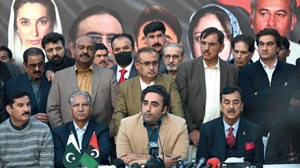 One often wonders what is so special about power that a person goes to the extent of putting his life at stake to get power, even after enduring exile, imprisonment, and punishments. Of course, there is such magic in power and authority that when a person is in power, he finds himself on cloud nine. However, when he loses power, he keeps revelling in his nostalgic reverie, characterised by authority, control, and many worldly gains. This is not enough, as many people go the extra mile to gain power somehow, even if they have to enter the power corridor through a back door.
Dr. Inam Ahmed Khanzada,
Shikarpur, Pakistan.
Pakistan-India Relations
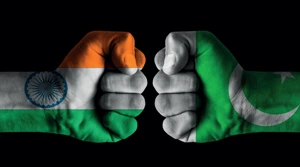 Regarding Pakistan-Indian relations, there is not much hope left to bring normalcy to their bilateral relationships. Despite the significant steps taken by Pakistan to reduce tensions with India, the situation remains uncertain. Diplomatic activities of many important countries are ongoing. A question constantly bothers us: if a war between the two nuclear countries is possible, then why is a safe environment and sustainable peace in the subcontinent not possible? Apparently, the Kashmir issue is the biggest obstacle to peace. But if the enemy is determined not to relent, they may have many excuses. In the given scenario, the newly-elected government of Pakistan must keep up its efforts to restore its ties with New Delhi.
Azra Ilmas,
Lahore, Pakistan.