


“Some are born to enjoy illusion; others are cursed to see the truth.” This statement aptly captures the stark socio-economic divide in Pakistan, where the experience of the state varies dramatically according to one’s wealth, influence, and social position.
For the privileged, Pakistan can represent opportunity, comfort, and security; for the poor, it often represents inflation, unemployment, inadequate public services, and an uncertain future. The country’s fundamental challenge is therefore not merely poverty, but a governance structure in which economic inequality often translates into unequal access to state institutions and opportunities.
Pakistan can increasingly be described as having two parallel realities. The affluent enjoy private education, quality healthcare, secure housing, modern transport, exclusive social spaces and the ability to protect themselves from economic shocks. The poor, meanwhile, frequently depend on overcrowded public schools and hospitals, struggle with rising food and energy costs, and remain vulnerable to unemployment, illness and climate-related disasters. For a wealthy family, inflation may require a lifestyle change; for a poor household, the same inflation may mean reducing food consumption or withdrawing a child from school.
The problem becomes more serious when wealth and political influence reinforce each other. Where access to policymakers, public resources, regulatory institutions, and economic opportunities depends heavily on connections, the state can unintentionally become a mechanism for reproducing inequality. Those who already possess wealth are better positioned to influence decisions, obtain information, navigate bureaucracy, and withstand economic crises. Those without such resources remain dependent on institutions that may be slow, inaccessible, or unresponsive.
This creates a vicious cycle. Wealth generates influence; influence generates access; access creates further economic advantage; and economic advantage generates greater influence. At the other end, poverty produces poor education, limited skills, insecure employment, and weak political voice, which in turn perpetuate poverty. Consequently, inequality becomes intergenerational.
The taxation and public expenditure system also reflects this governance challenge. When the tax burden falls disproportionately on consumption while preferential treatment and exemptions remain available to powerful economic groups, the poor can end up paying a significant share of their limited income merely to survive. Similarly, when public education and healthcare are inadequate, low-income citizens are forced to purchase what should be available as essential public services privately. Thus, the poorest citizens can sometimes pay more for a weaker state.
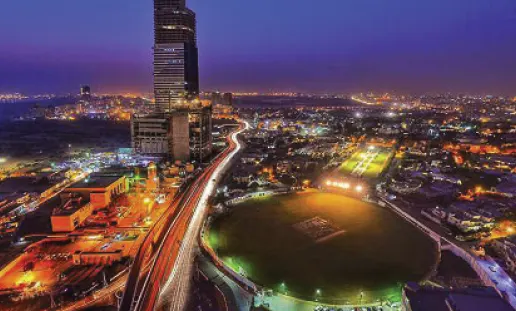
Another danger is the illusion of development. Shopping malls, gated communities, luxury vehicles, private universities, and high-end housing projects create visible signs of prosperity. Yet these symbols can conceal the economic insecurity experienced by millions. Development cannot be measured simply by the wealth accumulated by a small segment of society.


The writer is a civil servant with a keen interest in socio-economic aspects in the light of Quranic concepts. He can be reached at wajidpalh315@gmail.com
Leave a Reply