The Beijing summit was not intended to resolve the core issues dividing the United States and China, as neither side presently considers these issues resolvable solely through negotiations
ByDaniyal Talat | June 2026
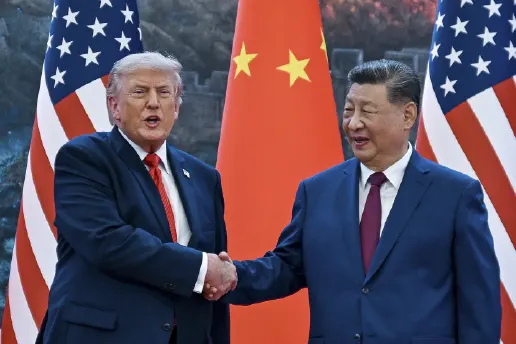
The recent summit in Beijing between U.S. President Donald Trump and Chinese President Xi Jinping concluded without any major breakthroughs on trade, Taiwan, Iran, or technology policy. While both governments described the meeting as constructive, the reality was far more restrained: the summit largely served as an exercise in maintaining stability and avoiding further deterioration in relations between the world’s two largest powers. No landmark agreements emerged, no strategic disputes were resolved, and no dramatic shifts in policy were announced.
Yet despite producing little in terms of substance, the meeting may still hold significant importance for the future of US-China diplomacy. At first glance, the summit appeared underwhelming. The long-standing structural disagreements that have shaped relations between the United States and China remained firmly intact. Trade tensions, technology restrictions, industrial policy disputes, military competition in the Indo-Pacific, and concerns over Taiwan continue to define the relationship.
Although China agreed to extend a fragile trade truce concerning rare earth exports and related technologies, this was viewed more as a temporary pause than a meaningful resolution. The broader issues surrounding tariffs, market access, technology transfer, and semiconductor restrictions remain unresolved. However, judging the summit purely by the absence of agreements risks overlooking the changing nature of modern great-power diplomacy.
The US-China relationship has evolved beyond the framework of traditional diplomatic engagement aimed at achieving compromise or partnership. Instead, it increasingly resembles a managed strategic rivalry in which both powers seek to compete without allowing tensions to escalate into direct confrontation. Under these conditions, the purpose of diplomacy itself has changed.
The summit demonstrated that for both Washington and Beijing, maintaining communication channels has become a strategic necessity. Direct leader-to-leader engagement helps reduce the risk of misunderstanding during periods of heightened geopolitical tension. This is particularly important regarding Taiwan, which remains the most dangerous flashpoint in US-China relations.
During the summit, Xi Jinping reportedly described Taiwan as “the most important issue” in bilateral relations and warned that mishandling it could undermine cooperation in other areas. The American side, meanwhile, avoided making any new commitments or concessions regarding Taiwan policy, maintaining its long-standing position under the “One China” framework.
Although no progress was made, the exchange itself carries significance. In a relationship increasingly shaped by military competition, economic restrictions, and strategic distrust, clear communication about red lines and intentions helps reduce the possibility of accidental escalation. Diplomatic engagement, therefore, is no longer primarily about resolving disputes; it is about managing them.
The summit also highlighted the growing importance of economic security in global geopolitics. The extension of the rare-earth trade truce may appear minor on the surface, but it carries broader implications for global markets and supply chains. Rare earth elements are essential components in semiconductors, electric vehicles, renewable energy systems, defence technologies, and advanced manufacturing. China’s dominance over rare-earth processing gives Beijing significant leverage within the global economy.
By extending the truce, China signalled that it does not currently seek maximum economic confrontation with the United States. At the same time, Beijing preserved its ability to use export controls as a strategic tool in the future. This reflects a broader reality in US-China relations: economic interdependence continues to coexist with strategic competition. Neither side is prepared for complete economic decoupling because the costs would be enormous for global markets, businesses, and consumers.
Yet both countries are steadily reducing vulnerabilities in sectors considered critical to national security, particularly technology and advanced manufacturing.
For investors and international markets, this creates a complex environment. Temporary stability may ease immediate concerns, but the underlying trajectory still points towards gradual fragmentation of the global economic system. The rivalry between Washington and Beijing is no longer limited to tariffs or trade balances; it increasingly revolves around technological dominance, supply-chain resilience, artificial intelligence, semiconductors, and critical minerals. The summit did little to change this long-term direction.
Another important aspect of the Beijing meeting was its symbolic and political value. Diplomacy today often serves performative as well as practical purposes. Both Trump and Xi had domestic and international audiences to address through the summit. Xi sought to project confidence and reinforce China’s image as a global power capable of engaging the United States on equal terms.
Trump, meanwhile, benefited politically from appearing firm towards China while simultaneously presenting himself as a leader capable of maintaining global stability through negotiation rather than conflict. In this sense, the optics of diplomacy become part of statecraft itself. Even when no agreements are reached, the image of dialogue can reassure allies, calm financial markets, and demonstrate that competition remains under control.
For both governments, avoiding the perception of open hostility may be strategically valuable. At the same time, the summit underscored the limitations of diplomacy in the current geopolitical climate. Neither Washington nor Beijing appears willing to compromise on what they consider core national interests. China shows no indication of softening its stance on Taiwan, industrial policy, or state-led technological development.
The United States, meanwhile, remains committed to restricting China’s access to advanced technologies while strengthening alliances and military partnerships throughout the Indo-Pacific region. As a result, future US-China diplomacy is likely to become increasingly transactional and crisis-oriented rather than transformational. The era when policymakers hoped economic integration would gradually produce political convergence between the two countries appears to have ended.
What is emerging instead is a long-term strategic competition characterized by selective cooperation and persistent rivalry. The Beijing summit ultimately reflected this new reality. It was not designed to solve the deepest problems dividing the United States and China because neither side currently believes those problems can be solved through negotiation alone. Instead, the summit functioned as a mechanism for stabilizing tensions, preserving communication, and managing competition between two superpowers whose relationship now shapes the global political and economic order.
In that context, the absence of deterioration may itself be considered a diplomatic achievement. High-level engagement between Washington and Beijing remains valuable not because it guarantees breakthroughs, but because it reduces uncertainty in an increasingly unstable international system. As strategic rivalry continues to intensify, diplomacy may no longer be about partnership or reconciliation. Instead, it may simply be about ensuring that competition between the world’s two most powerful nations does not spiral into crisis.






Leave a Reply