


'Kingship knows no kinship,' says Sultan Alauddin Khilji, an emperor of the Khilji dynasty that ruled the Delhi Sultanate in the Indian subcontinent from 1296 to 1316. The British colonists came to the subcontinent for nothing else than pecuniary interests by exploiting the very resources of the then India, enriched with resources and wealth, with no restraint. Though mostly trumpeted for their good governance and munificent attributes, the colonial masters were second to none in subjugating the poor masses to the point of imposing servitude and even resorted to slave trading to appease the beastly instincts ingrained into the very core of the British lords.
Be it Asia or Africa, the British rulers marginalised the downtrodden to the level of massacre and raped and murdered a bazillion of women to intimidate civilian populations. The sun never set on the British Empire because even God could not trust the British in the dark, rightly said by Shashi Tharoor, an Indian politician.
Coupled with ceaseless persecution, unabated genocide and rarely-documented ethnic and cultural cleansing of the oppressed, the British hegemony, all in all, was exerted and embodied by the Caucasian races, who espoused a different but quite a hard-line policy towards the other races and ethnicities. To make matters worse, the British raj expanded its drug trafficking network throughout China to get them hooked on opium in order to destroy the people of China, both physically and mentally.
The road to peace in Kashmir goes through Afghanistan.
The United States welcomed the 21st century with a catastrophic mistake - the invasion of Afghanistan. Discernibly, they have been striving to destabilize the geopolitics of the South Asian region. However, despite employing coercive ways and strong-arm tactics, the Americans have now finally figured out that a war-torn like Afghanistan is akin to the Bermuda Triangle with no end in sight.
At this crucial juncture, a great convergence is taking place, as the U.S. started pulling out its troops from Afghanistan. Although, a peaceful Afghanistan would be a big success, the return of the insurgency in the Afghan land would be a deadly blow to the whole region - a nightmare for the Indian policymakers, who would find their decades-long efforts biting the dust in the end.
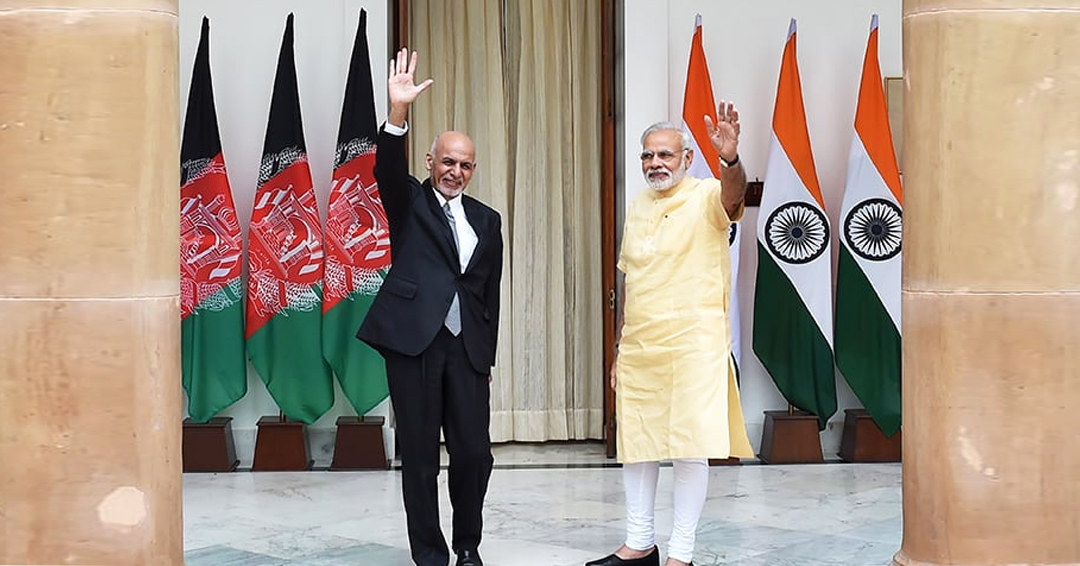
At this defining moment, Pakistan is a force to reckon with, since the United States is looking towards the country to use its land as a launching pad to target the Taliban across the border. However, the on-going geopolitical uncertainty in the region has set alarm bells ringing in New Delhi, since Pakistan's influence over the Taliban will continue to haunt India, which has already invested a huge amount of money within Afghanistan for infrastructure building and its long socio-economic development.
Post-U.S. withdrawal, the most significant concern for India is the resurgence of freedom movement in the Indian-occupied Kashmir. Having opposed any talk with the Taliban forces in the past, today India has been left with a Hobson's choice: Run with the hare and hunt with the hounds. However, when karma strikes back, no one could avoid its wrath.
The Indian atrocities in Jammu & Kashmir
A bad workman always blames his tools. Carried out in February 2021 by a suicide bomber hailed from Kashmir, the Pulwama attack, by all measures, was a devastating event, killing about 40 Indian soldiers with many others wounded. As always, the Indian side blamed Pakistan for the Pulwama incident. On February 26, 2019, the Indian Air Force carried out a so-called surgical strike across the Line of Control in Azad Kashmir, claiming 300 terrorists in the strike.
Giving a befitting reply without delay, the Pakistan Air Force carried out the 'Operation Swift Retort,' leaving the Indian side in humiliation with their two fourth-generation aircraft turned into ashes, followed by the capturing of an IAF pilot by Pakistani authorities. However, the Pakistan Government soon released the captured Indian pilot as a gesture of peace and harmony.
In August, 2019, India unilaterally revoked the special status of the disputed Kashmir territory by abrogating the Articles 370 and 35-A. Since then, the Kashmiris have been denied basic human rights. The fascist India government, led by the Bharatiya Janata Party (BJP), has imposed a martial law-like lockdown in Indian-occupied Kashmir.
Now India is rapidly changing the demographic of the occupied Kashmir, that too in a stark violation of the international law, including the 4th Geneva Convention. However, India has so far issued over 3.4 million fake domiciles to non-Kashmiris in a bid to change the demography of Indian-occupied Kashmir, a Muslim-dominated state, which is a pivotal point that connects three regional powers - China, India and Pakistan.
Fighting a war is absolutely no option, as this generation has already had enough of hate, war and conflict. Hemming and hawing on the issue of Kashmir will might ignite a full-scale war between the two nuclear-armed nations. While safeguarding our national interests, we must defend personal interests as well.

The writer is an undergraduate student at Bahria University in Islamabad. He can be reached at nasirhuzaifa@yahoo.com
Leave a Reply