

Special editorial feature
‘Deregulation would bring in supply chain efficiencies.’
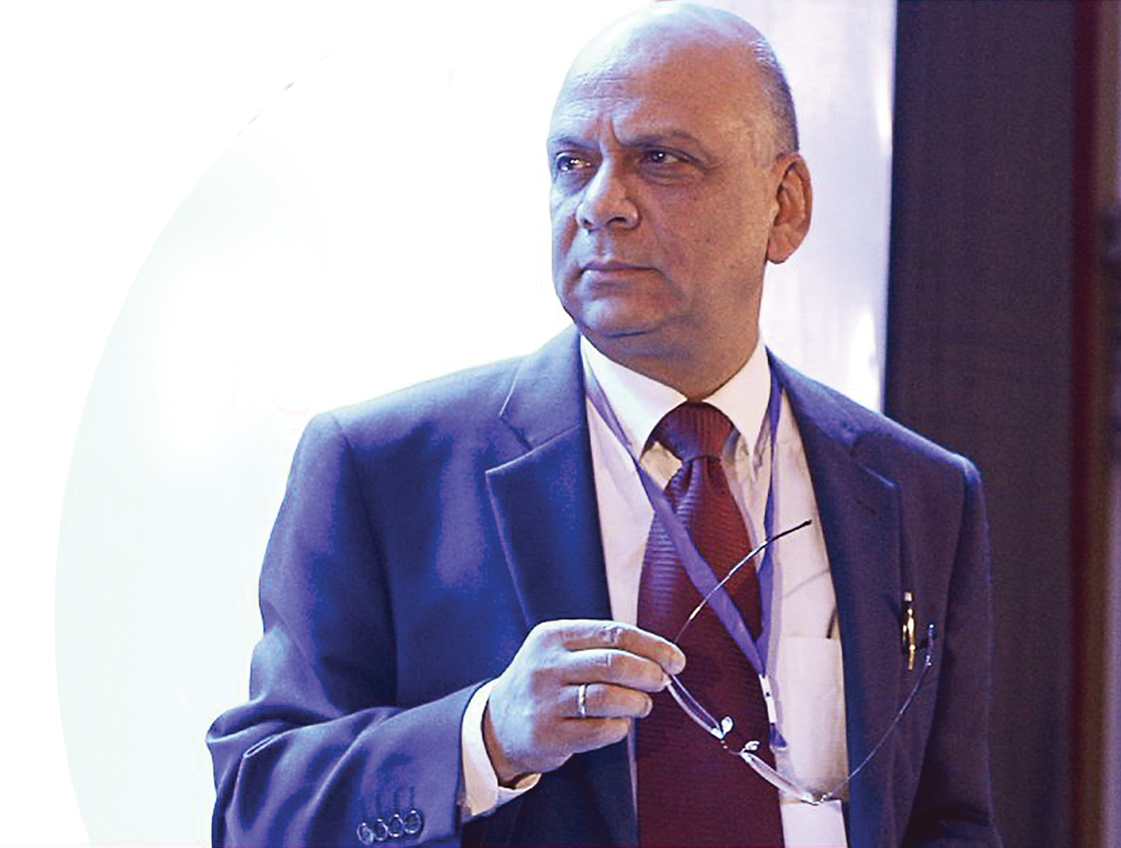
- Syed Zawar Haider, CEO, Oil Companies Advisory Council (OCAC)
How would you describe the rise in petroleum products sales in Pakistan over the last few months?
Downstream Petroleum sector (Refineries and Oil Marketing Companies–OMCs) have experienced a high fluctuation in demand in the last 4 to 5 months wherein the demand for Motor Fuels (Petrol and Diesel) has experienced a steep decline with the start of COVID-19 lockdowns from March ‘20 to April ‘20 which was followed by a surge in demand in the month of June ‘20, resulting in shortages of petroleum products. Focusing on Petrol, the demand has grown from 439,000 MT in April to 663,000 MT in May (increase of 51% vs. April ‘20) while the anticipated demand for June was 750,000 MT (increase of 71% vs April ‘20). It is important to mention that average demand of Petrol from Jul ‘19 – May ‘20 (11 months) was around 600,000 MT and specifically in the month of June ‘19, it was 614,000 MT, which provides a perspective in terms of the increase in demand for Petrol.
What measures have the OMCs taken to meet this demand?
Pakistan is a net importer of Petroleum products, especially Petrol (70% to 80%) and Diesel (40% to 50%), therefore to address the demand surge for the month of June 2020 and onwards, all OMCs are actively working with the Ministry of Energy – Petroleum Division, to import additional quantities of Motor Fuels; however it is important to appreciate the challenges due to increasing trend in International prices vs. prevailing prices in Pakistan causing huge financial loss to the Downstream Petroleum Sector.
How are the OMCs performing their role as good corporate citizens?
As a responsible Corporate Citizen of Pakistan, the Downstream Petroleum Sector is fully committed to serving the nation by supplying petroleum products in the country. All companies are working tirelessly round the clock to improve the stock situation of petrol at a huge financial loss of around Rs. 25 billion in the month of June ‘20 alone to their respective organizations. It needs to be appreciated that these extraordinary efforts have been deployed in arranging supplies to keep the wheels of the economy moving under difficult conditions in pre- and post-COVID-19 lockdowns. It may also be noted that the Downstream Petroleum Sector is heavily regulated and monitored by the Ministry of Energy – Petroleum Division (MEPD) and the Oil & Gas Regulatory Authority (OGRA), whereby decisions and import approvals of MEPD directly impact the delicate supply chain of the country.
Are the OMCs bearing extra financial impact in arranging smooth POL supplies for the market?
Yes, it is pertinent to mention here, that the prevailing OMCs’ margin is only Rs 2.81 per litre, while the financial loss incurred by OMCs was estimated at around Rs 25 per litre in June ‘20 alone.

‘The unpredictability of prices of petroleum products in the international market has a direct impact which should be factored in while reviewing any supply chain situation.’
Can the OMCs be accused of hoarding POL products?
Hoarding is a subject which is currently being incorrectly attributed to the Downstream Petroleum Sector whose supply chain logistics of petroleum products are totally different from other commodities. Firstly, petroleum products are bulk in nature with heavy reliance on imports and limited storage availability in the country, so there are spikes of high days cover when a vessel of imported products arrives and discharges its cargo into the Port Terminals of importing OMCs; however, it is important to note that stocks in the Port Terminals of OMCs are essentially transitory stocks which should not be mistaken for hoarding. Similarly available stocks in refineries are not entirely saleable as some quantities are under testing for complying with product specifications while some quantities have to be retained for operational reasons to resume refinery start-up in case of unplanned shutdown. Notwithstanding the aforestated, it is important to note the dichotomy of the situation wherein Oil Companies requiring to maintain 20 days stocks are also being held responsible for stock hoarding.
Since there is always price volatility in POL imports, could deregulation be a good solution? What should be the frequency of price fixing?
The unpredictability of prices of petroleum products in the international market has a direct impact which should be factored in while reviewing any supply chain situation as the prevailing pricing formula in the country is not capable of handling price volatilities as is being experienced during the COVID-19 crisis. A simple and short-term solution to managing price volatility could be to change the pricing frequency in the present mechanism to weekly or fortnightly basis wherein the exposure period would be reduced. Furthermore, the present formula needs to be changed to weekly/ fortnightly prices linked to Platt’s Oil gram pricing postings, providing a correct reflection of the international prices. However, for structural reforms, complete de-regulation of Motor fuels should be taken in a phased program.
Will deregulation in pricing improve the performance of oil marketing companies?
Deregulation would bring in supply chain efficiencies which will reduce the import procurement cycle and improve availability of petroleum products in the country
Despite its overdependence on oil, why has Pakistan not been able to construct more strategic oil reserve storage facilities?
Development of Strategic Oil reserves is a complex issue which should be appreciated in its full context. Globally, the concept of strategic reserves for Petroleum products and other commodities are a critical part of Government policies, ensuring availability and security of the commodities which have been developed and implemented keeping in view the needs and resources of individual countries.
For Pakistan, there is no approved policy document which addresses the subject of Strategic Stocks and Commercial Stocks; the last Downstream Petroleum Sector policy dates back to 1997 which lacks comprehensiveness of the subject. It is important to mention that the responsibilities of creating and maintaining Strategic Oil Reserves rests with the Government which should not be confused with the Commercial Stocks of Oil Companies.![]()
Syed Zawar Haider is an eminent professional of the downstream oil industry. He is the CEO of the Oil Companies Advisory Council (OCAC). He has over 32 years of diversified local and overseas experience of having worked in leading national and multinational companies. He has previously served in important positions in Pak-Arab Refinery Limited, OCAC and ExxonMobil. For 10 years, he worked as a General Manager of Pak-Arab Refinery Limited. Mr. Zawar Haidar carries a successful track record in achieving cost reductions, high performances, negotiating contracts and streamlining joint ventures. He holds an MS in Engineering Management Sciences from the Wichita State University.
|
Cover Story
|
|
Tributes
|
|
Special Editorial Feature
|
|
News Buzz
|
Update |


Leave a Reply