

Dhaka
De-Hyphenating 1971
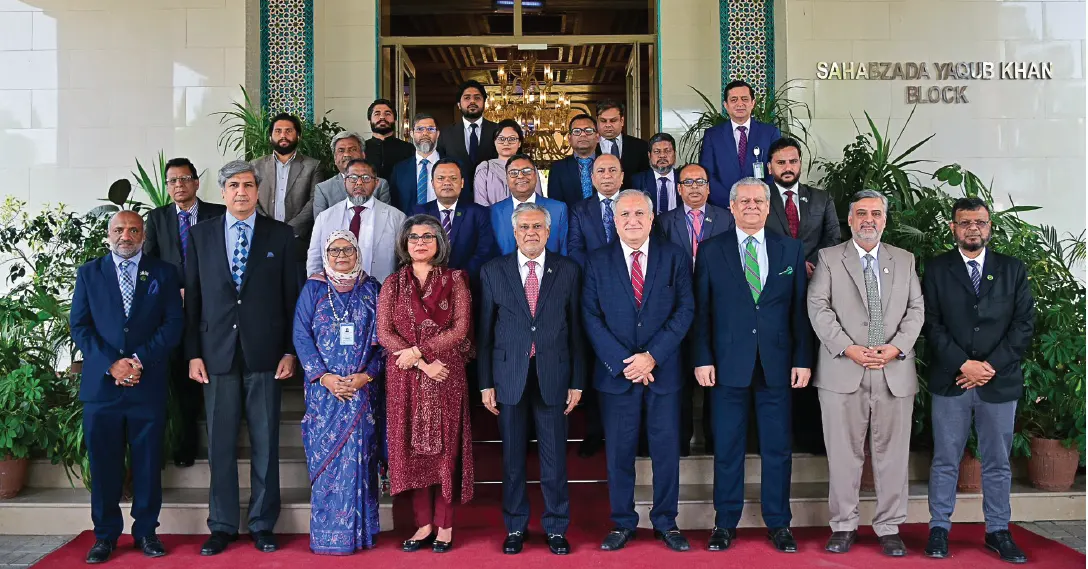
Bangladeshi civil servants are now being trained at the Civil Services Academy in Pakistan. Does it truly reflect a heartfelt reunion of shared history, or is it mainly just a practical, transactional arrangement between Pakistan and Bangladesh?

In a telling diplomatic shift, Pakistan has secured the role of hosting civil service training for Bangladeshi officials — a role long held by India. The development reflects the sharp cooling of Bangladesh-India relations following Sheikh Hasina’s ouster in 2024 and the subsequent warming of Dhaka-Islamabad ties under Muhammad Yunus’s interim government. For decades, India has reinforced its soft power in Bangladesh through institutional programmes such as civil service training. Pakistan stepping into that space is not merely a bilateral footnote — it is a signal that South Asia’s diplomatic architecture is being quietly but consequentially redrawn. Is this a temporary political adjustment in Dhaka — or the opening move in a lasting realignment that India may struggle to reverse?
SouthAsia spoke to experts to discuss how significant it is, symbolically and institutionally, that Bangladeshi civil servants are now being trained at the Civil Services Academy, Lahore, and whether this represents a genuine reconciliation of institutional memory or is primarily a transactional arrangement.
For Dr. Moonis Ahmar, former Dean of the Faculty of Social Sciences at the University of Karachi (KU), “It reflects a symbolic reconciliation between Bangladesh and Pakistan”. Noting the process got an impetus during Bangladesh’s Nobel Peace Prize-winning economist, Dr Muhammad Yunus’s time, who was the head of the country’s interim government. Yunus was sworn in as the country’s interim head after Awami League’s Prime Minister, Sheikh Hasina, was forced to quit and flee the country following violent protests, fleeing to India.
For Dr Ahmar, “The decision to send Bangladeshi civil servants to get their training in Civil Service Academy Lahore is some sort of a paradigm shift,” referring to it as a milestone, with this move being “a message to India that it (Bangladesh) is not dependent on New Delhi”. He mentioned that pre-1971, at the time of a United Pakistan, “civil servants from East Pakistan, along with their West Pakistani counterparts, were trained in Lahore”.
To hear Dhaka’s perspective, SouthAsia spoke to Dr Shahab Enam Khan, Professor, Department of International Relations, Jahangirnagar University, Bangladesh, to understand the significance of this development and the message it sends about Bangladesh’s current foreign policy priorities. “Twelve officers and a fortnight don’t change much operationally. Still, the signal is large that Dhaka is dismantling a single-vendor model of institutional dependence, not swapping one patron for another,” states Dr Khan. For him, “This isn’t Bangladesh switching partners — it’s Bangladesh ending the monopoly and expanding the knowledge and efficiency of its bureaucrats.”
One wonders whether Pakistan deliberately pursued a soft-power strategy in Bangladesh or is responding opportunistically to the vacuum left by India’s estrangement from Dhaka. “So far, yes, it’s true that Pakistan is using diplomacy, aid, trade, and things like that in order to deepen its relations with Bangladesh. Training is just one aspect of that. When Bangladeshi civil servants go to the Civil Services Academy in Lahore, it will have an impact on their mindset. For a long time, there was a downward trajectory, particularly when the Awami League was in power. Bangladesh-Pakistan relations underwent a negative transformation during that period,” Dr Ahmar, former Dean of the Faculty of Social Sciences at KU, mentions.
Highlighting the vacuum that emerged after August 2024, when the regime of Sheikh Hasina fell and she took refuge in Delhi, Dr Ahmar recalls that it was also when India-Bangladesh relations began to take a downward turn. “Pakistan’s ability to seize this opportunity, particularly by inviting Bangladeshi civil servants for training in Lahore, reflects the possibility that India may no longer enjoy a dominant position in Bangladesh,” he states.
Moving across borders to assess how Dhaka views this initiative, whether as a consequence of the recent cooling in Bangladesh-India relations, or whether it is part of a broader and more deliberate effort by Bangladesh to diversify its external partnerships, Dr Khan, Professor of International Relations at Jahangirnagar University, Dhaka, views it to be “both — but on different clocks. The chill with Delhi is the accelerant; diversification is the engine that was already running. The cooling with India explains the timing. It does not explain the direction. Strip out the friction with Delhi and Dhaka, and you’d still be de-monopolizing its partnerships — just more slowly”.
Pakistan’s ability to seize this opportunity, particularly by inviting Bangladeshi civil servants for training in Lahore, reflects the possibility that India may no longer enjoy a dominant position in Bangladesh
With institutional exchanges such as civil service training often regarded as instruments of soft power, can one expect these programs to shape long-term diplomatic relationships and influence in South Asia? For Dr Khan, from Dhaka, these programs generally outlast the governments that launch them, which is exactly why they matter. “What matters here, to be honest, is that one cohort or multiple layers of training won’t make anyone pro-certain countries, as we have seen in the past. But these trainings have reopened channels and tend to widen the relationship,” he mentions.
Commenting on the long pause in bilateral relations between Bangladesh and Pakistan, Dr Khan states, “It has only alienated the two from learning the best of each other’s knowledge and skills. Bangladesh has always benefited from the UK, US, Japan, China, India, and other countries, so it is always rational to expand Bangladesh’s skills development with Pakistan”.
The May cohort of officers travelling to Lahore for training was made possible by the existing elected government in Bangladesh — which emphasized a more balanced foreign policy — rather than by the interim one headed by Dr Yunus, the Nobel Peace Prize laureate. That, for Dr Khan, is the “real story.” “That means the diversification logic now survives a change of administration. Within the bureaucracy, there’s consensus on the principle but caution about Pakistan specifically, because 1971 remains a live fault line. You may call it calibrated openness, not enthusiasm. 1971 has been de-hyphenated from the present — not closed yet,” he shares.
What then of the current development? Should it be interpreted as a temporary adjustment driven by current political circumstances, or does it point to a more enduring recalibration of Bangladesh’s regional diplomacy? “I think the recalibration of the method seems permanent, at least for now; the Pakistan tilt within it is contingent on Islamabad’s reciprocity and Delhi’s own choices. Bangladesh, still, is operating as a lonesome actor in South Asia without any conflict baggage, yet facing constant security threats from its immediate neighbours, largely in terms of refugee crises resulting from ethno-religious nationalism or perhaps, to be honest, religious and ethnic extremism,” notes Dr Khan, the IR Professor from Dhaka, who shares that national security will also determine Bangladesh’s regional diplomacy.
When we asked Dr Ahmar, from Karachi, about the realistic limits of Pakistan’s ability to sustain this soft power engagement with Bangladesh, and then to consolidate this opening into a lasting relationship, he notes that “there is no permanency as far as positive transformation in Bangladesh-Pakistan region is concerned, particularly in terms of bettering trade relations, military relations, educational ties, and also some sort of connectivity through direct flights between Bangladesh and Pakistan, (especially between) Dhaka and Karachi”.
Dr Ahmar cautions that as long as the Bangladesh Nationalist Party (BNP) – the current elected government – stays in power, “Bangladesh–Pakistan relations are unlikely to face major setbacks. However, if there is another paradigm shift and the Awami League returns to power, it may seek to settle old scores”, which will hamper Pakistan’s efforts of the last two years. For Dr Ahmar, the sustainability of these gains depends largely on the political landscape in Dhaka.
Some analysts argue that South Asia is becoming increasingly multipolar, with countries pursuing more flexible and diversified partnerships. Does this Bangladesh-Pakistan initiative reflect a wider transformation in the region’s diplomatic architecture? Dr Khan from Jahangirnagar University in Dhaka believes so. “This is where transactional regional multipolarity comes in. I think both countries are assembling partnerships à la carte and refusing to be hyphenated. But I’d temper the optimism. Unfortunately, South Asia is still moving toward flexible improvisation rather than coherent design. This opening is a node in that improvisation, and the improvisation will only meet a meaningful end if the reciprocities are well designed and implemented for the greater good.
The writer, who is based in Karachi, is a communications professional and a dedicated UN Volunteer. Feel free to reach out to her at mariaamkahn@gmail.com.


Leave a Reply