



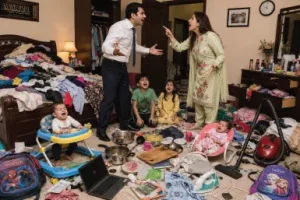
While marriage is often called the cornerstone of a family, not all foundations stand the test of time. Many couples in our society remain together for years, sharing their lives and creating wonderful memories. However, essential human needs like safety, respect, friendship, and emotional support are often overlooked, even in close relationships.
Life may appear normal on the surface, but the relationship is strained behind closed doors. This is the reality of a dysfunctional marriage, in which interactional patterns are more harmful than helpful.
The Core Cracks We Often Ignore:
Dysfunction manifests itself in more subdued ways than the overtones, such as frequent disputes or separation:
Lack of communication: Discussions become antagonistic or transactional. Couples grow emotionally distant from one another when they stop sharing ideas, worries, and little everyday moments.
Loss of emotional closeness: Vulnerability, empathy, and affection vanish. The couple lives together more like roommates than lovers.
Broken trust: Once broken, trust seldom recovers on its own without deliberate effort, whether due to financial dishonesty, infidelity, or repeated unfulfilled promises.
Unresolved conflict: Resentment accumulates over time like sediment in a river as problems are buried rather than addressed
Codependency: Personal boundaries and autonomy are erased when one partner’s identity is totally dependent on the other’s attitude or acceptance
Role imbalance: One person bears the burden of parenting, finances, or emotional labor while the other becomes disengaged, leading to weariness and resentment.
Experts and counselors point out difficult yet real relationship warning signs that individuals often don’t discuss. When compassion evolves into sarcasm, mocking, or eye-rolling, it’s a problem. Criticism and contempt are serious warning signs. Then there is emotional neglect, in which one partner, despite being physically present, feels invisible and that their needs are unimportant. Not to mention financial control and secrecy, confidence collapses quickly when money is used as power rather than a shared instrument.
Parentification of children, when they are compelled to take on caregiving responsibilities and grow up too quickly, is another relationship warning sign. Some couples completely avoid fighting, but at the expense of avoiding problems by turning to work or other distractions. Additionally, partners may feel like strangers living together if they don’t share a common vision for the future or a set of values.
Social and cultural factors are important. Marriage is viewed in many cultures as an institution that must be upheld at all costs, even if it means sacrificing personal well-being. People are frequently kept in bad relationships by the stigma associated with divorce, fear of family judgment, and economic dependency. Even when children are more impacted by a stressful, unloving home than by separation, “we stay for the children” becomes the rationale.
Relationship experts and therapists agree that when issues arise, it’s a sign to take steps forward, not necessarily a signal that everything is over.
Identify the issue without assigning blame: Rather than criticizing character, acknowledge patterns. “You never listen” is less effective than “We have a communication problem.”
Seek expert assistance as soon as possible: Marriage counseling is not a final option. Early counseling increases a couple’s chances of healing.
Rebuild uniqueness and boundaries: Good marriages strike a balance between intimacy and privacy. Each couple needs space to develop on their own.
Practice making repairs: Emotional safety can be gradually restored with small gestures like an apology, a thank you, or a moment of listening.
Know when to let go: Separation may be the best option for spouses and kids in situations involving abuse, control, or ongoing emotional trauma.
A functional marriage isn’t a perfect one. It’s a partnership where conflict is managed with respect, where both people feel valued, and where repair is possible after rupture. Society needs to move beyond the idea that staying together is the only measure of success. True success is staying well together.
For those living in a dysfunctional marriage, the first step isn’t fixing the other person. It’s recognizing that you deserve a relationship where you feel safe, heard, and respected. Sometimes that begins at home. Sometimes it begins outside of it.

The writer, based in Karachi, is a passionate freelance contributor with a real love for literature. She can be reached at xsmona@icloud.com
Leave a Reply