



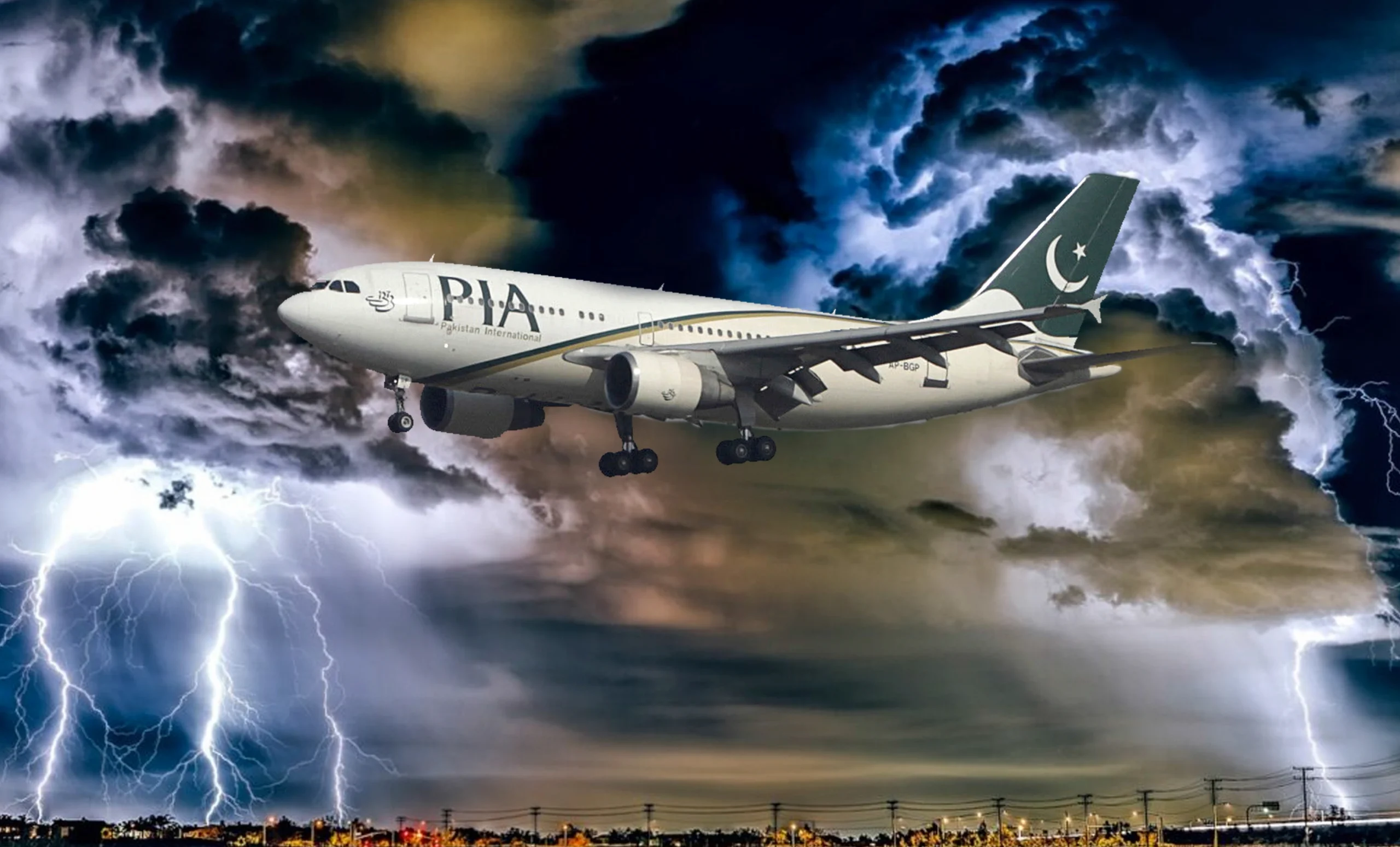
Imagine yourself reclined in luxury and comfort, a flight attendant in a designer uniform serving Pakistan’s fine cuisine. You reach London from Karachi on the fastest flight ever recorded on the route in 6 hours, 43 minutes, and 51 seconds. This was all a reality in the 1960s for the Pakistani flag carrier- Pakistan International Airlines. Fast forward to now. A flight to London is impossible as the organization is banned from flying in the European Union and the United Kingdom.
From establishing the legacy airline Emirates into reality by wet leasing aircraft to now grappling with losses of 80+ billion rupees. It transitioned from pioneers in innovation and engineering, even supporting startups and providing technical assistance to airlines like Air Malta and Philippines Airways, to acquiring one of the worst safety records in aviation history, marked by many crashes.
From making history as the first commercial flight from a non-communist nation to communist China, PIA now stands on the brink of becoming history itself. The airline witnessed a significant decline starting from the 1990s, and since then, it has been not only on a figurative but literal nosedive. Instead of solely blaming political and economic conditions, established organizations must address these challenges. Acknowledging that the aviation industry is critical to navigating political turmoil, organizations must take responsibility and find practical solutions within their control.
Confronting the glaring issue, the elephant in the room lies in the abysmal bureaucratic management, as they could not tackle the increase in competition with emerging private airlines such as Airblue and especially with the new low-budget carrier Fly Jinnah and its innovative and intelligent business model. Furthermore, PIA is exacerbated by a deteriorating safety record that has eroded customer confidence. PIA neglects the potential of Pakistan as a destination, hindering any increase in passenger demand.
As a response, the government has elevated the privatization of PIA to top priority, enlisting Ernst & Young as the advisor for the sale. This article delves into the intricate details of PIA’s transformation from a legacy to an endangered airline. It emphasizes the crucial need for visionary and enterprising leadership to steer PIA towards becoming a vital instrument for the development and prosperity of Pakistan.
Management and Bad Decision Making
The golden era of PIA was observed under Air Commodore Nur Khan. he was appointed 1959 as the Managing Director of PIA. The six-year span he led introduced Asia to the world of jet aircraft, as PIA was the first Asian airline to have operated a jet airliner, the Boeing 707.
However, as the decline started in the 1990s, the government introduced the open skies policy, introducing new organizations to be set up. This policy should have benefited the economy as it promoted a healthy competitive market but added to PIAs misfortune. It demanded the military men and civil servants who lead the organization to have an enterprising mindset.
Due to economic challenges, PIA faced a setback exacerbated by leadership prioritizing petty politics and utilizing the organization for personal interests. People in the top hierarchy lacked professional backgrounds, undermining the company’s stability. This also created the issue of overstaffing, as PIA had employed 500 employees per aircraft, as reported in the Express Tribune: “They said PIA’s total strength was around 14,500 [including outsourced staff] while it currently has a fleet of 29 aircraft, which cost Rs2.06 billion per month. Compared with other airlines, the officials said the PIA has a ratio of 500 employees per aircraft.”
The news of fake pilot licenses, although later proven false, triggered a significant backlash. The repercussions were severe, with the EU banning PIA from their routes and Pakistani pilots globally losing their jobs. This underscores the damaging impact of the top leadership on the organization.
Abdullah Khan, the spokesperson for PIA, had accepted that politics was a factor in the downfall of the PIA on the Duniya news show “Nuqta-e-Nazar.” They have identified the issues and claim to be moving forward in a new direction.


This writer is a freelance journalist. He can be reached at khalid.hassan3000@gmail.com
Leave a Reply