


It is well-known that all religions propagate peace, love, and harmony. On the contrary, the clergy of many faiths are busy fanning hatred and gratuitous controversies between different sects and schools of thought. The same goes with the famous British formula termed ‘divide and rule,’ which they applied in the subcontinent for controlling and junta.
The hatred, based on religious sentiments, is unfortunately thriving today, and it is extraordinary that the British colonialists, who followed secular ethos in their own country, spread religious hatred wherever they ruled. There is no denying that the partition of India was done on religious grounds: Pakistan was created for the Muslim majority, and India belonged mainly to the Hindu majority while accommodating the other religious communities. The difference was that Pakistan declared itself an Islamic country. However, India declared itself a secular state. Be that as it may, despite its so-called secular credentials, religious minorities are targeted in different parts of India, especially in the India-occupied Kashmir, Gujarat, Manipur, Jharkhand, etc. For Indian minorities, the situation has even deteriorated under the Modi regime.
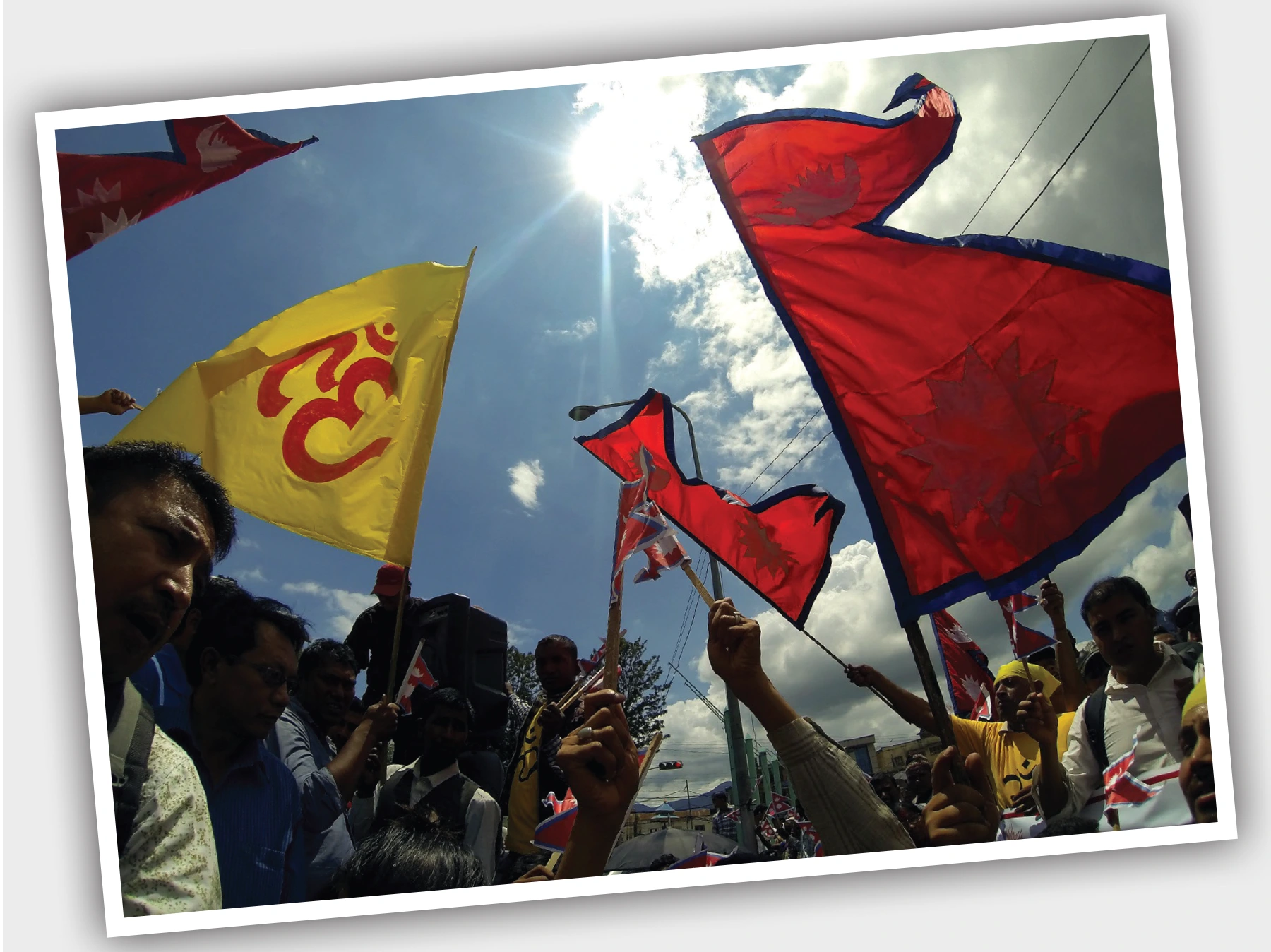
Since Nepal is under Indian influence and most of the population hails from the Hindu religion, religious disputes are observed occasionally. In August this year, the issue created further hype when two men from Eastern Nepal live-streamed a feast where they ate beef. These were the same people who were earlier arrested for slaughtering a bull. When they were released from jail, they celebrated their release by eating the beef, and interestingly, it was being streamed live on social media. This act of eating beef was condemned by the Hindu outfits from the Dharan town where the incident took place; its video went viral like wildfire across the country.
Historically, Nepal remained a monarchy, where the upper-caste Hindu people enjoyed power. Since they hailed from the upper caste, they declared Nepal a Hindu state. Though the majority, approximately 80 percent of the country, believe in Hinduism, and around 10 percent of people follow Buddhism, this is not an absolute rule that the state must be associated with a particular religion. However, the political situation changed in 1990 when the executive monarchy was overthrown and replaced with a constitutional monarchy. This development occurred after a movement launched by the leadership who believed in ethnic politics.
Like Pakistan, politics around ethnic lines is more vital than politics on religious grounds in Nepal. This kind of politics was supported by the Maoist insurgency between 1996-2006, which resulted in the signing of an agreement between the Maoists and the major political parties of Nepal. Ultimately, this led to an Interim Constitution in 2008 in which Nepal was declared a “Secular State,” which later was confirmed in Article 4 of the 2015 Constitution. Like ethnic issues, casteism is another issue prevailing in Nepal, which also supports the secular ethos. This is because secularism separates religion and politics and believes the state shouldn’t help any particular religion and respect all of them on an equal basis. In this regard, secular ethos is in favour of the lower castes because if the matters of the state are separated from religion, it can vanish the caste difference.


The writer is currently serving as an Assistant Professor at the Faculty of Heritage, Aror University of Art, Architecture, Design & Heritage, Sukkur. He can be reached at qasim_shu2016@yahoo.com
Leave a Reply