
Istanbul
Icon of Dispute
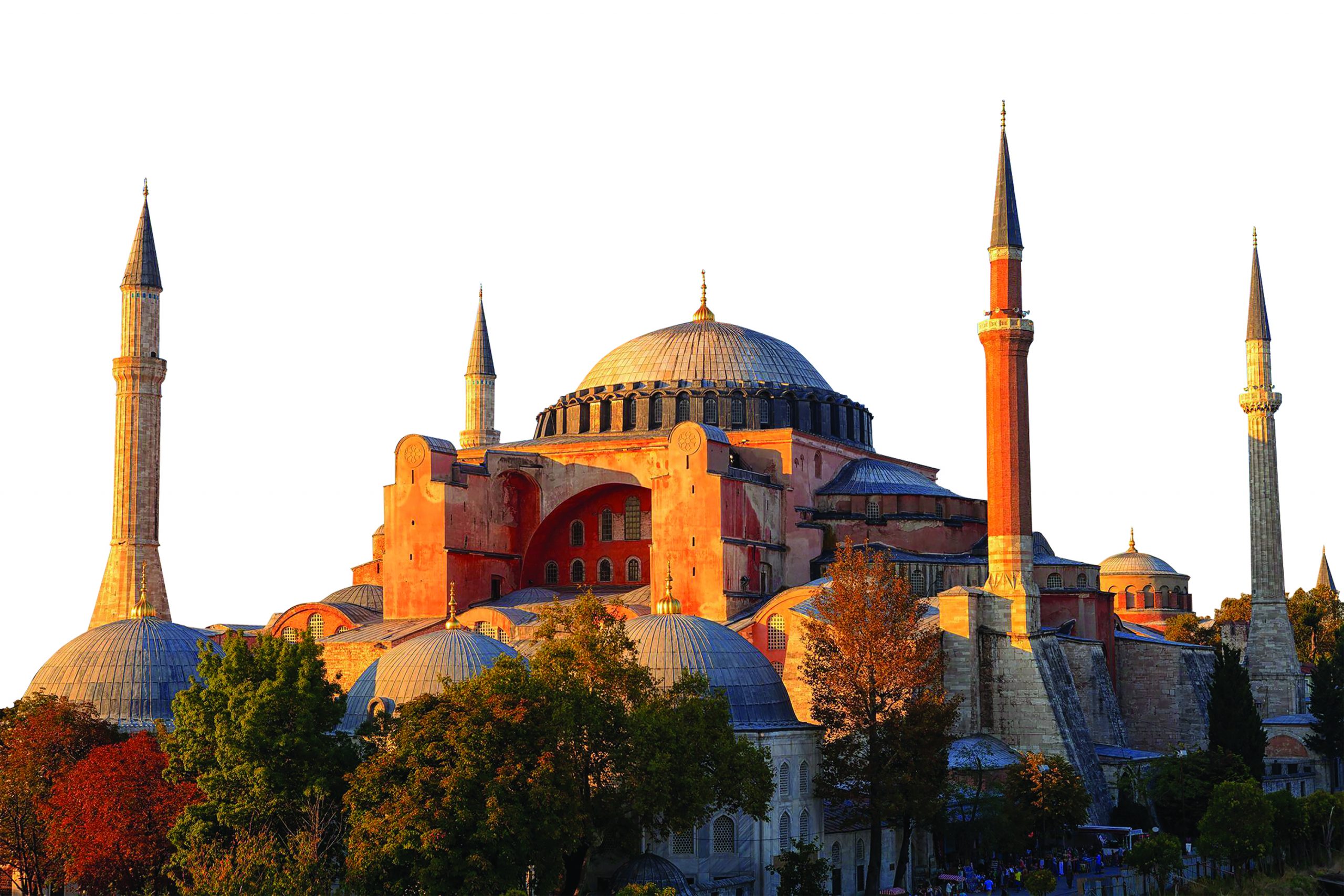
Turkish President Recep Tayyip Erdogan has rejected
international condemnation of converting Turkey’s landmark
Hagia Sophia from a museum to a mosque, saying the move
represented his country’s will to use its “sovereign rights”.
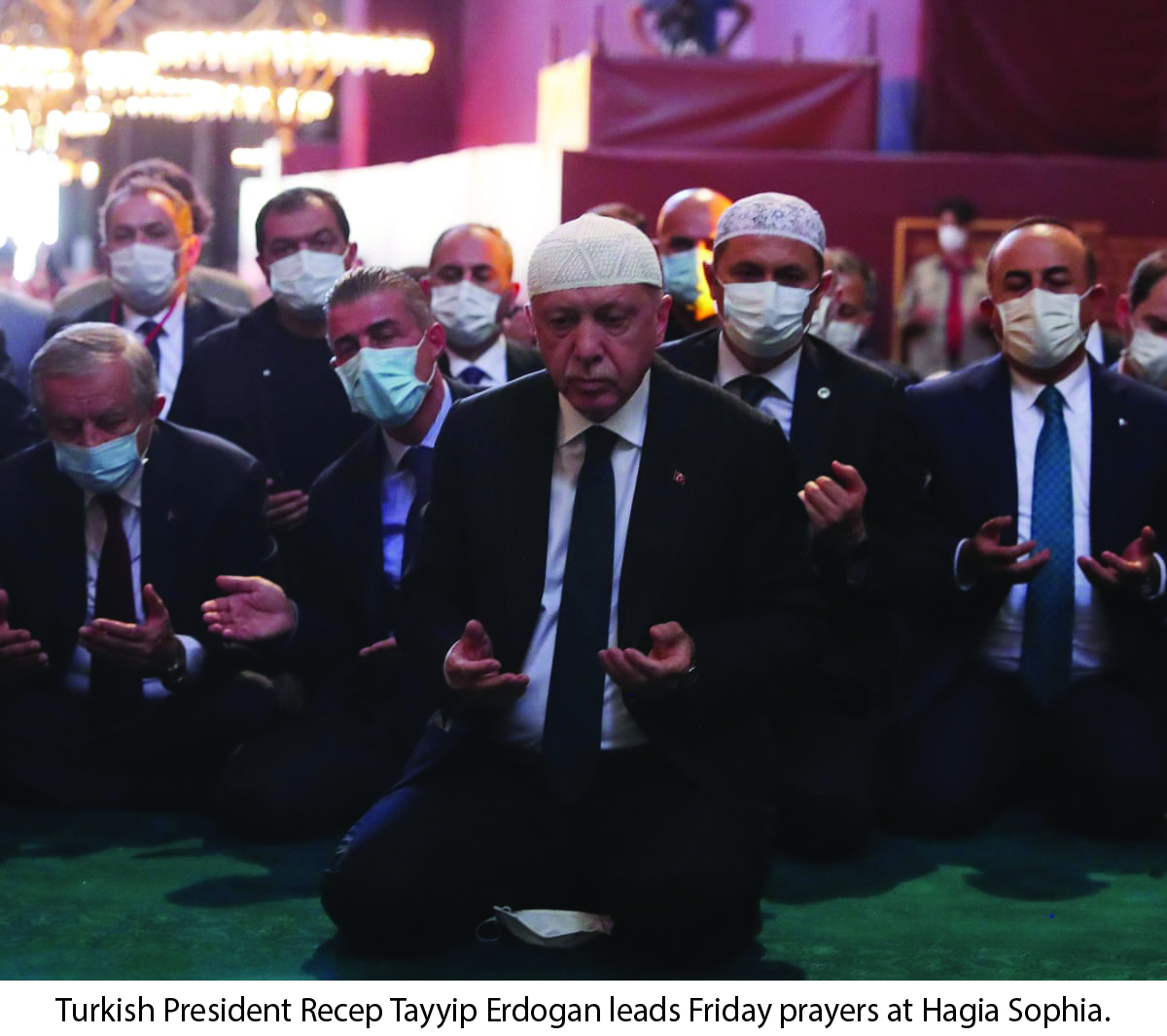
President Erdogan on July 10, 2020, made a historic decision and formally opened the Hagia Sophia as a mosque on Friday, July 24, 2020. This was a reversion of the Hagia Sophia from a museum to a mosque. Erdogan's action came after a court ruling though the internatonal media and some governments made a negative outcry over the decision.
International quarters described the event as hugely controversial and, as expected, criticism from the Orthodox Churches of Greece and Russia, and from the US Secretary of State urged Turkey to maintain Hagia Sophia’s museum status based on the argument that place was a bridge between cultures and religions.
UNESCO has also warned Turkey about conversion of Hagia Sophia into a mosque because, according to the UN body, the action could violate the 1972 World Heritage Convention.
The critics have started a reprehensible attempt to equate the incident with other disputed religious sites in different parts of the world such as the Babri Mosque in India and the Al-Aqsa Mosque in Jerusalem. They emphasize that if a church is converted into a mosque, it justifies the conversion of mosques into temples and synagogue. The assertion is nothing more than a camouflage of the truth that misleads by hiding the facts and promoting a one-sided version of history. Actually, the historical perspective of the reversion of the Hagia Sophia museum to its original status as a mosque needs an unbiased analysis.
The dome of Hagia Sofia has withstood the vicissitude of time; the building was built in the 6th century as a cathedral and stood as the world’s largest example of Byzantine Christian architecture built almost a millennium ago. It remained intact for about 921 years as a church until 1453. When Sultan Mehmet II came to the Ottoman throne, he reinforced the Ottoman navy, strengthened the military and ordered preparations for the siege of Constantinople. After he conquered Constantinople, the bastion of Christendom (present-day Istanbul), he was only 21 and he ended the Byzantine Empire.
Historians claim that soon after the fall of the city in 1453, Sultan Mehmet II converted the church Hagia Sophia into a mosque. This claim is not substantiated with any documentary proof or circumstantial evidence. However, in 1934, the mosque was turned into a museum byMustafa Kemal Ataturk who founded the modern Turkish Republic, a country that emerged as a secular state after the fall of the Ottoman Empire.
Sultan Mehmet II entered the Hagia Sophia along with his entourage and performed the first Adhan (call to prayer). This was a declaration that Byzantine Christian land had been captured by the Turks and had become an Islamic territory. Historically, Hagia Sophia was considered Christianity’s most important place of worship and coincidentally it was also a place for the monastic investiture of the Byzantine Empire.
Sultan Mehmet II signifies a symbolic significance by declaring his rule over the city. As the Ottoman soldiers under his command entered city victorious, almost the entire population was horrified by Sultan Mehmet II’s arrival and they began departing the city, leaving it completely deserted.
The city churches were abandoned after the conquest. The inhabitants of Constantinople, who had fled out of sheer fear were persuaded by Sultan Mehmet II to return to their homes. He provided them assurances for the protection of life, property and honour. Interestingly, conversion to Islam was not demanded but many Christians embraced Islam and subsequently served under the Sultan.
Sultan Mehmet II purchased the Hagia Sophia building and adjoining areas with his own money and created a waqf. As such, the building belongs to the Fatih Sultan Mehmet Han Foundation. The foundation was meant to preserve and maintain the Hagia Sophia based on the waqf system, and a waqf document testifies beyond any shadow of a doubt that the Hagia Sophia Mosque was waqf property. (A waqf is an inalienable charitable endowment under Islamic law).
Turkey’s move has threatened to deepen tensions with neighbouring Greece which is home to millions of Orthodox followers. Greece has strongly criticized the action and as stressed that the building is part of its orthodox Christian history. The story is different in Greece itself. Most of the mosques in Greece were neglected, ruined, or used for different purposes. Dozens of mosques were closed to worship while others were converted into churches and many were utilized as bars, barns, or cinema theaters for adult films.
A recent study has disclosed that the Israeli authorities have turned 15 mosques into Jewish synagogues. Another study has also revealed that 40 mosques were either closed, destroyed or abandoned altogether, while 17 more have been turned into barns, bars or museums.
Transforming places of worship into museums, many communist regimes have also confiscated and closed mosques, based on the argument that the salience of religion will go into the dustbin of history!
The Hagia Sophia is the ultimate symbol of the Muslim Ottoman conquest of Christian Constantinople. For President Erdogan who is a politician who uses religious and nationalist symbolism to draw support from his conservative voters, this will have a profound impact on his followers. Erdogan’s religious outlook, policies, and political success have disturbed the western world. With his strong narrative on different issues specifically concerning the Islamic Ummah, Erdogan has come forward as an astute Muslim leader in global politics. He has unequivocally drawn a global network of support. Erdogan became a model for the Muslim world that was caught up in a grip of autocrats, generals, kings, and dictators. Erdogan has actively pursued the Islamic cause of the Ummah on various occasions..
Turkey’s ruling Justice and Development Party, or AKP, has set ambitious economic goals for 2023 as the year is an election year though there is growing expectation of a snap election. The U.S. and the Western countries also have a strategic stake in Turkey’s unprecedented economic growth, sustainable development and rising political influence.
Regrettably, the Western media and partisan politics have portrayed the Hagia Sophia episode in a particlar color. Erdogan is being painted as a religious-nationalist, who uses religion to legitimize his decisions and actions.
The conversion, in fact, came into effect because Turkey’s highest court had issued a ruling that allowed the government to change the building’s status from a museum to a mosque. President Erdogan signed the decree for the opening of Hagia Sophia as a mosque. This repudiated a 1934 government decree that had converted the disputed landmark from a mosque to a museum. ![]()
This freelance writer follows national and international issues of public interest. He can be reached at syedzubairahmed |
|
Cover Story
|
|
Tribute
|
|
News Buzz
|
Update |


Leave a Reply