

Racism
Meaningful Conversations
Early childhood education is key to surmounting systemic
discrimination as everything that children experience decisively
shapes their worldview and attitudes as adults.
In a world reeling from the COVID-19 pandemic, racism and social justice have again begun to dominate headlines.
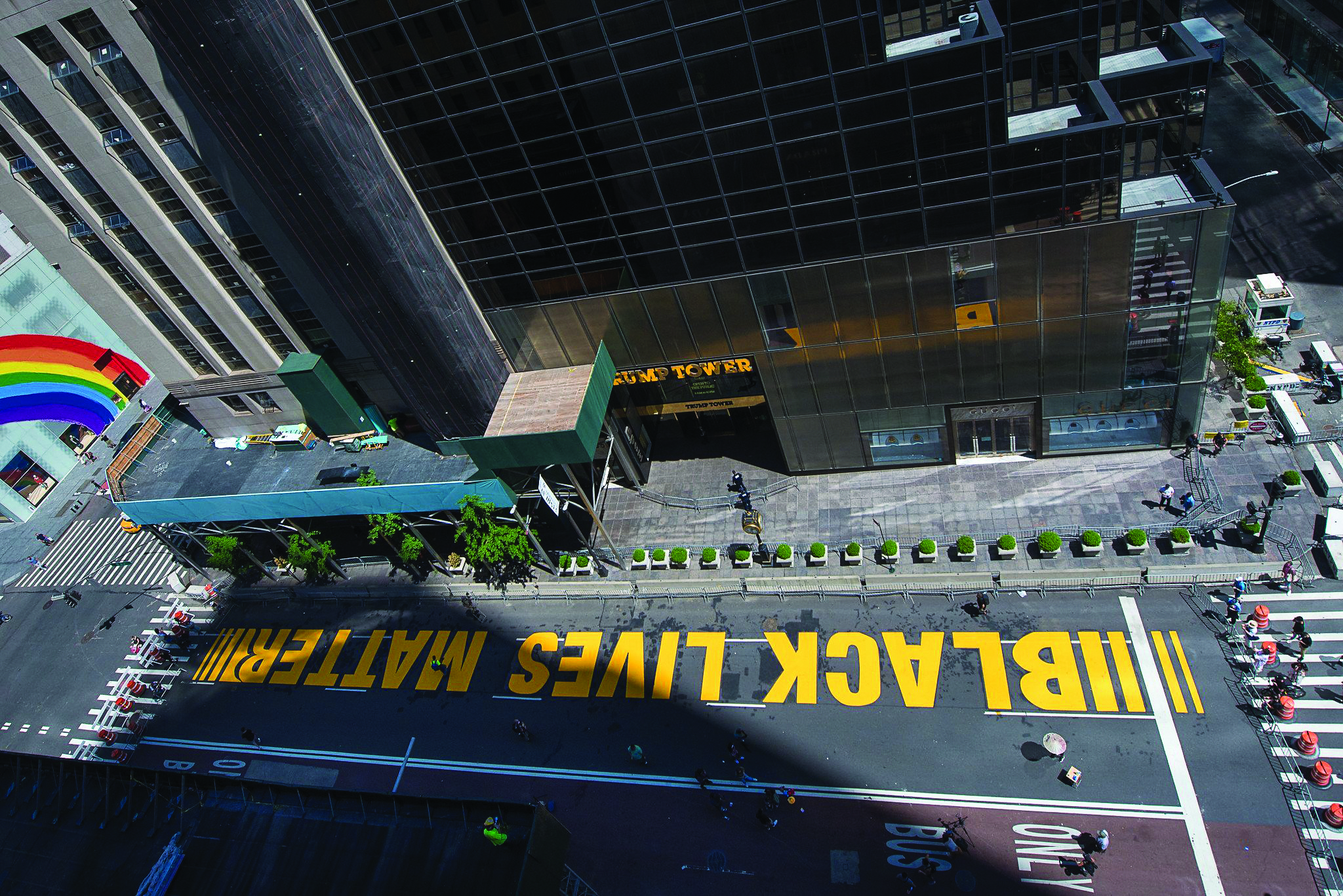
In late May, yet another African-American male, 46-year-old George Floyd, fell afoul of a white police officer and suffocated to death under his knee. His murder not only rekindled the Black Lives Matter movement, it also mobilized a global citizenry weary of analogous injustice.
Unlike the past, the outrage over Floyd’s murder rang across continents. In Europe and America, massive protests broke out in solidarity with American blacks. These were wake-up call to local politicians long addicted to excusing systemic discrimination. Such inequities, we know, do not confine themselves along ethnic lines: they also manifest as religious, sexual and socioeconomic biases.
While senseless, gratuitous violence is depressingly familiar in the US; it is the logical consequence of a society that constitutionally prizes personal firearms. The US, in fact, houses more civilian weapons than citizens, yet its bonkers gun-culture has failed to curb crime. Its world-beating incarceration rate translates to over two million adults behind bars.
Far more alarming are the country’s near-fanatical law enforcement practices and excessive racial profiling. Deadly police encounters with unarmed suspects are commonplace, and a hair-raising number of their victims are African-Americans. This is no fluke and instead explains the deeply bigoted underpinnings of American society.
The textbook approach to checking discrimination is toughening civil rights laws and expanding civic education in schools and colleges. This approach, in my opinion, is akin to putting the cart before the horse, and naturally fails. What is worse, adults who belong to the status quo, worry they cannot denounce racism without appearing insincere, or worse, saying all the wrong things.
In her writings on the sensitive periods of a person’s development, famed educator Dr. Maria Montessori asserted that our formative years (from birth to the age of six) anchor our personalities. In those years, everything that children experience decisively shapes their worldview and attitudes as adults. The American Psychology Association’s former executive director, Dr. Gwendolyn Keita, agrees that upbringing has a “tremendous impact” on one’s inclination toward, and response to, discrimination.
As a result, unless we engage with pre-schoolers in meaningful conversations about discrimination in its many insidious forms, the vicious cycle of intolerance will gyre onward into future generations.
We must also dispense with the unfounded notion that children are “too young” or “too naïve” to understand racism. According to a 2010 study by the University of Toronto, even six-month old infants can express racial biases by reacting favourably to same-race faces and pulling away from others.
The caveat is that the sample infants in this experiment had scant exposure to other races, but the principle stands. While humans do not have an innate pre-disposition to discrimination, we come equipped with the mental toolkit to form toxic opinions about others. Therefore, it is imperative parents and teachers seed and reinforce in children a lifelong appreciation for ethno-religious diversity.
Otherwise, we will perpetuate in them the notion that discrimination is acceptable, or that suffering is a fact of life. On the one end of this spectrum lie the bigots with their false sense of privilege and on the other those who self-identify with victimhood for the same. Over time, both groups in their perverse ways, fuel systemic injustices that amplify wealth inequalities and curtail social mobility.
While there is no surefire approach to instilling ethno-religious sensitivity in children, there are strategies available to parents and teachers:
First, start with yourself. Children will unquestioningly model the behaviour of the significant adults in their lives, and if you cannot practice what you preach, they will remember and imitate.
Next, find the right books. Read them stories that promote kindness and empathy and remember to affirm the important moral lessons. All the better if you can pair reading with activities that enliven the story, since studies prove pre-schoolers learn best through active participation. The entire family or class, for instance, could role-play the stories and/or use hand-puppets to portray the principal characters.
Exposing children to peers of distinct races, cultures and religions is also paramount. Hence parents must arrange playdates that reflect such diversity. In multicultural societies, this goal is easy to accomplish and even easier to undermine as their fabrics invariably string together a medley of stereotypes. One solution is to encourage children to celebrate every cultural festival in the community; a tradition prevalent in many Southeast Asian countries like Malaysia.
These strategies may appear simplistic, yet slight adjustments in the way we raise children will considerably alter their attitudes toward others as adults. Above all, we must accept our gaps in knowledge and treat sensitivity education as a journey we undertake alongside our children.
Given the state of the world, we cannot remain silent about discrimination. For without social diversity, Dr. Keita stresses we cannot produce innovative and vibrant minds. Such poverty weakens our societies and renders them incapable of fulfilling their potential. ![]()
The author is an early childhood educator and editor of www.imageofachild.com. She can be reached at imageofachild@gmail.com |
|
Cover Story
|
|
Special Editorial Feature
|
|
Region
|
|
News Buzz
|
Update |


Leave a Reply