
Beijing
Intriguing
Relationships
Governments twist and mould world history and nationalist
urges to align with their socio-economic perspectives.
Dynamics of Nationalism
Can nationalism always be considered as the antithesis of globalization? The approach is fallacious because it only posits the view that, with ever-expanding globalization, national boundaries will be irrelevant. However, nationalism is not a defencive and isolationist force against economic globalization. Nationalism as a founding ideology is often reframed and moulded specific to one nation’s understanding of its own history, evaluation of the existing socio-economic conditions and projection of itself into the future. Nationalist sentiments can also be the catalyst for economic globalization.
In each nation, there is not one unified form of national identity, nor right or wrong form. Forms of nationalism are always sets of images that are independent and responsive to the realities of the outside world. Hence, competing understandings of nationalism portray completely contrasting views on the impact of economic globalization. The dynamic nature of nationalism allows itself to be distorted, reframed, restructured and remoulded. Nationalism, hence, constantly provides means and space for states to survive and achieve political legitimacy and orientation in their socio-economic targets/objectives. Thus, for some, globalization poses a threat to national identity and for some others, globalization in fact fosters nationalism.
Governments twist and mould world history and nationalist urges that align with their socio -economic perspectives. Subsequently, the deep-rooted struggle about finding the right ideology for the nation’s success shapes the approach towards economic globalization. Recently, right-wing nationalism in some of the developed nations can be regarded as a response and reaction to the uncertainties of economic globalization. On the other hand, many developing nations which have been the main beneficiaries of a more-integrated market economy have galvanized public opinion and moulded nationalist sentiments in support of greater economic globalization.
Pushback against Economic Globalization
The pushback against globalization, manifested in the Brexit vote and support for political leaders such as Donald Trump, stems from social and economic exclusion at the hands of economic globalization. With growing globalization and the changes it has brought to the world, many in the developed nations feel they are left behind by recent developments. Social and economic exclusion appears to have translated into support for leaders such as Trump.
Until recently, America’s historic mission of spreading values of free trade and liberty were contingent with what it meant to be an ‘American’, though the degree to which it has been publicly emphasized has varied. Undoubtedly, there was a broad consensus about the compatibility between American nationalism and the tenets of economic globalization. The compatibility was to the extent that the USA was willing to give up its own short-term economic interests for the sake of keeping the global economy running and maintaining intergovernmental institutions. It was hoped that by keeping the US wide open to the rest of the world’s exports and even granting economic favours, it would be in the favour of the US in the long-term. The US would be the main beneficiary of economic development by keeping allies all over the world.
In most of the 20th century, economic growth and globalization seemed to have risen in tandem in the US. After the end of the Cold War, it was the height of a certain “globalization euphoria”: The implementation of the Open Door Policy in China and integration of former socialist economies into the global market economy all signified reaffirming support for the worldwide triumph of a liberal world order.
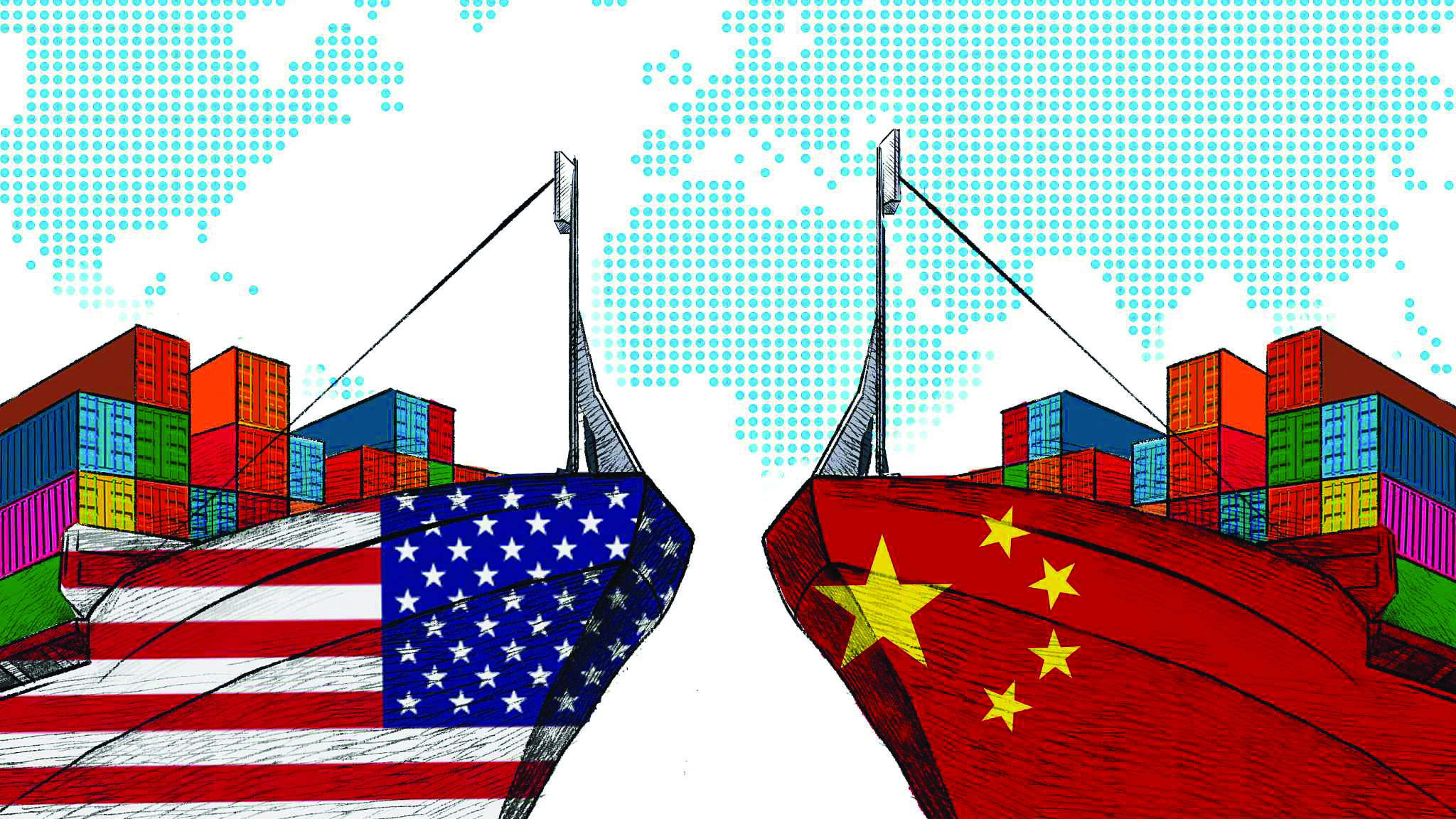
In the face of changing global realities and growing global competition, the bond, however, between nationalism and advocacy for the global economy is now fracturing in the US. Under decline of a manufacturing employment, loss of competitiveness, reduced and unstable incomes among the poor and working class, the American public has grown skeptical about economic globalization. The Trump administration also feels being unfairly treated and exploited at the hands of developing nations. Now the US government pits American nationalism against the international global economy and displays hostility toward global governance.
Call for a Globalized Economy
In contrast to the US antagonism against economic globalization, political leaders in China have defined nationalism in line with the promotion of economic development and upholding globalization principles in recent times. For years, China experienced national humiliation at the hands of imperial powers and faced isolation in the international community. It suffered from poor governance and lacked modernization. In the late 1970s, economic development was the most viable path to address the daunting economic social problems. Since the reforms, Chinese nationalism is defined in line with the promotion of economic development and integration of the nation into the global economy. The decisive surge of nationalism, therefore, coincided with the economic growth in China.
In modern China, the rise of the nation is contingent on upholding the values of the liberal economic order and economic globalization. From the century of humiliation to China’s rise as a world power, these developments demonstrate the dramatic paradigm shift in China. It moved from showing hostility toward the international system to developing a new sense of accountability and commitment in the international community.
In the grip of economic slowdown, nationalism and economic globalization are harnessed again by the Chinese state. President Xi Jinping’s model for economic growth and prosperity known as the ‘Chinese Dream’ also suggests that China’s ascendancy still operates in tandem with sustenance and expansion of economic globalization. China’s nationalism continues to be reframed and moulded in ways that facilitate its integration into the global market economy and assume greater responsibility for the maintenance of the existing world order.
Economic Globalization and Instrumentalization of Nationalism
Nationalism in China as an ideology advocates its rise based on economic globalization principles whereas in the United States, the Trump administration twists American nationalism as an ideology to advocate the rise of the nation based on anti-global economic principles. In both nations, governments strategically instrumentalize national patriotism as an ideology to mobilize the masses to support and carry out the socio-economic targets. Although perpetuating completely contrasting attitudes toward global economic integration, President Xi’s ‘Chinese Dream’ is not any less or more nationalistic than Trump’s ‘America First’ approach.
Until the late 1970s, China’s zero-sum game approach to economic globalization has led to deepening isolationism in the international community. During the time when the liberal international economy contributed to economic growth and prosperity in the United States, the tenets of a liberal economy were introduced as the ingredients for economic development for the rest of the world. When such meta-narratives met opposition from the developing nations, the opposing forces were seen as a threat, backwards, uncivilized and in need of change.
Just some decades later, when the US no can longer reap the economic benefits of globalization, the very same values and principles of liberal economic order are perceived as posing a direct threat to security and national economy. On the other hand, China has turned out to be the forerunner and defender of economic globalization and free trade in part because the Chinese state benefits from the present socioeconomic conditions. As the socioeconomic conditions continue to change under the influence of globalization, the intriguing relationship between nationalism and the call for globalization will likely change.![]()
This Turkish writer is doing his MA in International Relations at Tsinghua University,China. He can be reached at ykaripek@outlook.com |
|
Cover Story
|
|
Special Editorial Feature
|
|
Region
|
|
News Buzz
|
Update |


Leave a Reply