

Moscow
Russomania
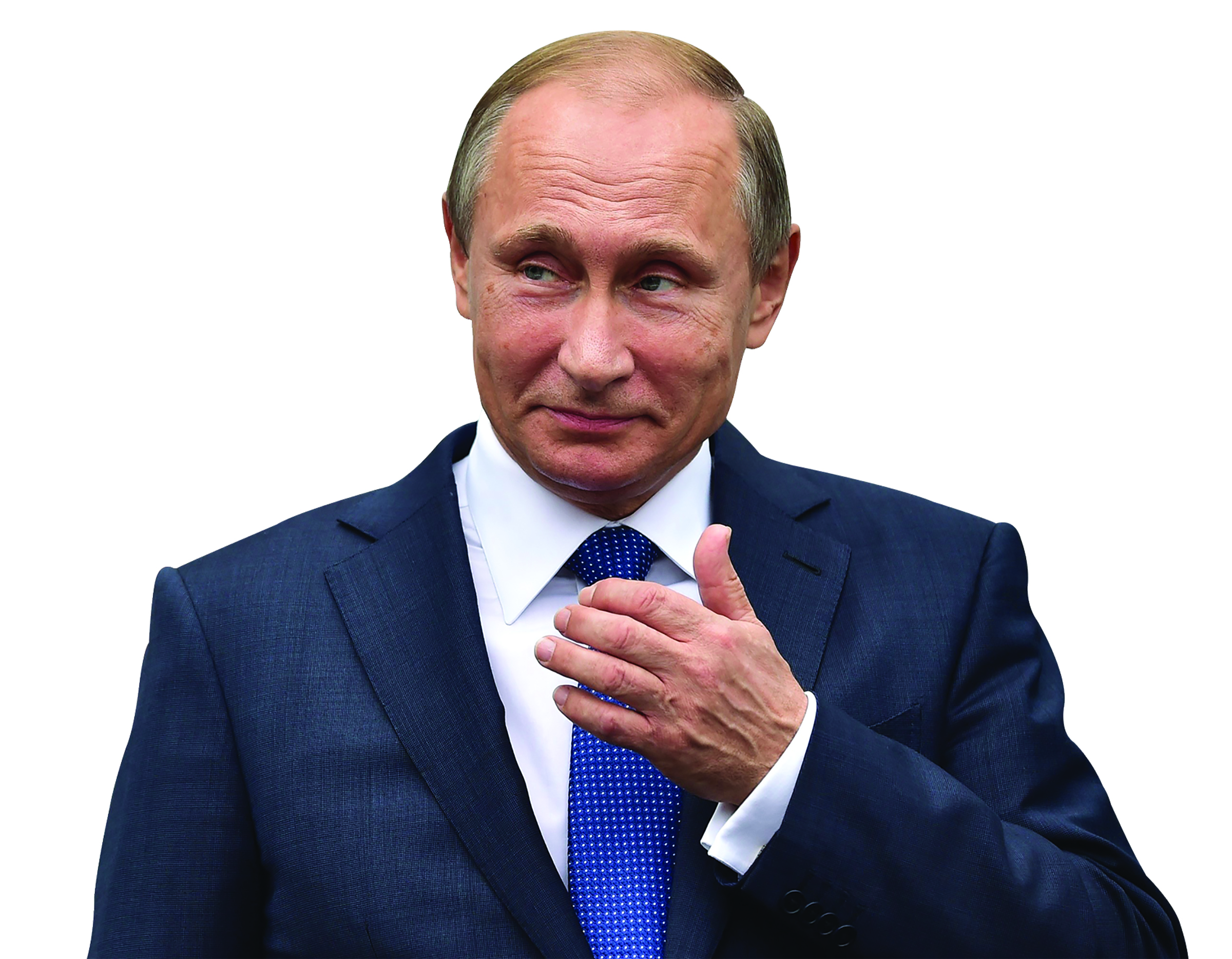
Vladimir Putin has taken Russia to new heights of success with
his sound future planning tempered by his personality that is a
combination of hard-driving ambition and personal charisma.
The constitutional reforms package announced by Vladamir Putin got an overwhelming response of approval from the Russian nation. These reforms will allow Mr Putin to serve two more six-year terms.
The Kremlin hailed the poll as a “triumph” and Mr. Putin thanked the Russians for their “support and trust”, adding that they were “improving the political system, firming up social guarantees, strengthening sovereignty and territorial integrity”.
By enacting these reforms, Putin has succeeded in getting constitutional as well as legal cover to extend his monocracy to 2036. The world is amazed at how he rules and with which magic wand he controls Russia?
Vladimir Putin is beyond any doubt, a man of great sensation in international politics. He has strikingly proved his mettle not only in statecraft but also in tactics of global diplomacy. He, by virtue of his success at home as well as abroad, has won laurels even from his most bitter detractors. US President Trump also could not help eulogizing Putin on many occasions.
The Russians are infatuated with Putin and deem him as a messiah since he has lifted their country to new heights. He has been ruling Russia since 2000 and has won four electoral terms. In 2018, he won with 76.69% votes. He will continue to be at the helm of power until 2024. This is irrefutable testimony to the fact that the Russian nation is spellbound by Putin’s charismatic persona.
He is, no doubt, a man of phenomenal achievements in both the internal and external domain of statecraft. Undeniably, he has created a huge impact on the world as well as on his country.
Externally, he has taken his country to new heights. The world, now, keeps an eagle eye on every move that Russia makes and the term Russophobia finds prominence in international media, particularly in the West.
Putin aspires to regain the lost influence of his country in “near abroad”. The latest examples of such moves are the Ukraine conflict and the annexation of Crimea. Those who were taken aback by Putin’s annexation of Crimea and the subsequent Russian-fuelled conflict in eastern Ukraine should have remembered that six years earlier, he had set the mould for the “Putin doctrine” in Georgia. Under this, Russia would use troops to protect its interests in a sphere of influence hemmed in by NATO’s advances.
Putin is staunchly against NATO’s eastwards expansion. Under Yeltsin, Russia pursued a policy of grudging cooperation with NATO. All that has changed under Putin. In his first interview with the BBC, Putin made it clear that NATO’s eastward expansion represented a threat to his country. That is why Moscow finally started showing its military muscle to NATO to push it back. The newly aggressive stance of Putin has worried Poland and the Baltic nations, as well as the Nordic countries. Even Sweden and Finland have started musing aloud about joining NATO.
Additionally, on the external front, Putin is the vocal proponent of a multipolar world. In one of his interviews, when he was asked the reason for a surging Russophobia in the West, he replied that it was his stance on a multipolar world that monopolists did not appreciate. Putin stands up to western hegemony and, with China, acts as a balance to the overweening military and political power of the US. If Yeltsin was consistently in America’s pocket, then Putin has been on its back.
In pursuit of multipolarity, Putin has shifted in recent years toward greater economic and military cooperation with Asian countries whose growing economies are hungry for Russia’s energy and whose governments are less judgmental of its human rights record. Putin has brokered two huge deals to supply China with gas and the two countries have also held joint naval exercises this year in the Mediterranean Sea.
Russian relations with West are in tatters in many ways. Russophobia is ubiquitous in the West. Consequently, whatever wrong happens in the West, it is attributed to Russia. Anglo-Russians relations are strained at present. London, which was once a second home for the Russians and where the oligarchs parked their kids in swanky schools, listed their companies in the stock exchange and bought football clubs, has now turned into a safe haven for the entire dissident community of anti-Putinistas that has further worsened the relationship between the two countries.
Last year, Russia was accused by Britain for poisoning a Russian agent living in England under political asylum. British Prime Minister, Theresa May announced that twenty three Russian diplomats identified as having links to espionage would be expelled. Russia, in return, expelled some British diplomats and took the decision to close down the British Council in Moscow. This situation aptly depicts the diplomatic storm that Russia is currently facing.
Moreover, Putin also strives hard to project the soft image of his country to the world. The Sochi winter Olympics in 2014 and the FIFA World Cup in 2018 were triumphs for the Putin since no measure of any security breach took place during these international events.
Putin also played a pivotal role in reviving the country’s ailing economy. When he assumed office, the Russian economy was just emerging from the disastrous market reforms of the 1990s and the 1998 financial crisis. He slashed taxes to benefit business; he also re-nationalized key sectors, starting with the dismantling of the Yukos Oil Company in 2003. Nonetheless, unused manufacturing capacity and rising prices for oil, Russia’s main export, helped in ushering an era of unprecedented prosperity, with real disposable income doubling between 1999 and 2006.
Alongside a crackdown on the opposition, NGOs and the internet, Putin introduced new legislation inspired by his vision of Russia as a bastion of traditional morals. The most egregious example was the 2013 ban on gay propaganda, which LGBT rights activists say has contributed to a rise in homophobic harassment in the country, including vigilante group violence.
To cap it all, Putin’s era has been marked by internal and external success which may come to an end in 2024 but the Russians are so much in love with Putin that no one ventures to predict the end of Putanism. ![]()
The writer is an advocate and a columnist based in Quetta. He can be reached at syedabdulrasool1 |
|
Cover Story
|
|
Special Editorial Feature
|
|
Region
|
|
News Buzz
|
Update |


Leave a Reply